Munich delivered.
I just got home from AutoCon 5, the Network Automation Forum’s sixth event and its return to European soil, and I am running on the usual post-conference cocktail of jet lag and adrenaline. From June 8 to 12, the community took over the Westin Grand Munich, and the week did exactly what AutoCon always does, make that trip across the pond well worth the discomfort of sitting in coach.
Here is what I tell anyone who asks whether these events are worth the flight: the talks are great and the workshops are great, but the real product is the people. Put 600-plus engineers, architects, and automation practitioners in one building, give them some coffee and a reason to argue in good faith, and you get something you cannot fake. AutoCon has had that energy since the very first event, and Munich was no exception.
Why AutoCon Earns the Flight
There are bigger conferences and flashier ones, where you say a quick hello to someone in passing and that’s about as deep as it gets. What there is not, anywhere else I’ve found, is a room this dense with people who actually run networks for a living and are willing to be honest about what is and is not working. Nobody is here to be sold to. Vendors show up, sure (I am one of them), but the unwritten rule is that you leave the marketing deck at the door and talk like a practitioner. That culture is what it’s about. It is why I have been to every single one.
The format helps. Two days of hands-on workshops up front, then three days of single-track and dual-track talks built around real-world success stories instead of roadmap fantasies. Michael Bushong opened the conference with a sharp talk on the cognitive biases that quietly sabotage automation programs, which set exactly the right tone. This is a community that is comfortable looking in the mirror.
Landing in Munich
I flew in early, which I have learned the hard way is non-negotiable if I want my brain online for a 9 a.m. workshop. Bavaria did not disappoint.
I am a sucker for old European cities, and Munich is a particularly good one to wander on foot. Once you get into the old town, the neo-Renaissance facades are everywhere: grand stone buildings with ornate cornices, perfectly symmetrical windows, the kind of craftsmanship nobody budgets for anymore. I walked the length of Maximilianstrasse, looked up at the Maximilianeum sitting on its rise across the Isar, and took it all in. Marienplatz in the center, the river running green through the city.
There is something grounding about standing in front of a building that has been there for well over a century when you spend your days thinking about technology that reinvents itself every six months. I did not plan the metaphor, but it followed me around all week: the things that last are the things built on solid foundations. Hold that thought, because the closing keynote landed in almost exactly the same place.
The Hallway Track
The hallway track is, reliably, the best part of the entire event.
It’s where you bump into legends who shaped the way you think. In my case, it was Ivan Pepelnjak – who also had an incredible talk, in pure Ivan fashion. I compared notes on agent governance with engineers from regulated environments who cannot just YOLO an LLM into production. I argued, productively, about whether spec-driven development actually scales. I learned more in those unstructured conversations than I do from most structured ones, and that is not a knock on the talks. It is a credit to the people.
Faces from AutoCon
What hit me hardest in Munich was how many of these people I have now known for years.
I think back to AutoCon 1 in Denver in the fall of 2023, when this was a brand-new experiment and none of us knew if it would work. A few hundred of us showed up on faith. Scott, Chris, and the crew who started the Network Automation Forum built something out of nothing, and somewhere across six events it stopped being a conference I attend and became a community I belong to. The people I met in that first Denver ballroom are friends now. Real ones. We have watched each other change jobs, ship projects, blow up projects, start companies, and grow up a little. Getting to see them twice a year in a different city each time is a genuine privilege, and Munich was a reunion as much as it was a conference.
That is the part the agenda never captures, and the part I would not trade for anything.
Proctoring: From RAG to MCP
On the workshop days I had the best seat in the house. I got to proctor “From RAG to MCP: New Tools for a New Era in Network Operations” alongside two people I would run through a wall for: John Capobianco and Joksan Flores.
The workshop sold out, which never stops being a little surreal. The premise was simple and the payoff was not: take engineers who may have never built an agent before and, over a single morning, walk them from Retrieval-Augmented Generation all the way to the Model Context Protocol, with real networking use cases the whole way.
What I love about teaching this material with John and Joksan is that none of us are interested in selling magic. We show people the seams. John worked magic in diving into where RAG helps and where it quietly lies to you, why MCP is a cleaner contract than gluing REST calls together with Bash, and how the new TOON format fits into keeping context lean. If you want to run the labs yourself, the whole thing is public at github.com/automateyournetwork/NAF_AC5. Clone it, break it, learn something.
At the Booth: FlowAI & Honest AI Conversations
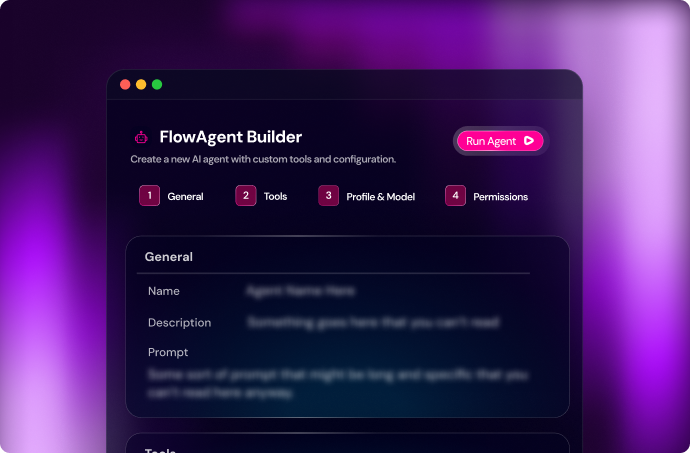
When I was not proctoring or chasing talks, you could find me at the Itential booth giving demos of Itential FlowAI, our new agentic orchestration product.
I’ll be straight about what I enjoyed most, and it wasn’t the demo. It was the conversations around them. AutoCon is the rare crowd that will push back, and I want them to. Plenty of people walked up skeptical, and that is healthy. The network is not a chatbot. It’s production infrastructure with blast radius, change windows, and consequences. So we did not have hype conversations. We had good-faith ones about where AI actually fits in the network engineer’s toolkit and, just as importantly, where it does not. This is the kind of feedback that makes it way back into the product, which turns out to be the best feedback loop there is.
The throughline of almost every one of those discussions matched what I keep writing about: AI belongs inside your guardrails, not around them. You do not hand an agent a root shell and walk away. You give it scoped tools, real governance, audit trails, and deterministic execution underneath the reasoning.
That is the difference between a party trick and something you can actually put in front of a change-advisory board. Watching that idea land with engineer after engineer at the booth was the most encouraging part of my week.
The Closing Keynote: The Intelligence Layer
Chris Wade, our co-founder and CTO, closed the show and wrapped a neat bow on everything.
His thesis was deceptively simple: we have never actually had an intelligence layer to capture and harness what network engineers know. We have tried. Chris walked through the graveyard of honest attempts, intent-based networking, source-of-truth-driven orchestration, infrastructure as code, and made the case that each one stalled for the same reasons. Abstractions leak, vendors differentiate on purpose, and we kept asking network engineers to become software developers to encode their knowledge in domain-specific languages built for machines instead of humans.
My favorite line of the talk was about determinism. The best thing about determinism is that it is deterministic. The worst thing about determinism is that it is deterministic. Anyone who has maintained a thousand-line automation script full of retry logic and edge-case handling felt that one in their bones. Every edge case you add makes the next one harder. The complexity compounds until the thing you built to save time becomes the thing you are afraid to touch.
His reframe was the part that connected to everything I had spent the week talking about. Stop forcing design and implementation into the same pile of code. Go back to first principles: design documents and methods of procedure describe intent, and agents handle implementation. He broke the agentic stack into three complementary layers that map almost perfectly to our workshop. Agents are the orchestrator that decides when. Skills, encoded as SKILL.md files, are the expertise that teaches how. MCP is the connector that provides what. Not competing approaches. Layers.
He drew a clean line between building and operating. On the build side, agents like Claude Code and Codex generate deterministic automation through spec-driven development, which is just software engineering with the spec put back where it belongs. On the operate side, teams of purpose-built agents handle the repetitive work, software upgrades, port turn-ups, health checks, while engineers shift into a new role: managers of their agent teams, keeping a human on the loop. He grounded all of it in the same adoption curve we already know from automation, moving from human in the loop, to human on the loop, to human out of the loop, one earned step at a time.
If you want to go deeper on this, Chris joined Ethan Banks for a new Packet Pushers episode during the conference and they go all the way in. It’s worth the listen.
Onward to AutoCon 6
And just like that, it was over. Closing ceremony, one last round of hugs and handshakes, promises to keep the Slack threads alive.
The next one is already on the calendar. AutoCon 6 heads back to the United States this fall, in Tucson, Arizona. Different location, same community, and if Munich is any indication, the conversation will have moved forward again by the time we get there. It always does.
If you have been on the fence about coming, consider this your nudge. Come for the talks, stay for the hallway track, and find me to chat! I will be the one happily arguing with you about agents.
See you in Tucson.

 Build Build agents & workflows visually, with AI, or bring your own.
 Integrate Connect every system, tool, agent, & AI in your stack.
 Execute Execution for agentic & deterministic operations.
 Secure & Govern Govern every action with built-in RBAC, audit & approval gates.
 Operate Self-service operations & real-time visibility.









 Agentic Operations Connect AI to infrastructure for trusted, automated actions.
 Infrastructure Modernization Transform legacy networks into modern, AI-ready infrastructure.
 Infrastructure as a Product Deliver network and infrastructure services on demand - self service, governed, & consumed like cloud.
 Hybrid & Multi-Cloud Orchestration Unify hybrid & multi-cloud infrastructure through agentic orchestration.
 Governed Change Management Execute every infrastructure change with pre/post validation, audit evidence, & rollback, human or AI-initiated.