











Where Your Infrastructure Automation Lives, Versions, & Runs














GitHub is already the system of record for your application code. Itential makes it the system of record for your infrastructure automation too. Every script, playbook, workflow, and agent committed to Git becomes a governed, callable service. Every infrastructure change triggered from a CI/CD pipeline executes with pre/post validation, RBAC, and a full audit trail, whether initiated by a developer, a pipeline, or a FlowAgent.
Application teams have GitOps. Pull requests, versioned code, automated pipelines, and rollback on failure. Network and infrastructure teams are still triggering changes manually, running scripts outside of any version-controlled workflow, and operating completely disconnected from the delivery pipelines that depend on them. When an application deployment needs a firewall rule, a VLAN, or a DNS record, someone opens a ticket and waits. That gap between application velocity and infrastructure operations is where delivery slows down.

Python scripts and Ansible playbooks work in isolation. They run outside CI/CD, outside RBAC, outside any audit trail. Engineers write them. Nobody else can safely use them.

GitHub Actions can deploy an application. They cannot trigger a governed network change, provision infrastructure, or validate that the environment is ready. That handoff is still manual.

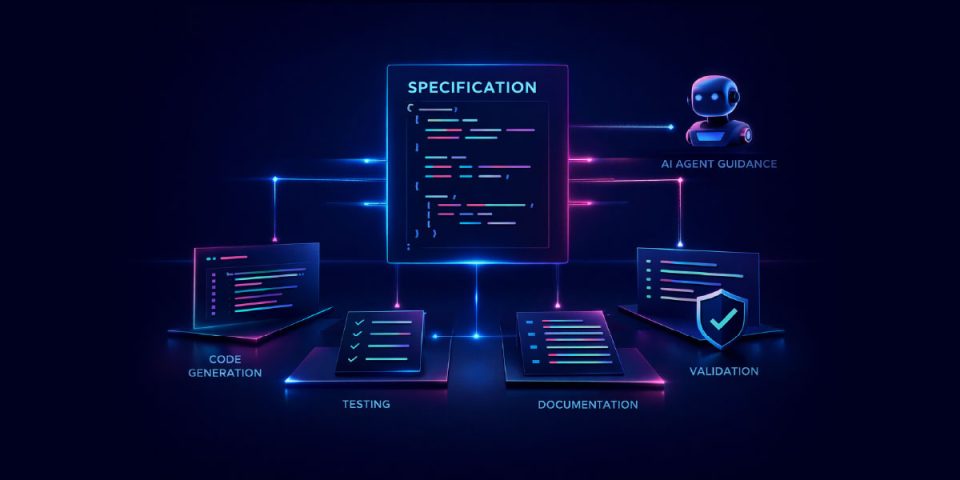
When Spec-Driven Development generates a workflow or automation from plain language, it needs somewhere to live, be versioned, and be deployed from. Without Git integration, AI-generated infrastructure code has no pipeline.
The Itential Platform connects directly to GitHub repositories. Every committed script, playbook, workflow, and agent syncs automatically and becomes a governed, callable service with RBAC, secrets injection, and a full audit trail, ready to run from the first commit.
Connect your GitHub repository and the platform syncs automatically. Python scripts, Ansible playbooks, Terraform plans, and workflow definitions become governed, API-callable services any team, FlowAgent, or pipeline can invoke. Engineers keep building in their IDE. Governance wraps everything automatically.
Store golden configuration templates, network data files, and infrastructure specs in GitHub. Itential workflows read directly from your repository during execution, using the latest committed version as the source of truth for every device configuration, compliance check, and provisioning operation.
GitHub Actions call the Itential REST API or the Itential MCP Server to trigger governed infrastructure workflows as part of any CI/CD pipeline. Application deployment pipelines provision network resources, validate compliance, and update infrastructure automatically, with pre/post validation and rollback built in.
When Spec-Driven Development generates a workflow, automation, or agent from plain language, it commits the artifact directly to your GitHub repository. CI/CD picks it up and deploys automatically. AI-generated infrastructure code follows the same Git workflow as everything else, version-controlled and governed from the first run.

Connect to GitHub, GitLab, or Bitbucket and every committed script, playbook, and workflow syncs automatically, always running the latest version with no manual deploy steps.

GitHub Actions call Itential via REST API or MCP to trigger governed infrastructure workflows, with RBAC, pre/post validation, approval gates, and a full audit trail on every pipeline-initiated change.

Spec-Driven Development generates workflows and automations from plain language and commits them directly to GitHub. CI/CD deploys automatically, version-controlled and governed from run one.

Publish governed infrastructure operations as catalog items callable from GitHub Actions, giving application and platform engineering teams self-service access to network changes without opening tickets.

Itential is the agentic infrastructure operations platform, connecting AI reasoning to deterministic execution across network, cloud, and IT systems. For Git-native teams, Itential connects directly to GitHub — syncing every committed script, playbook, and workflow as a governed service, and exposing REST API and MCP endpoints that GitHub Actions can call to trigger governed infrastructure changes from any CI/CD pipeline. Every action validated. Every change attributed. Human approval enforced wherever you define it.
Git-Native Automation Sync
Connect a GitHub repository and every committed Python script, Ansible playbook, Terraform plan, and workflow definition syncs automatically, always running the latest committed version.
GitHub Actions-Triggered Workflows
GitHub Actions call Itential via REST API or the Itential MCP Server to trigger governed infrastructure workflows as steps in any CI/CD pipeline, with pre/post validation and full audit trails.
Multi-Domain, Multi-Tool Orchestration
Coordinate network, cloud, and ITSM systems from a single pipeline-triggered workflow, natively running Ansible, Python, Terraform, and OpenTofu without rework.

GitHub is the developer platform where the world’s code lives – version control, pull requests, Actions for CI/CD, and a complete delivery pipeline that powers application teams everywhere. For infrastructure teams, GitHub provides the same foundation: a versioned, attributable home for every script, playbook, plan, and workflow. Itential connects to GitHub natively, turning the repository into the source of truth for infrastructure automation and the trigger surface for governed CI/CD execution.
Versioned Source of Truth
Every script, playbook, Terraform plan, and workflow definition lives in GitHub with full version history, attribution, and pull request review — the same governance model application teams already use.
GitHub Actions for CI/CD
GitHub Actions deliver the pipeline surface that lets application and platform teams trigger governed Itential workflows as part of any deployment, turning infrastructure changes into a native CI/CD step.
Open API Architecture
GitHub’s REST and webhook APIs let Itential sync repository content, read network data and golden configs at execution time, and accept pipeline-driven triggers from Actions – the foundation for Git-native infrastructure automation.

Itential connects to GitHub repositories via the GitHub API adapter. Connect your GitHub, GitLab, or Bitbucket repository and the platform syncs automatically. Every Python script, Ansible playbook, Terraform plan, OpenTofu plan, and workflow definition becomes a governed, callable service with RBAC, secrets injection, audit logging, and REST API exposure. Executions always run the latest committed version. No manual deploys, no version drift.
GitHub Actions call the Itential Platform REST API or the Itential MCP Server to trigger governed infrastructure workflows as steps in any CI/CD pipeline. The pipeline passes structured inputs, the platform validates them against the workflow schema, enforces RBAC and blast-radius controls, executes the governed workflow with pre/post validation, and returns structured results back to the pipeline. Every pipeline-initiated infrastructure change produces the same audit trail as a human-initiated one.
When SDD generates a workflow, automation, or agent artifact from a plain language description, it calls the Itential Platform’s REST APIs to construct the artifact and commits it directly to your specified GitHub, GitLab, or Bitbucket repository. CI/CD picks it up and deploys automatically. The generated artifact is immediately governed and callable, identical in schema, execution behavior, and audit trail to anything built manually. AI-generated infrastructure code follows the exact same Git workflow as everything else.
Itential workflows read directly from GitHub repositories during execution, pulling the latest committed version of golden configuration templates, network data files, device inventory, and infrastructure specs. Workflows use that data to generate device configurations, validate compliance, and drive provisioning operations. Because the data comes from Git, it is versioned, attributable, and consistent across every execution that references it.
Platform and network engineering teams publish governed infrastructure operations as catalog items that GitHub Actions and application pipelines can invoke via API or MCP. Application teams request infrastructure changes, firewall rules, VLANs, DNS records, and network service provisioning directly from their GitHub Actions pipelines without opening tickets. The governed execution layer enforces RBAC, validation, and audit trails on every request regardless of who or what triggered it.
Yes. Connect your GitHub repository and every committed script, playbook, and plan syncs automatically. Apply a JSON schema decorator to expose any automation as a governed REST API endpoint callable by workflows, FlowAgents, and CI/CD pipelines. Engineers keep writing in their IDE, committing to Git. Itential handles how those assets get executed, governed, and consumed by other teams and systems.
See how the Itential Platform connects to GitHub so every committed automation becomes a governed service, every CI/CD pipeline can trigger governed infrastructure changes, and every AI-generated workflow deploys automatically from the first commit.