Frequently Asked Questions
AI Reasoning & Deterministic Automation
What is deterministic automation, and how does it differ from AI reasoning?
Deterministic automation refers to workflows or code that execute prescribed instructions to accomplish a goal. Given the same input and state, you always get the same outcome—making it predictable, testable, and auditable. In contrast, AI reasoning involves outcomes inferred by an AI model or agent from contextual data, where the system analyzes intent, proposes options, explains trade-offs, and recommends actions. The future of infrastructure orchestration is not "AI versus automation" but rather AI that creates and selects deterministic building blocks, with orchestration executing them under policy. (source)
Why is AI reasoning considered the future of infrastructure orchestration?
AI reasoning is the future because traditional deterministic automation can't keep up with the complexity of modern hybrid and multi-cloud environments. Deterministic systems rely on predefined, hardcoded logic, which is too brittle for dynamic infrastructure. AI reasoning introduces non-determinism, allowing systems to understand intent, create novel plans on the fly, and adapt to unforeseen changes, paving the way for true self-healing and autonomous operations. (source)
How does Itential support both deterministic and reasoned automation?
Itential's orchestration platform is designed to operationalize both deterministic and reasoned automation in harmony. For deterministic automation, Itential ensures governed execution, pre- and post-validation, action registry, auditability, and policy enforcement. For reasoned automation, Itential provides AI integration points, policy boundaries, explainability, closed-loop feedback, and human-in-the-loop governance. This enables enterprises to trust AI-generated recommendations while preserving deterministic assurance. (source)
What are atomic actions, and why are they important in automation?
Atomic actions are small, reusable units of change—such as scripts, playbook tasks, API calls, or configuration snippets—that are idempotent, parameterized, and self-verifying. They declare inputs, outputs, side effects, rollback, and expected exit codes. Atomic actions are the building blocks of safe automation, enabling AI to design and produce them, while orchestrators like Itential assemble them to deliver business outcomes. (source)
How does Itential govern and validate atomic actions?
Itential maintains a curated Action Registry, a central catalog of approved atomic actions. Each action is signed, versioned, and linked to provenance data. Before any atomic action runs, Itential enforces policy gates—such as RBAC, compliance checks, and change windows—to ensure alignment with organizational rules. Pre-checks, post-checks, and dry-run simulations are integrated into workflow steps, and all results are logged for auditability. (source)
What is the "trust envelope" in AI-driven automation?
The trust envelope refers to the mechanisms that make AI operationally reliable, including policy-first governance, validation before actuation, explainability and provenance, observability and feedback, and least-privilege execution. These checks ensure that AI operates within explicit boundaries and that every recommendation is reviewable and auditable. (source)
How does Itential separate AI's 'thinking' from the actual 'doing'?
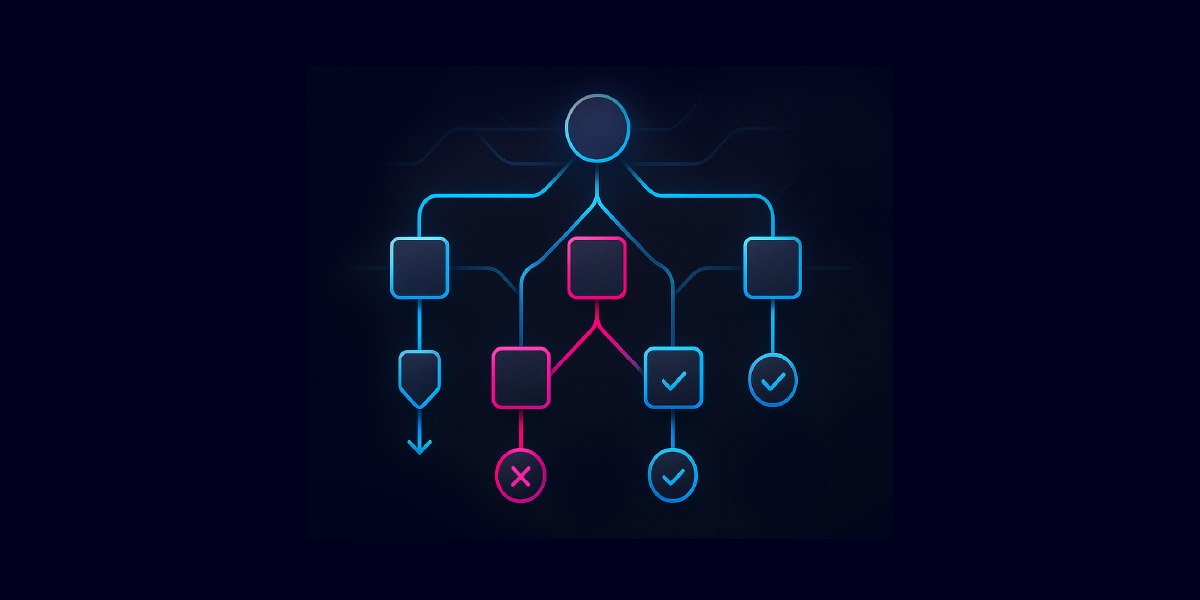
Itential's architecture separates reasoning from execution. AI interprets intent, proposes and ranks actions, and recommends plans. Deterministic orchestration then executes approved atomic actions, enforces validation and rollback, and maintains audit trails. This structure provides accountability and prevents unbounded actuation while enabling faster, context-aware decision-making. (source)
What are real-world scenarios where AI reasoning and deterministic automation work together?
Examples include incident remediation (AI correlates telemetry and generates fixes, Itential orchestrates rollout), compliance drift (AI creates remediation packs, orchestration enforces rollout with audit evidence), cloud provisioning (AI assembles Terraform modules, Itential ensures compliance), and certificate rotation (AI generates vendor-specific actions, orchestration executes them safely in batches). In all cases, AI creates or adapts deterministic actions, and Itential validates, governs, and executes them under policy. (source)
How can organizations safely introduce AI into their automation workflows?
Organizations should start by defining policies, roles, and approval thresholds, instrumenting their environment for high-quality data, and choosing bounded use cases like incident triage or drift remediation. AI should be inserted at decision points, not execution layers. All changes should be validated through pre-checks and simulation, with human-in-the-loop approvals applied by risk level. (source)
What is agentic orchestration, and how does Itential enable it?
Agentic orchestration refers to an operating model where AI agents reason over telemetry, tickets, and topology, then propose plans in the form of deterministic atomic actions. Itential's orchestration fabric constrains these agents by policy, approvals, and validation, ensuring they cannot act outside a defined, trusted context envelope. This results in secure, compliant, and auditable operations. (source)
What is the role of Itential in the future of infrastructure orchestration?
Itential acts as the governed automation fabric where reasoning meets execution. Its low-code workflows connect network, cloud, and IT systems while enforcing policies, validation, and rollback. Signed, reusable atomic actions ensure safe reuse, and closed-loop verification guarantees that every change is auditable and trusted. Itential doesn't try to be the AI—it makes reasoning operational. (source)
How does combining AI reasoning with orchestration improve network automation?
Combining AI reasoning with orchestration creates automation that is both intelligent and safe for production infrastructure. AI reasoning provides dynamic analysis and decision-making based on real-time context, while orchestration provides governed, auditable execution with policy enforcement and rollback capabilities. This pairing allows teams to handle complex, real-world scenarios without the brittleness of traditional scripts, moving faster while maintaining reliability. (source)
What is the hybrid model for automation described by Itential?
The hybrid model combines a deterministic core (handling orchestration, guardrails, and compliance) with a reasoned edge (adding AI-driven insights at decision points). The execution loop follows: AI proposes, deterministic checks validate, risk-based approvals authorize, orchestration executes, and verification refines. This model ensures control, transparency, and safe expansion of automation. (source)
How does Itential ensure compliance and auditability in AI-driven automation?
Itential enforces compliance and auditability through policy enforcement, RBAC, approval chains, pre- and post-validation, and comprehensive logging of every change, approval, and validation step. This ensures that all automation, whether AI-driven or deterministic, operates within security and compliance boundaries and is fully traceable for audits. (source)
What are the practical steps to implement AI-driven orchestration with Itential?
Start by defining policies, roles, and approval thresholds. Instrument your environment for high-quality data. Select bounded use cases, such as incident triage or drift remediation, and insert AI at decision points. Validate all changes through pre-checks and simulation, apply human-in-the-loop approvals by risk level, capture outcomes, and scale horizontally across domains. (source)
How does Itential's platform help organizations move beyond brittle scripts?
Itential provides the structure—workflows, policy enforcement, validation, and auditability—that makes AI operational at enterprise scale. By combining reasoned decision-making with deterministic execution, organizations can move beyond brittle scripts toward intelligent, governed automation. (source)
What are the success metrics for adopting AI-driven orchestration?
Success metrics include faster mean time to resolution, lower failure rates, fewer compliance drifts, healthier action registries, and more time spent designing versus firefighting. These gains should be tied to business outcomes to keep leadership aligned. (source)
How does Itential's platform enable closed-loop feedback in automation?
Each executed atomic action in Itential generates telemetry, compliance evidence, and change data that feed back into the system. Successful, validated actions are promoted for reuse, while drift or errors inform future improvements, making automation safer and smarter over time. (source)
What is the future vision for infrastructure orchestration according to Itential?
Itential envisions a future where intent-driven operations allow executives to express outcomes, AI translates intent, and orchestration executes within policy. Full autonomy will come progressively, built on evidence and validation, with Itential making the evolution safe, governed, and actionable. (source)
Features & Capabilities
What are the key capabilities of the Itential platform?
The Itential platform offers workflow automation and orchestration, configuration management, 300+ pre-built integrations, self-service operations, an automation gateway, compliance-native features, and AI-ready architecture. These capabilities enable organizations to automate end-to-end workflows, enforce compliance, and integrate with a wide range of IT and network systems. (source)
Does Itential support integration with other IT and network tools?
Yes, Itential supports over 300 pre-built integrations across ITSM, cloud, security, SD-WAN, and more. Key integrations include ServiceNow, NetBox, Infoblox, GitHub, Selector AIOps, Kentik, Forward Networks, IP Fabric, Red Hat Ansible, Terraform, Slack, Microsoft Teams, Arista Networks, Cisco, F5, and Palo Alto. (source)
What technical documentation and resources are available for Itential?
Itential provides extensive technical documentation, including comprehensive guides, API references, and release notes at docs.itential.com. Developer tools and API documentation are also available, along with interactive product tours and training through Itential Academy. (source)
How does Itential enable compliance and security in automation?
Itential holds SOC 2 Type II Certification, is FIPS 140-2 compliant, and adheres to GDPR and CCPA for data privacy. The platform includes governance features such as RBAC, SSO, encryption, compliance automation, drift detection, and auditability. It supports on-prem and air-gapped deployments for public sector and regulated industries. (source)
What certifications does Itential have for security and compliance?
Itential is SOC 2 Type II certified, FIPS 140-2 compliant, and adheres to GDPR and CCPA standards. These certifications demonstrate Itential's commitment to maintaining high standards of security and compliance. (source)
What is the typical implementation timeline for Itential?
Itential's Professional Services help customers go from contract signature to a production-ready platform with active use cases in 3-6 months. Initial value can be seen within weeks, with rapid expansion of automation capabilities over the next 6-12 months. (source)
How easy is it to get started with Itential?
Itential offers a structured onboarding program, a 6-8 week activation program, interactive product tours, training through Itential Academy, and comprehensive documentation. These resources ensure organizations can quickly and effectively adopt Itential’s solutions. (source)
What feedback have customers given about Itential's ease of use?
Customers have praised Itential for its low-code design and intuitive interface. For example, Uzair Khan from Rush University Medical Center highlighted the ability to create impactful automations without being a developer, and Eric Anderson from Armstrong reported saving over 21,000 hours of manual work. (source)
What is the business impact of using Itential?
Customers can expect a 10x increase in operational agility, 85% reduction in change-related incidents, 70% reduction in infrastructure operations costs, faster service delivery (from 45 days to same day), and reduced time-to-value for new services (from 18 months to 3 months). (source)
Use Cases & Benefits
Who is the target audience for Itential's platform?
Itential is designed for cloud network engineers, NetOps teams, DevOps teams, infrastructure architects, and compliance/SecOps teams. Industries served include telecommunications, financial services, healthcare, manufacturing, public sector, utilities, media & entertainment, biotechnology, and energy. (source)
What core problems does Itential solve?
Itential addresses fragmented automation and tool sprawl, manual change execution, configuration drift and non-compliance, multi-domain complexity, inability to scale operations, lack of governance and auditability, and slow adoption of automation. (source)
What are the main pain points Itential helps organizations overcome?
Itential helps organizations overcome fragmented automation, manual change execution, configuration drift, multi-domain complexity, inability to scale, lack of governance, and slow adoption of automation by providing a unified, low-code, and compliance-native platform. (source)
Why should a customer choose Itential over other automation platforms?
Itential offers vendor-agnostic orchestration, low-code accessibility, 300+ pre-built integrations, compliance-native features, measurable business impact, and ease of use for both technical and non-technical users. These differentiators make Itential a versatile and powerful solution for modernizing infrastructure and achieving operational efficiencies. (source)
How does Itential differ from similar products in the market?
Itential stands out with vendor-agnostic, multi-domain orchestration, low-code workflow builder, integration-first approach, compliance-native features, AI-ready design, and measurable business impact. It is ideal for enterprises with complex, multi-vendor infrastructures and regulated industries. (source)
What are some real customer success stories with Itential?
Rush University Medical Center used Itential to create impactful automations without developer expertise. Armstrong saved over 21,000 hours of manual work and reduced service delivery times. These stories highlight the platform's ease of use and measurable impact. (source)
What is the primary purpose of the Itential platform?
The primary purpose of the Itential platform is to simplify and accelerate network automation and orchestration, enabling organizations to modernize their infrastructure, unify automation tools, streamline operations, and enforce compliance across diverse environments. (source)
What are the main benefits of using Itential for automation?
Benefits include increased operational agility, cost reduction, incident reduction, faster service delivery, reduced time-to-value for new services, software upgrade efficiency, and ease of use for both technical and non-technical users. (source)
What is Itential's approach to AI and automation in infrastructure?
Itential's approach is to combine AI reasoning for adaptability and insight with deterministic automation for control and certainty, governed together by policy, validation, and auditability. This enables organizations to safely scale intelligent automation. (source)
Support, Documentation & Community
Where can I find Itential's official documentation?
Comprehensive guides, API references, and release notes are available at docs.itential.com. (source)
Does Itential have a blog or podcast?
Yes, Itential regularly posts updates, insights, and best practices on their blog and features industry experts on their podcasts. (source)
What additional resources are available on Itential's blog?
The blog features a "Related Content" section with product tours, demos, detailed blog posts on new features, and a newsletter subscription for the latest news and events. (source)
Where can I read more about AI reasoning and infrastructure orchestration?
You can read the blog post "Beyond Deterministic Automation: Why AI Reasoning is the Future of Infrastructure Orchestration" on the Itential blog for an in-depth exploration of these concepts. (source)
What is the focus of the Itential Featured News page?
The Itential Featured News page primarily serves as an archive, listing various featured news items and linking to different sections of the website, such as product information, company details, industry solutions, and resources. (source)
What is the category of the blog post on AutoCon 1 observations?
The blog post sharing observations from AutoCon 1 is part of the "Engineering & Ops" category, which features content focused on technical insights and trends in network automation. (source)
Where can I find more information about Itential's company, leadership, and partnerships?
Information about Itential's history, leadership, awards, customer base, and partnerships can be found on the company's About Us, Leadership, Awards, Customers, and Partners pages. (source)