
Share this
Table of Contents
Austin delivered. I just wrapped up an incredible week at AutoCon 4, the Network Automation Forum’s latest conference, and I’m still buzzing from the energy. As always, the hallway track was impeccable. Over 550+ network engineers, architects, and automation practitioners descended on the Austin Marriott Downtown from November 17-21. When you have that many great technologists under one roof, some magic will happen.
For context: I spent two days proctoring a sold-out workshop on Itential and MCP alongside Peter Sprygada, Mike Elrom and Joksan Flores, helped proctor John Capobianco’s equally packed Selector AI workshop, watched Peter unveil FlowAI on the conference stage, and delivered a talk diving deep into whether MCP is just another API abstraction layer (spoiler: it’s not). It was exhausting and exhilarating.
The Workshop Experience: Orchestrating with MCP
Our workshop – “From APIs to AI: Orchestrating Network Actions with Itential & MCP” – sold out weeks before the event. We designed it to be beginner-friendly across networking, systems, and programming, with zero installations required thanks to Itential’s fully hosted cloud environment. Just bring a laptop and a browser, and you’re in. Easy learning!
The goal was simple: show the practical path from scripts to platform-level automation, then all the way to AI-enabled orchestration. We started with Itential Automation Gateway (IAG) executing Python scripts and Ansible playbooks directly from Git repos, moved into orchestrating those automations through Itential Platform with ServiceNow and NetBox integrations, built JSON Forms to capture user input, published everything to a self-service portal, and finally – the piece that had everyone leaning forward – triggering workflows via APIs and AI assistants using our MCP Server.
Peter brought his deep architectural knowledge and infectious enthusiasm, while Mike and Joksan kept everyone moving through the hands-on labs with precision. The energy in that room was incredible. The best part was all the amazing conversations following the workshop.
Helping with John Capobianco’s RAG to MCP Workshop
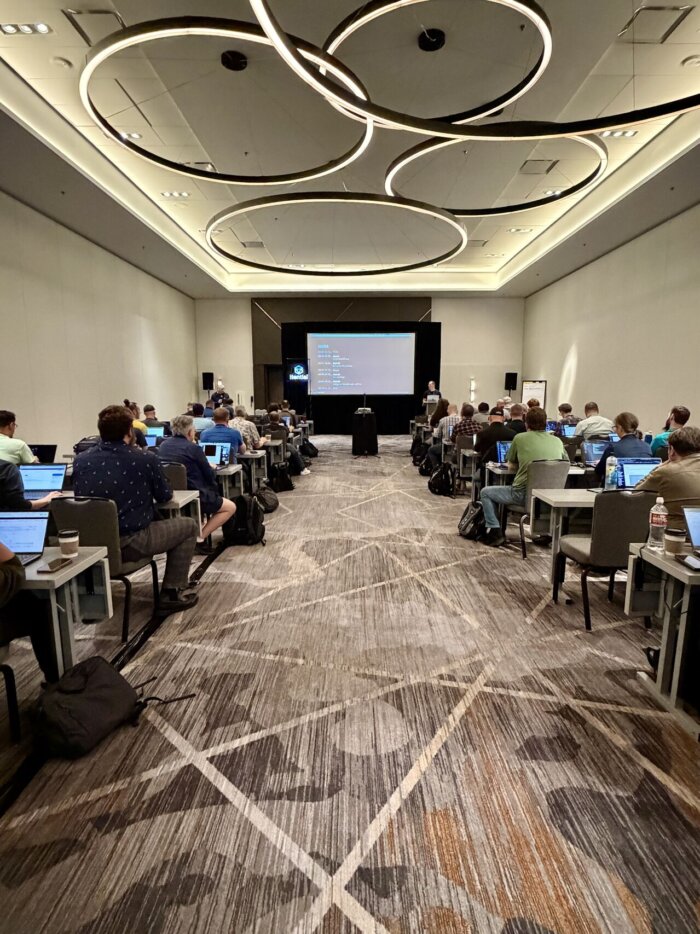
Between our workshop sessions, I jumped over to help John Capobianco proctor his Selector AI workshop on “Augmenting Network Automation with AI: From RAG to MCP.” Also sold out. I even grabbed one of my partners in crime, Joksan Flores, to help. This workshop was crammed with practitioners eager to understand how to build AI-enhanced network tools from scratch.
John’s approach is brilliantly practical. He walked participants through building RAG (Retrieval Augmented Generation) systems for network documentation, then progressed into creating MCP servers that expose network automation tools like Cisco pyATS through standardized interfaces. His “VibeOps” philosophy – making network operations accessible through natural language rather than requiring CLI mastery – resonated deeply with attendees.
What I loved about helping with this workshop was seeing the complementary nature of what John teaches versus what we teach at Itential. John shows you how to build AI-enhanced tools and MCP servers. We show you how to orchestrate and operationalize those tools at enterprise scale with governance, security, and auditability. Put them together and you’ve got the full stack: tool creation plus enterprise deployment.
Peter Unveils FlowAI on Stage
Wednesday afternoon, Peter Sprygada took the stage and officially unveiled FlowAI – Itential’s new agentic orchestration platform. I may be biased, but watching Peter present our team’s work to this practitioner audience was one of the highlights of the week.
FlowAI is Itential’s answer to the fundamental question enterprises are wrestling with: AI can reason, but can it be trusted to execute? The answer we’re providing is yes – but only when you separate reasoning from execution and enforce governance at every step.
FlowAI introduces four core components that work together to create a secure AI-to-Action loop. FlowAgent Builder lets you create role-based agents with defined personas, reasoning styles, LLM attachments, and exact tool access. FlowAgents themselves are intelligent, task-oriented agents that interpret intent, reason through operational context, and construct goal-oriented plans – but they never execute changes directly. That’s the crucial architectural decision. Instead, they hand their plans to Itential’s deterministic execution layer, where every step runs through workflow engine validation, RBAC policies, schema enforcement, and audit logging.
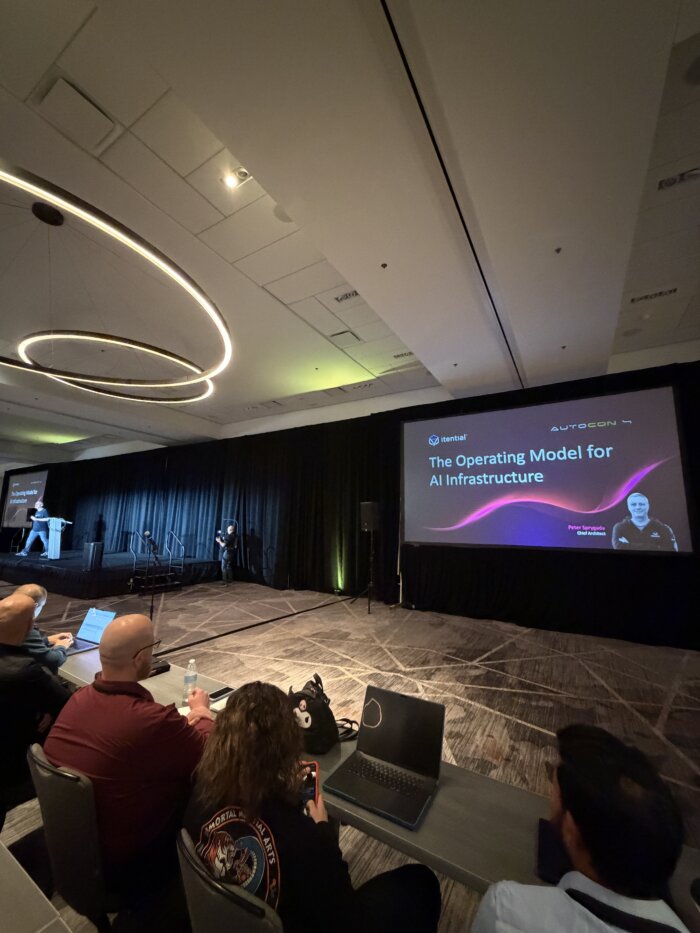
FlowMCP Gateway extends Itential Automation Gateway to securely invoke external infrastructure agents and MCP tools like NetBox MCP and Selector MCP, bringing outside intelligence under Itential’s governance umbrella. And FlowMCP Server – the enterprise-grade version of our open-source MCP Server that we launched in May 2025 – provides centralized management of multiple MCP instances with virtual MCP servers, persona definitions, and full multi-user access controls.
Peter’s message was clear: this isn’t about replacing your automation. It’s about evolving it. Moving from “automation to agentic orchestration” while maintaining the visibility, security, and trust that production infrastructure demands. The tagline “Governed Intelligence by Design” captured it perfectly.
The timing couldn’t have been better. FlowAI was officially announced that same day and is in Private Customer Preview, with live demonstrations happening throughout AutoCon 4. The conversations that followed – in hallways, at happy hours, during the vendor expo – showed just how ready this community is for intelligent orchestration that doesn’t compromise on governance.
See how it works in the demo below.
Is MCP Just an API Abstraction?
On Thursday, I delivered my talk titled “Is MCP just an API Abstraction?” This topic matters because there’s genuine confusion in the market about what MCP (Model Context Protocol) actually is and why it’s different from traditional API integration patterns.
I started by framing the N×M integration problem that’s haunted infrastructure teams forever. You’ve got N models and M infrastructure tools, and without abstraction layers, you end up building N×M integrations. APIs gave us one solution – standardize on REST, GraphQL, gRPC – but they still require bespoke client implementations, authentication handling, error management, and domain expertise for every single integration.
Then I walked through what I call API tradecraft – the practical reality of working with infrastructure APIs. Rate limits. Pagination. Eventual consistency. Idempotency. Token refresh. Error code interpretation. This isn’t abstract computer science; this is the daily experience of network engineers trying to automate at scale. And it’s why so many automation projects stall out.
MCP introduces a fundamentally different model. Instead of exposing raw APIs, you expose semantically meaningful tools with rich context about what they do, what inputs they expect, and what side effects they have. AI agents don’t need to understand your API documentation – they understand tool descriptions in natural language. The MCP server handles all the authentication, error handling, schema validation, and protocol complexity behind a standardized JSON-RPC 2.0 interface over STDIO, SSE, or HTTP.
But here’s the key insight I emphasized: MCP isn’t just an API abstraction – it’s an intelligence abstraction. It mediates between the probabilistic reasoning of AI systems and the deterministic requirements of infrastructure execution. It’s the layer that facilitates safety for AI agents to operate in production environments, because every tool invocation is logged, validated, and governed.
The N×M problem transforms under MCP. You build one MCP server per system, exposing semantically rich tools. AI agents learn one MCP protocol that works across all servers. Instead of N×M integrations, you’ve got N + M interfaces, and you’ve added the intelligence layer that traditional APIs struggle with at scale.
Community & Conversations
What makes AutoCon special isn’t just the content, it’s the community. I talked with network architects from major enterprises about how they’re navigating the cultural shift from CLI-driven operations to platform engineering. I compared notes with service provider engineers on multi-tenant orchestration challenges. I geeked out with automation tool builders about workflow DSLs and state machines. I listened to people share their automation failures – not just successes – and how they learned from them.
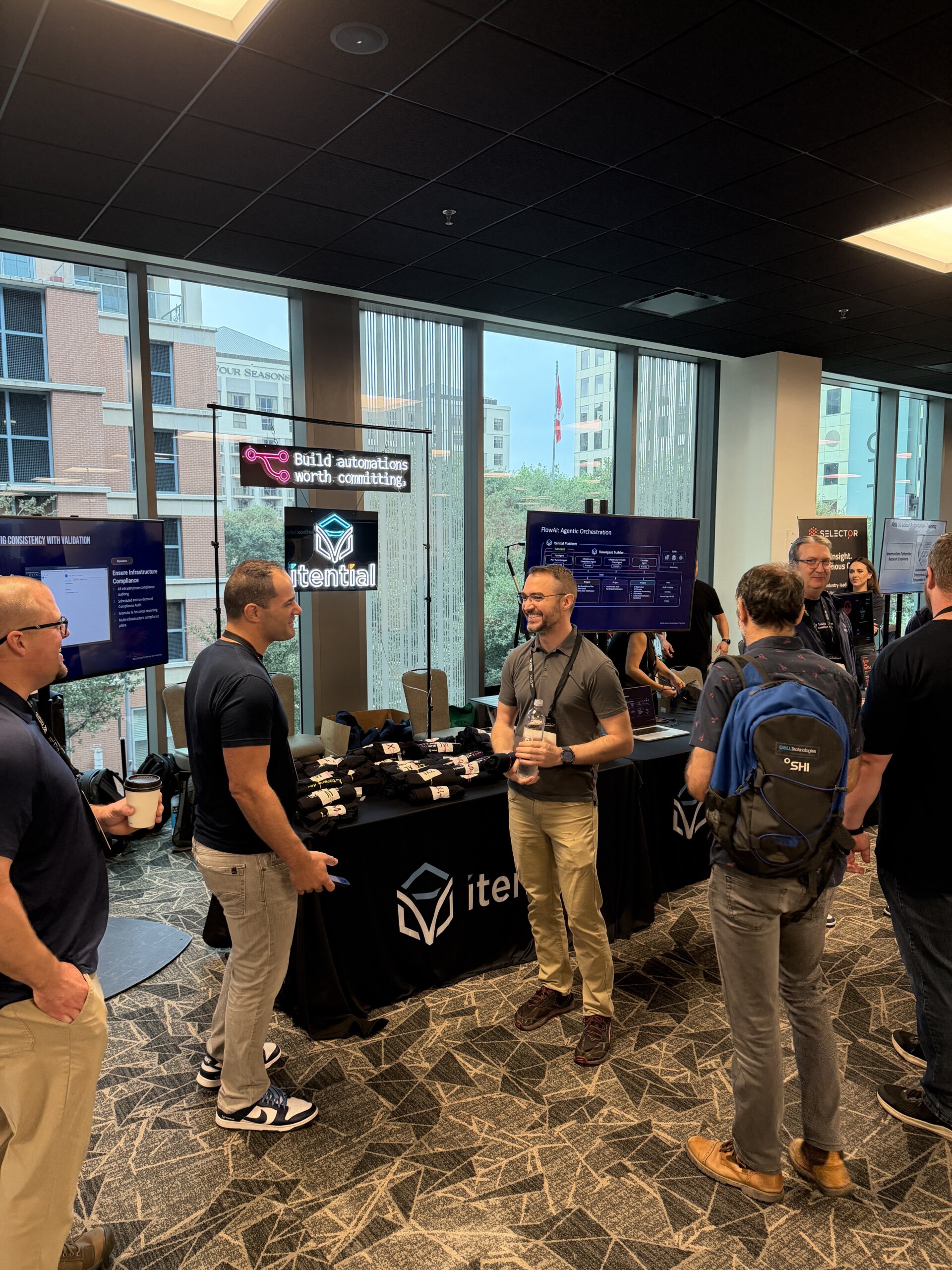
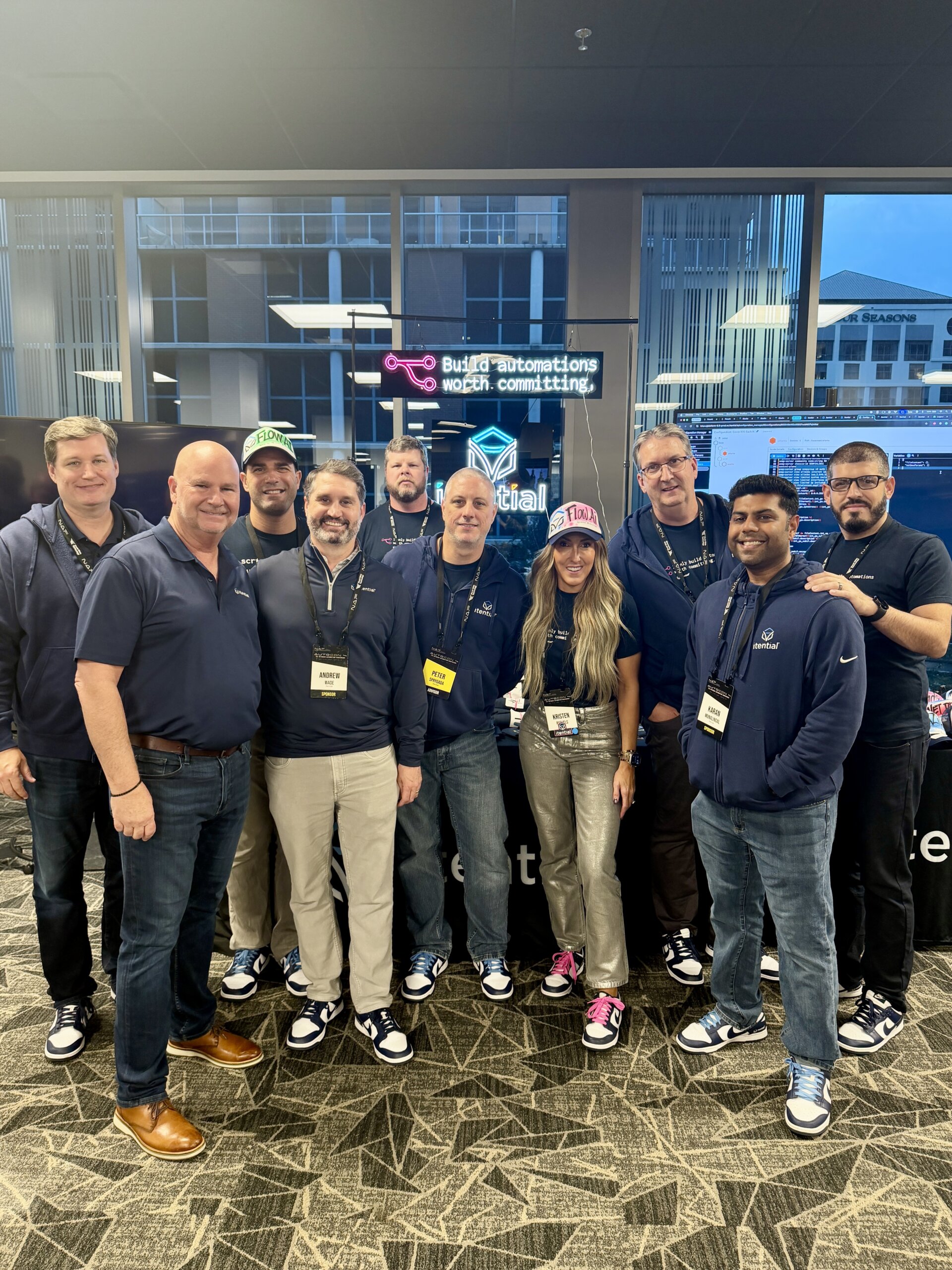
The food was hot, the energy was hotter, and the networking (literally and figuratively) was off the chain. Special shoutout to the Itential team who made the trip – Peter, Mike, and the rest of the crew represented us brilliantly. And to the NAF organizers who somehow orchestrated 16 sold-out workshops across two days and three conference tracks without breaking a sweat (that we could see).
Key Themes from the Conference
Three major themes emerged across AutoCon 4 that are worth calling out:
Agentic automation is here.
The conversation has shifted from “if” to “how.” Multiple workshops covered AI agents, MCP implementations, and RAG systems. Vendors are racing to add AI features. But more importantly, practitioners are demanding governance, auditability, and deterministic control. Nobody wants probabilistic models making production changes directly. The architecture pattern that’s winning is clear: intelligent reasoning + governed execution.
MCP is becoming the standard.
Anthropic’s Model Context Protocol – introduced just a year ago in late 2024 – has exploded and really supplanted the SSoT theme from AutoCon 3.
Platform engineering is the path forward.
The days of individual contributors running Ansible playbooks on their laptops are ending. Organizations are building internal platforms that expose network automation as self-service products with APIs, portals, and now AI interfaces. This isn’t about replacing network engineers – it’s about amplifying their expertise and making it accessible organization-wide.
Conclusion
AutoCon 4 reinforced something I’ve believed for years: the network automation community is special. We’re not waiting for vendors to solve our problems. We’re building solutions, sharing code, and pushing each other to think bigger about what’s possible.
Itential’s presence at AutoCon4 – through our workshop, FlowAI’s unveiling, and the conversations we had with practitioners – validated our direction. Governed agentic orchestration isn’t a future concept; it’s happening now. The practitioners are ready. The technology is ready. And the community is charging forward together.
I’m already looking forward to AutoCon 5. If you haven’t experienced a Network Automation Forum event yet, make it happen. Bring your laptop, bring your curiosity, and prepare to have your assumptions challenged by the smartest practitioners in the industry.
As always, the automation journey continues – now with a whole lot more intelligence baked in.
Stay tuned for new content coming from the Itential team as we move FlowAI from Private Preview to broader availability. And if you’re interested in exploring what agentic orchestration looks like in your environment, let’s talk. The future of infrastructure operations is governed, intelligent, and absolutely within reach.
See What’s Next
Stay tuned for new content coming from the Itential team as we move FlowAI from Private Preview to broader availability.
And if you’re interested in exploring what agentic orchestration looks like in your environment, let’s talk. The future of infrastructure operations is governed, intelligent, and absolutely within reach.
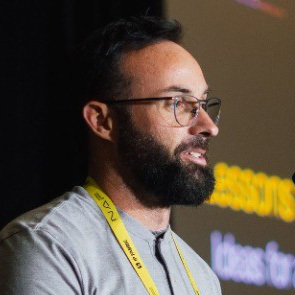
William Collins
Director of Technical Evangelism ‐ Itential
William Collins is a strategic thinker and a catalyst for innovation, adept at navigating the complexities of both startups and large enterprises. With a career centered on scalable infrastructure design, he serves as Itential’s Director of Technical Evangelism. Here, he leads the charge in network automation, leveraging his deep roots in cloud architecture and network engineering. William hosts The Cloud Gambit Podcast, diving into cloud computing strategy, markets, and emerging trends with industry experts. Outside of transforming networks, you can find him enjoying time with family, playing ice hockey, and strumming guitar.