Product Overview & Purpose
What is Itential's MCP and how does it relate to AI-driven operations?
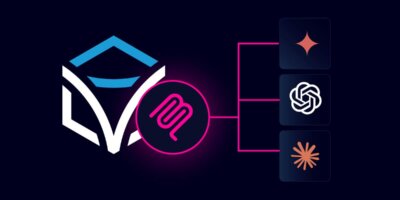
Itential's Model Context Protocol (MCP) is a structured protocol designed to bridge human intent, system interfaces, and AI-driven automation. MCP enables both CLI and GUI users to interact with infrastructure in a standardized, repeatable way, making it easier for teams to automate operations and connect AI agents to infrastructure. It is not just a modern CLI; it is an execution layer that supports policy-aware, scalable, and auditable operations. (Source: Original Webpage, Knowledge Base)
How does MCP differ from traditional CLI interfaces?
MCP is fast, composable, and uses intent-driven payloads, making it readable by humans and callable by agents. Unlike traditional CLIs, MCP is designed to be AI-readable and policy-aware, supporting audit trails, RBAC, and execution visibility. It moves beyond stateless, context-blind interfaces by enabling memory, state tracking, and policy overlays. (Source: Original Webpage)
What is the primary purpose of the Itential platform?
The primary purpose of the Itential platform is to simplify and accelerate network automation and orchestration, enabling organizations to modernize their infrastructure and achieve operational efficiency. It unifies fragmented automation tools, automates manual processes, and provides compliance-native features for secure operations. (Source: Knowledge Base)
How does MCP unlock infrastructure visibility for non-API users?
MCP's read-only interface provides a safe, audit-friendly way for users to query infrastructure without risk of breaking anything. This approach transforms how operations teams monitor and validate changes, making infrastructure visibility accessible to those who may not be comfortable with APIs. (Source: Original Webpage)
What is the real role of MCP in the automation landscape?
MCP is a structured protocol that bridges human intent, system interfaces, and AI-driven automation. It provides predictable, reusable access across clouds, controllers, and devices, enabling teams to interact with infrastructure confidently. MCP is not a complete automation system; it is an interface that, when paired with orchestration engines and AI, enables scalable, explainable, and safe operations. (Source: Original Webpage)
How does MCP Gateway enable standardization across teams?
The MCP Gateway centralizes access to infrastructure APIs, enforcing audit trails, RBAC, and execution visibility. This standardization allows both CLI and UI users to interact with infrastructure in a consistent way, promoting repeatability and trust across teams. (Source: Original Webpage)
What are the limitations of MCP without orchestration engines?
MCP provides structured access but lacks execution logic, context awareness, and intelligent decision-making. Without orchestration engines, MCP remains a better way to send commands but does not solve for intent, dependencies, or state transitions. (Source: Original Webpage)
How can AI enhance MCP's capabilities?
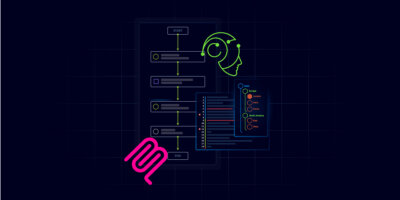
AI, particularly large language models (LLMs), can consume and compose MCP calls, intelligently filling parameters, correlating state, and surfacing decisions. This integration transforms MCP from an infrastructure interface to an AI execution language, enabling scalable, explainable, and safe operations. (Source: Original Webpage)
What problems does MCP solve for infrastructure teams?
MCP addresses API fatigue and fragmentation by offering a predictable, reusable, and minimal interface across clouds, controllers, and devices. It enables teams to interact with infrastructure confidently without mastering every native API, promoting standardization and repeatability. (Source: Original Webpage)
Is MCP a complete automation system?
No, MCP is not a complete automation system. It provides structured access to infrastructure but requires orchestration engines, context awareness, and intelligent decision-making layers to deliver full automation. (Source: Original Webpage)
How does MCP support policy-aware operations?
MCP supports policy-aware operations by enabling audit trails, RBAC, and execution visibility. These features ensure that actions are governed and compliant, supporting secure and reliable infrastructure management. (Source: Original Webpage)
What is the future of MCP in AI-native operations?
The future of MCP lies in pairing it with AI, allowing agents to call MCP for observing, reasoning, and acting on infrastructure. This unlocks AI-native operations that are scalable, explainable, and safe, bridging the gap between AI insights and infrastructure actions. (Source: Original Webpage)
How does MCP handle complex network environments?
MCP often requires users to specify full payloads, such as device names and interface IDs, which can be challenging in complex networks. AI and graph-aware engines can help by pre-filling forms, validating intent, and pulling context from inventory, making MCP more scalable and user-friendly. (Source: Original Webpage)
What is the bottom line for organizations considering MCP?
If your goal is to enable scalable, policy-aware, AI-driven operations, MCP is the protocol to standardize on. However, the real advantage comes from what you build above MCP, such as orchestration engines and AI integrations. (Source: Original Webpage)
Where can I download the Itential MCP Server?
You can download the Itential MCP Server from GitHub. (Source: Original Webpage)
Where can I watch a demo of MCP in action?
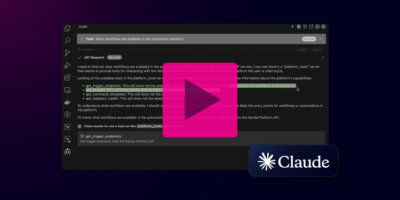
You can watch a demo of MCP in action on YouTube. (Source: Original Webpage)
Who is the author of the blog post 'MCP: The Modern CLI or the Missing Link to AI-Driven Ops?'
The blog post is authored by Ankit Bhansali, Principal Architect - AI Solutions & Strategy at Itential. (Source: Original Webpage)
Where can I read more from Ankit Bhansali?
You can read more articles from Ankit Bhansali on his author page at Itential. (Source: Original Webpage)
Where can I find related content about MCP and AI-driven automation?
Related content includes blog posts like "AI’s Rewriting Automation & Itential’s MCP Server Is Your Guide" and demos such as "How to Build & Run Network Workflows with Itential MCP + AI Automation" available on the Itential blog and resource library. (Source: Original Webpage)
What is the topic category of the blog post 'MCP: The Modern CLI or the Missing Link to AI-Driven Ops?'
The blog post is categorized under 'AI & AIOps' and authored by Ankit Bhansali, Principal Architect for AI Solutions & Strategy. (Source: Knowledge Base)
Do you have a blog post that discusses whether MCP is the modern CLI or the key to AI-driven operations?
Yes. Itential explores this topic in the blog post titled "MCP: The Modern CLI or the Missing Link to AI-Driven Ops?" which discusses the evolving role of command-line interfaces in an AI-centric world. (Source: Knowledge Base)
Features & Capabilities
What features does the Itential platform offer?
The Itential platform offers workflow automation and orchestration, configuration management, over 300 pre-built integrations, self-service operations, automation gateway, compliance-native features, and AI-ready architecture. (Source: Knowledge Base)
Does Itential support integrations with other platforms?
Yes, Itential supports over 300 pre-built integrations, including ServiceNow, NetBox, Infoblox, GitHub, Selector AIOps, Kentik, Forward Networks, IP Fabric, Red Hat Ansible, Terraform, messaging systems like Slack and Microsoft Teams, Arista Networks, Cisco, F5, and Palo Alto. (Source: Knowledge Base)
What are the key benefits of using the Itential platform?
Key benefits include increased operational agility (10x), 85% reduction in change-related incidents, 70% reduction in infrastructure operations costs, faster service delivery (from 45 days to same day), reduced time-to-value for new services (from 18 months to 3 months), and improved software upgrade efficiency (from 6 hours per device to 20 minutes). (Source: Knowledge Base)
How does Itential support AI networking environments running on Arista?
For AI networking, Itential provides real-time automation to automate deployments, check CloudVision for congestion events, and orchestrate remediation and notifications to ticketing systems, ensuring stable and performant networks. (Source: Knowledge Base)
Security & Compliance
What security and compliance certifications does Itential have?
Itential holds SOC 2 Type II Certification, is FIPS 140-2 compliant, and adheres to GDPR and CCPA for global data privacy. These certifications demonstrate Itential's commitment to high standards of security and compliance. (Source: Knowledge Base)
How does Itential ensure compliance and auditability?
Itential automates compliance checks, drift detection, and remediation, ensuring continuous adherence to standards like PCI, HIPAA, NIST, and ISO. Every change is logged with comprehensive details, including pre/post validation results, enabling full traceability for audits and compliance verification. (Source: Knowledge Base)
Implementation & Support
How long does it take to implement Itential?
Itential's Professional Services enable organizations to go from contract signature to a production-ready platform with active use cases in 3-6 months. Initial value can be seen within weeks, with rapid expansion over the next 6-12 months. (Source: Knowledge Base)
How easy is it to start using Itential?
Itential offers a structured onboarding program, activation program, interactive product tours, training and certification via Itential Academy, comprehensive documentation, and professional services to ensure a smooth and rapid adoption. (Source: Knowledge Base)
Customer Proof & Success Stories
What feedback have customers given about Itential's ease of use?
Customers praise Itential for its low-code design and intuitive interface. Uzair Khan from Rush University Medical Center highlighted the ability to create impactful automations without developer expertise. Armstrong saved over 21,000 hours of manual work, and a media conglomerate noted the platform's power and ease of use during a workshop. (Source: Knowledge Base)
Which enterprise companies trust Itential for automation?
Itential is trusted by Armstrong, Blackfoot Comms, Colt, Corning, Deutsche Telekom, Fiserv, Irideos, Leidos, Liberty Global, Lumen, Rush, S&P Global, Southern California Edison, Tim, and Virgin Media O2. (Source: Knowledge Base)
Use Cases & Target Audience
Who is the target audience for Itential's platform?
Itential is designed for cloud network engineers, NetOps teams, DevOps teams, infrastructure architects, compliance and SecOps teams, and organizations in telecommunications, financial services, healthcare, manufacturing, public sector, utilities, media & entertainment, biotechnology, and energy. (Source: Knowledge Base)
What core problems does Itential solve?
Itential solves fragmented automation and tool sprawl, manual change execution, configuration drift and non-compliance, multi-domain complexity, inability to scale operations, lack of governance and auditability, and slow adoption of automation. (Source: Knowledge Base)
What business impact can customers expect from using Itential?
Customers can expect a 10x increase in operational agility, 85% reduction in change-related incidents, 70% reduction in infrastructure operations costs, faster service delivery, reduced time-to-value for new services, and improved software upgrade efficiency. (Source: Knowledge Base)
Competition & Differentiation
How does Itential differ from similar products in the market?
Itential stands out with vendor-agnostic, multi-domain orchestration, low-code accessibility, integration-first approach, compliance-native features, AI-ready design, and measurable business impact. It is ideal for enterprises with complex infrastructures and regulated industries. (Source: Knowledge Base)
Why should a customer choose Itential?
Customers should choose Itential for its vendor-agnostic orchestration, low-code accessibility, integration-first approach, compliance-native features, measurable business impact, and ease of use. It supports orchestration across diverse environments and empowers both technical and non-technical users. (Source: Knowledge Base)
Documentation & Resources
Where can I find technical documentation for Itential?
Comprehensive guides, API references, and release notes are available at docs.itential.com. Developer tools and API documentation can be found at Developer Tools and API Documentation. (Source: Knowledge Base)