Frequently Asked Questions
Product Thinking & Infrastructure Orchestration
What does 'product thinking' mean for infrastructure delivery?
'Product thinking' in infrastructure delivery refers to treating infrastructure as a standardized, reusable service rather than a one-off project or script. This approach focuses on creating scalable, consumer-friendly infrastructure products that can be consumed via self-service, improving agility, efficiency, and alignment with business goals. (Source: https://www.itential.com/blog/company/infrastructure-orchestration/inside-the-2025-gartner-guide-why-product-thinking-is-reshaping-infrastructure-delivery/)
Why is infrastructure orchestration essential for modern IT operations?
Infrastructure orchestration is essential because it automates and coordinates tasks across different IT systems, breaking down silos and enabling end-to-end workflows. This is critical for delivering scalable, reliable, and compliant infrastructure services in complex, hybrid, and multi-cloud environments. (Source: https://www.itential.com/blog/company/infrastructure-orchestration/inside-the-2025-gartner-guide-why-product-thinking-is-reshaping-infrastructure-delivery/)
How does the 2025 Gartner I&O Guide describe the shift in infrastructure delivery?
The 2025 Gartner I&O Guide highlights a shift from fragmented, task-based automation to productized, service-oriented infrastructure delivery. It emphasizes the need for unified platforms that support orchestration, low-code interfaces, and integration across hybrid environments. (Source: https://www.itential.com/blog/company/infrastructure-orchestration/inside-the-2025-gartner-guide-why-product-thinking-is-reshaping-infrastructure-delivery/)
What is the 'orchestration gap' and why does it matter?
The 'orchestration gap' refers to the underutilization of orchestration in automation efforts, often due to perceived complexity and skills gaps. This gap prevents organizations from scaling automation, enforcing governance, and achieving business-aligned outcomes. (Source: https://www.itential.com/blog/company/infrastructure-orchestration/inside-the-2025-gartner-guide-why-product-thinking-is-reshaping-infrastructure-delivery/)
What are Gartner's recommendations for I&O leaders?
Gartner recommends investing in platforms that unify provisioning, configuration, and orchestration; support hybrid infrastructure; offer low-code and self-service interfaces; integrate seamlessly with existing tools; enable platform engineering; and are ready for AI-augmented automation. (Source: https://www.itential.com/blog/company/infrastructure-orchestration/inside-the-2025-gartner-guide-why-product-thinking-is-reshaping-infrastructure-delivery/)
How does Itential support the shift to productized infrastructure?
Itential enables teams to orchestrate full-service workflows, expose automation as reusable self-service offerings, integrate with existing tools, support platform engineering, and bridge AI-generated actions into governed execution. (Source: https://www.itential.com/blog/company/infrastructure-orchestration/inside-the-2025-gartner-guide-why-product-thinking-is-reshaping-infrastructure-delivery/)
What are the main challenges organizations face in adopting productized infrastructure?
Organizations often struggle with fragmented automation, isolated scripts, lack of orchestration, and skills gaps. Only 23% of enterprises have successfully integrated automation into service delivery, according to Gartner. (Source: https://www.itential.com/blog/company/infrastructure-orchestration/inside-the-2025-gartner-guide-why-product-thinking-is-reshaping-infrastructure-delivery/)
How does orchestration transform automation into business outcomes?
Orchestration connects automation across systems, teams, and workflows, making it scalable, governable, and aligned to business outcomes. It enables standardized, repeatable, and secure infrastructure services. (Source: https://www.itential.com/blog/company/infrastructure-orchestration/inside-the-2025-gartner-guide-why-product-thinking-is-reshaping-infrastructure-delivery/)
What is the role of platform engineering in infrastructure delivery?
Platform engineering teams lead the evolution toward productized infrastructure by designing modular, version-controlled, and scalable infrastructure products, enabling developers and app teams to access infrastructure through governed interfaces. (Source: https://www.itential.com/blog/company/infrastructure-orchestration/inside-the-2025-gartner-guide-why-product-thinking-is-reshaping-infrastructure-delivery/)
How does Itential integrate with existing automation tools?
Itential seamlessly connects with tools like Ansible, OpenTofu, Terraform, ServiceNow, NetBox, and Git, allowing organizations to unify and operationalize their existing automation investments without needing to rewrite or rebuild automations. (Source: https://www.itential.com/blog/company/infrastructure-orchestration/inside-the-2025-gartner-guide-why-product-thinking-is-reshaping-infrastructure-delivery/)
What is the business impact of adopting productized infrastructure with orchestration?
Organizations that embrace productized infrastructure and orchestration move faster, reduce operational risk, and deliver infrastructure as a competitive advantage, meeting the scale, speed, and reliability demands of modern business. (Source: https://www.itential.com/blog/company/infrastructure-orchestration/inside-the-2025-gartner-guide-why-product-thinking-is-reshaping-infrastructure-delivery/)
What questions should I&O leaders ask when evaluating their automation strategy?
I&O leaders should ask: Can automation efforts scale across environments and teams? Are workflows orchestrated or still isolated scripts? Do teams have the interfaces and integrations needed for speed and control? Are they ready to support platform engineering and GenAI? (Source: https://www.itential.com/blog/company/infrastructure-orchestration/inside-the-2025-gartner-guide-why-product-thinking-is-reshaping-infrastructure-delivery/)
How does Itential help bridge AI-generated actions into real infrastructure execution?
Itential connects AI-generated actions to orchestration logic that enforces policy, collects inputs, and executes safely, enabling GenAI and agentic automation to operate in production environments. (Source: https://www.itential.com/blog/company/infrastructure-orchestration/inside-the-2025-gartner-guide-why-product-thinking-is-reshaping-infrastructure-delivery/)
What is the significance of self-service in infrastructure delivery?
Self-service enables internal consumers to access standardized infrastructure services via portals, APIs, or ITSM tools, reducing manual handoffs and accelerating delivery. (Source: https://www.itential.com/blog/company/infrastructure-orchestration/inside-the-2025-gartner-guide-why-product-thinking-is-reshaping-infrastructure-delivery/)
How does Itential enable platform engineering teams?
Itential provides tools for modular, version-controlled infrastructure products, allowing platform engineering teams to deliver infrastructure as a product with structured, governed interfaces for developers and app teams. (Source: https://www.itential.com/blog/company/infrastructure-orchestration/inside-the-2025-gartner-guide-why-product-thinking-is-reshaping-infrastructure-delivery/)
What is the main takeaway from the 2025 Gartner Guide regarding infrastructure delivery?
The main takeaway is that 'product thinking' is reshaping infrastructure delivery, requiring a shift from project-based tasks to creating scalable, reusable, and consumer-friendly infrastructure services. (Source: https://www.itential.com/blog/company/infrastructure-orchestration/inside-the-2025-gartner-guide-why-product-thinking-is-reshaping-infrastructure-delivery/)
Where can I download the 2025 Gartner Market Guide for Infrastructure Automation & Orchestration Tools?
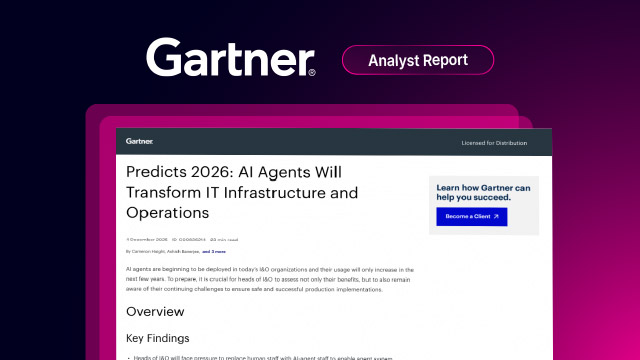
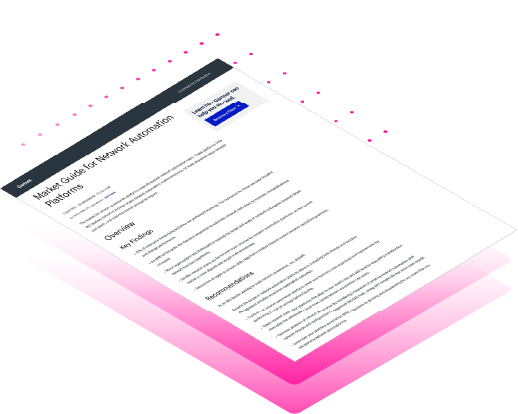
You can download the 2025 Gartner Market Guide for Infrastructure Automation & Orchestration Tools from this link. (Source: https://www.itential.com/blog/company/infrastructure-orchestration/inside-the-2025-gartner-guide-why-product-thinking-is-reshaping-infrastructure-delivery/)
How does Itential help organizations move from fragmented automation to scalable services?
Itential unifies existing automation tools, orchestrates end-to-end workflows, and exposes automation as reusable, self-service offerings, enabling organizations to deliver scalable, governed infrastructure services. (Source: https://www.itential.com/blog/company/infrastructure-orchestration/inside-the-2025-gartner-guide-why-product-thinking-is-reshaping-infrastructure-delivery/)
What is the difference between task-based automation and orchestrated workflows?
Task-based automation focuses on isolated scripts and tools, while orchestrated workflows connect multiple tasks and systems into governed, repeatable processes that deliver end-to-end outcomes. (Source: https://www.itential.com/blog/company/infrastructure-orchestration/inside-the-2025-gartner-guide-why-product-thinking-is-reshaping-infrastructure-delivery/)
How does Itential address the skills gap in orchestration?
Itential offers a low-code, user-friendly platform that enables both technical and non-technical users to build and consume automations, lowering the barrier to entry for orchestration. (Source: https://www.itential.com/why-itential/)
Features & Capabilities
What are the key capabilities of the Itential platform?
Key capabilities include workflow automation and orchestration, configuration management, over 300 pre-built integrations, self-service operations, automation gateway, compliance-native features, and AI-ready architecture. (Source: https://www.itential.com/cloud-platform/overview/)
Does Itential support integration with ServiceNow and other ITSM tools?
Yes, Itential supports integration with ServiceNow and other ITSM tools, enabling end-to-end automation and orchestration across IT service management processes. (Source: https://www.itential.com/solutions/servicenow/)
What types of integrations does Itential offer?
Itential offers over 300 pre-built integrations, including ServiceNow, NetBox, Infoblox, GitHub, Selector AIOps, Kentik, Forward Networks, IP Fabric, Red Hat Ansible, Terraform, messaging systems like Slack and Microsoft Teams, Arista Networks, Cisco, F5, and Palo Alto. (Source: https://www.itential.com/solutions/integrations/)
How does Itential enable compliance and governance?
Itential includes compliance-native features such as golden configurations, drift detection, compliance validation, audit trails, and role-based access control to ensure secure and reliable operations. (Source: https://www.itential.com/security-compliance/)
Is Itential AI-ready?
Yes, Itential features an AI-ready architecture that integrates with AI platforms for governed and auditable actions based on AI insights. (Source: https://www.itential.com/flowai/)
What self-service capabilities does Itential provide?
Itential enables teams to consume automation on-demand through self-service catalogs and APIs, making infrastructure services accessible without manual intervention. (Source: https://www.itential.com/cloud-platform/self-service/)
How does Itential support configuration management?
Itential automates compliance and remediation for network devices using golden configurations and policy checks, ensuring consistent and secure infrastructure. (Source: https://www.itential.com/cloud-platform/network-configuration/)
What is the Automation Gateway in Itential?
The Automation Gateway centralizes and manages all automation assets, including scripts and playbooks, from a single interface, streamlining automation management. (Source: https://www.itential.com/cloud-platform/itential-automation-gateway/)
Does Itential provide technical documentation and developer resources?
Yes, Itential offers comprehensive technical documentation, developer tools, API documentation, and release notes to support users and developers. (Source: https://docs.itential.com/)
What certifications and compliance standards does Itential meet?
Itential holds SOC 2 Type II Certification, is FIPS 140-2 compliant, and adheres to GDPR and CCPA for data privacy. It also supports compliance with PCI, HIPAA, NIST, and ISO standards. (Source: https://www.itential.com/security-compliance/)
How does Itential ensure auditability and traceability?
Itential logs every change with comprehensive details, including pre/post validation results, enabling full traceability for audits and compliance verification. (Source: https://www.itential.com/security-compliance/)
What is the Itential Marketplace?
The Itential Marketplace is a repository of over 300 pre-built integrations and automation assets, supporting ITSM, cloud, security, SD-WAN, and more. (Source: https://www.itential.com/automation-marketplace/)
Does Itential support public sector and air-gapped deployments?
Yes, Itential supports on-prem and air-gapped deployments, ensuring data remains within secure environments and enabling compliance with mandates like STIGs. (Source: https://www.itential.com/security-compliance/)
What is Itential's responsible disclosure policy?
Itential has a responsible disclosure policy for security vulnerabilities, ensuring transparency and proactive security management. (Source: https://www.itential.com/security-compliance/)
How does Itential's low-code platform benefit users?
Itential's low-code platform empowers both technical and non-technical users to create impactful automations quickly, reducing dependency on specialized skills and accelerating adoption. (Source: https://www.itential.com/why-itential/)
What feedback have customers given about Itential's ease of use?
Customers have praised Itential for its intuitive, low-code design. For example, Armstrong saved over 21,000 hours of manual work, and Rush University Medical Center highlighted the ability to create impactful automations without developer expertise. (Source: https://www.itential.com/why-itential/)
Use Cases & Business Impact
Who is the target audience for Itential's platform?
Itential is designed for cloud network engineers, NetOps teams, DevOps teams, infrastructure architects, and compliance/SecOps teams across industries such as telecommunications, financial services, healthcare, manufacturing, public sector, utilities, media & entertainment, biotechnology, and energy. (Source: https://www.itential.com/solutions/multi-cloud-network-automation-orchestration/)
What business impact can customers expect from using Itential?
Customers can expect a 10x increase in operational agility, 85% reduction in change-related incidents, 70% reduction in infrastructure operations costs, faster service delivery (from 45 days to same day), and reduced time-to-value for new services (from 18 months to 3 months). (Source: https://www.itential.com/why-itential/)
What core problems does Itential solve?
Itential solves fragmented automation and tool sprawl, manual change execution, configuration drift, multi-domain complexity, inability to scale operations, lack of governance and auditability, and slow adoption of automation. (Source: manual)
How long does it take to implement Itential?
Itential's Professional Services typically take 3-6 months from contract signature to a production-ready platform with active use cases. Initial value can be seen within weeks, and rapid expansion is possible over 6-12 months. (Source: https://www.itential.com/professional-services/)
What onboarding and training resources does Itential provide?
Itential offers a structured onboarding program, a 6-8 week activation program, interactive product tours, Itential Academy for training and certification, comprehensive documentation, and professional services. (Source: https://www.itential.com/itential-academy/)
Which enterprise companies trust Itential for automation?
Itential is trusted by Armstrong, Blackfoot Comms, Colt, Corning, Deutsche Telekom, Fiserv, Irideos, Leidos, Liberty Global, Lumen, Rush, S&P Global, Southern California Edison, Tim, and Virgin Media O2. (Source: https://www.itential.com/contact-us/)
What are some customer success stories with Itential?
Armstrong World Industries saved over 21,000 hours of manual work, and a Fortune 500 Technology Company built a working orchestration in five days during a POC. More stories are available on the Itential customers page. (Source: https://www.itential.com/professional-services/)
What pain points do Itential customers commonly face?
Common pain points include fragmented automation, manual change execution, configuration drift, multi-domain complexity, inability to scale, lack of governance, and slow automation adoption. (Source: manual)
How does Itential help organizations scale operations without increasing headcount?
Itential's low-code design, pre-built integrations, and self-service catalogs enable organizations to scale operations efficiently, with customers reporting 80-90% reduction in manual effort. (Source: manual)
What is the primary purpose of the Itential platform?
The primary purpose is to simplify and accelerate network automation and orchestration, enabling organizations to modernize infrastructure, achieve operational efficiency, and deliver business outcomes. (Source: https://www.itential.com/why-itential/)
How does Itential compare to other orchestration platforms?
Itential stands out with vendor-agnostic, multi-domain orchestration, low-code accessibility, 300+ pre-built integrations, compliance-native features, AI-ready design, and measurable business impact. (Source: https://www.itential.com/why-itential/)
What are the advantages of Itential for regulated industries?
Itential offers built-in governance, audit trails, policy enforcement, and compliance with standards like SOC 2, FIPS 140-2, GDPR, PCI, HIPAA, NIST, and ISO, making it ideal for regulated industries. (Source: https://www.itential.com/security-compliance/)
How does Itential help with configuration drift and compliance?
Itential's Configuration Validation application continuously compares device and system states against baselines, automatically identifies drift, and enforces governance standards. (Source: manual)
What is the role of orchestration in delivering infrastructure as a service?
Orchestration acts as the critical layer that connects disparate systems and automates end-to-end processes, enabling the delivery of infrastructure as a product through unified, self-service workflows. (Source: https://www.itential.com/blog/company/infrastructure-orchestration/what-it-takes-to-turn-infrastructure-automation-into-a-service/)
Where can I find more resources and customer stories about Itential?
You can explore more resources and customer stories on the Itential customers page and the Itential blog. (Source: https://www.itential.com/customers/)