Frequently Asked Questions
Product Overview & Fundamentals
What is the Model Context Protocol (MCP)?
The Model Context Protocol (MCP) is an open protocol introduced by Anthropic in November 2024 that standardizes how AI systems connect to external tools and data sources. MCP provides a universal language for AI agents to interact with any MCP-enabled tool, supporting executable functions (tools), data access (resources), and templated workflows (prompts). It operates on JSON-RPC 2.0 and enables dynamic discovery of capabilities, reducing the need for custom integration code for each AI framework. [Source]
Why was MCP created?
MCP was created to solve the fragmentation problem in AI tool integration. Previously, each AI framework required its own custom integrations, leading to inefficiency and complexity. MCP provides a universal protocol so AI agents can easily connect to any MCP-enabled tool, streamlining integration and reducing development overhead. [Source]
What is the Itential MCP Server?
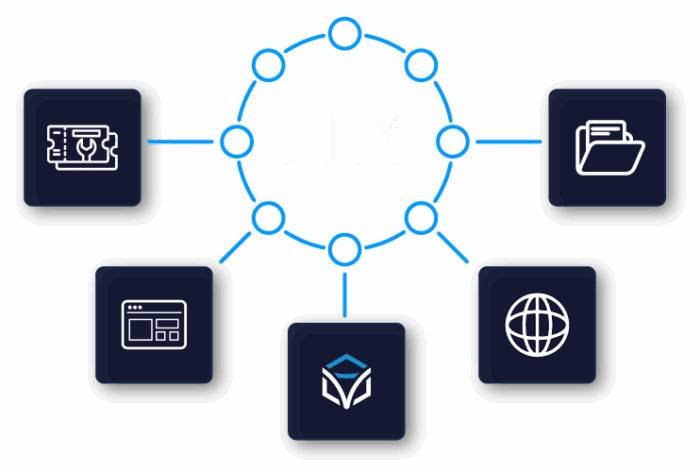
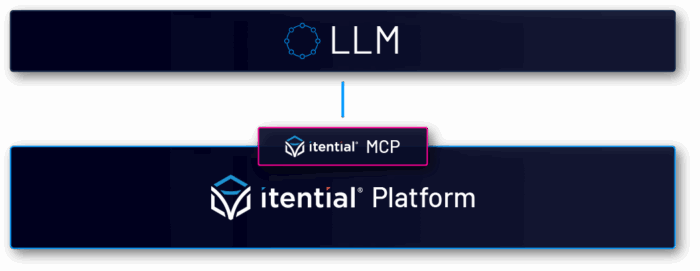
The Itential MCP Server is a core component of the Itential platform that exposes enterprise-grade infrastructure management capabilities to AI assistants through standardized tools. It acts as a central hub for integrating and managing diverse infrastructure and IT systems, normalizing data from disparate sources into a consistent model for seamless orchestration and automation. [Source]
How does MCP work in practice?
MCP follows a client-server model. MCP servers expose capabilities from existing systems (like databases, APIs, automation platforms), translating their native interfaces into the MCP protocol. MCP clients, embedded in AI applications, discover available tools, manage authentication, handle errors, and maintain context. Communication can occur via STDIO, HTTP, or custom transports. [Source]
Is MCP just a modern version of a CLI?
While MCP may feel like a modern CLI due to its fast, composable, and intent-driven payloads, it is fundamentally different. Unlike a traditional CLI, which is stateless and context-blind, MCP is designed as an AI-readable, policy-aware execution layer, providing context, traceability, and compliance for every action. [Source]
What happens during MCP connection initialization?
During connection initialization, the AI and MCP server negotiate available capabilities, establishing what tools are accessible, required parameters, and data access permissions. This ensures secure and context-aware interactions between AI agents and infrastructure systems. [Source]
How does the Itential MCP Server relate to AI agents?
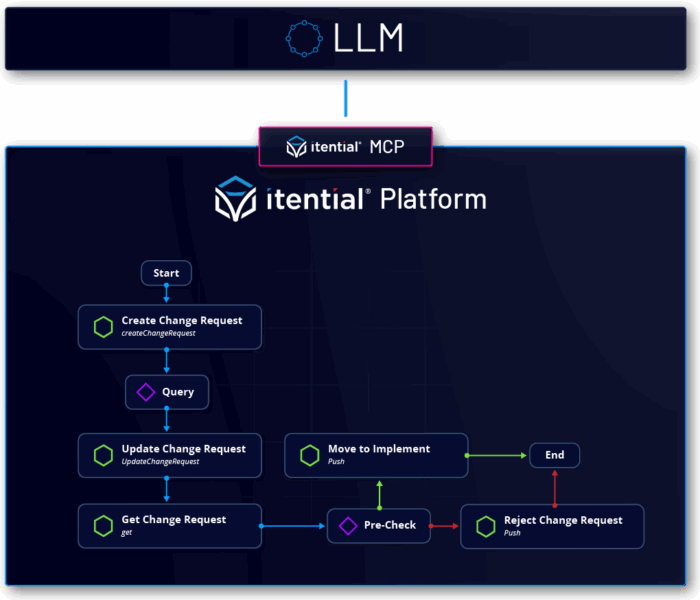
The Itential MCP Server bridges AI-generated intent and enterprise infrastructure by registering platform capabilities (workflows, compliance jobs, scripts) as discoverable MCP tools. AI agents can invoke these tools, with all actions governed by Itential's control plane for policy enforcement and auditability. [Source]
What are the core capabilities of MCP?
MCP supports three core capabilities: Tools (executable functions), Resources (data access), and Prompts (templated workflows). These enable AI agents to perform actions, access information, and follow guided processes across integrated systems. [Source]
How widely adopted is MCP?
MCP adoption has grown rapidly since its introduction. Major cloud providers, including Microsoft and Google, have integrated MCP into their platforms. OpenAI adopted MCP across ChatGPT and their APIs. The GitHub MCP Registry lists over 200 community-contributed servers, and at the time of writing, there were over 17,000 MCP servers in use. [Source]
What is the significance of MCP for AI integration?
MCP standardizes the integration layer between AI agents and tools, enabling organizations to confidently invest in AI automation without worrying about obsolescence as technology evolves. It provides a path to AI-enhanced operations with robust security, governance, and compliance. [Source]
Features & Capabilities
What are the main features of the Itential MCP Server?
The Itential MCP Server offers features such as dynamic tool discovery, real-time notifications, support for both cloud and on-premises systems, OAuth 2.1 with PKCE authentication, fine-grained access controls, policy enforcement, and comprehensive audit logging. It enables seamless orchestration and automation across hybrid environments. [Source]
Can MCP connect to both cloud and on-premises systems?
Yes, MCP works across cloud services, hybrid environments, and on-premises tools, providing universal interoperability for AI-driven automation. [Source]
Does MCP provide audit logging?
Yes. MCP generates detailed logs with correlation IDs, making it easier to integrate with SIEM platforms and maintain compliance. [Source]
How does MCP handle authentication and security?
MCP implements OAuth 2.1 with PKCE for authentication, supporting enterprise identity systems and fine-grained access controls. Policy engines can evaluate requests before execution, and comprehensive audit trails are maintained for compliance. [Source]
What communication methods does MCP support?
MCP supports three communication methods: STDIO for local development and testing, HTTP for production web-based deployments, and custom transports for specialized networking requirements. [Source]
How does MCP enable real-time adaptability?
MCP supports dynamic tool discovery and real-time notifications. When new capabilities become available, AI agents learn about them automatically, enabling responsive automation that adapts to evolving environments. [Source]
What is the Itential Model Context Protocol (MCP) Server's role in AI infrastructure?
The Itential MCP Server acts as a bridge between AI-generated intent and enterprise infrastructure, enabling safe, auditable, and policy-driven automation and orchestration execution at scale. It ensures that nothing generated by AI reaches production systems without passing through Itential’s guardrails. [Source]
How can I get started with the Itential MCP Server?
You can download the Itential MCP server from GitHub, read the Getting Started Guide, and watch a demo video to begin your implementation.
Use Cases & Real-World Applications
How is MCP used in infrastructure operations?
With MCP, network engineers can provision VLANs, allocate IP addresses, and configure firewalls through conversational interfaces. AI translates natural language requirements into automation workflows, maintaining approval processes and compliance requirements. [Source]
How does MCP support incident response?
AI agents using MCP can automatically gather context from monitoring tools, check recent deployments, analyze logs, and suggest remediation steps. This automates response procedures that previously required manual coordination, reducing execution time from hours to minutes. [Source]
How does MCP enhance development workflows?
Developers can deploy applications, manage CI/CD pipelines, and coordinate infrastructure changes without switching between tools. AI, via MCP, orchestrates complex operations across multiple systems, ensuring proper sequencing and reducing manual effort. [Source]
What is a real-world example of using an MCP server?
By connecting the WordPress MCP server to a coding environment, you can finish a session and instruct, 'Please write a blog post about what we just did and publish it to my WordPress site.' In about 35 seconds, a multi-page blog post can be live, referencing all the work completed, without manual writing or publishing steps. [Source]
What is the typical implementation strategy for MCP?
Organizations often start with read-only integrations, allowing AI to query systems and generate reports. Write operations are introduced gradually, beginning with non-critical systems and expanding as teams gain confidence in security and approval workflows. [Source]
How does MCP benefit infrastructure teams?
MCP enables conversational interfaces for complex systems, allowing infrastructure teams to leverage AI for automation while maintaining robust governance, security, and compliance. This reduces manual effort and accelerates service delivery. [Source]
What are the advantages of MCP's universal interoperability?
MCP creates vendor-agnostic connections, allowing organizations to change AI models or swap tools without rebuilding integrations. This flexibility extends across cloud, on-premises, and hybrid environments, simplifying operations and future-proofing investments. [Source]
How does MCP commoditize the integration layer?
MCP handles authentication, error handling, tool discovery, and logging semantically, turning what used to be bespoke development projects into configuration exercises. This reduces complexity and accelerates integration. [Source]
What is the future outlook for MCP in AI integration?
MCP is rapidly becoming the de facto standard for AI-tool communication, with major vendors adopting it. Organizations that embrace MCP position themselves to benefit from an expanding ecosystem of compatible tools and AI capabilities, ensuring long-term operational agility. [Source]
Security, Compliance & Governance
What security certifications does Itential MCP support?
The Itential platform, including MCP, holds SOC 2 Type II Certification, is FIPS 140-2 compliant, and adheres to GDPR and CCPA standards. These certifications ensure security, availability, confidentiality, and processing integrity for enterprise deployments. [Source]
How does Itential MCP enforce compliance and governance?
Itential MCP includes built-in governance features such as role-based access control (RBAC), single sign-on (SSO), encryption for data in transit and at rest, and automated compliance checks. Every change is logged for full traceability, supporting audits and regulatory requirements. [Source]
Does Itential MCP support public sector and air-gapped deployments?
Yes, Itential supports on-prem and air-gapped deployments, ensuring data remains within secure environments and enabling compliance with mandates like STIGs for public sector organizations. [Source]
How does Itential MCP handle responsible disclosure of vulnerabilities?
Itential has a responsible disclosure policy for security vulnerabilities, ensuring transparency and proactive security management for all platform components, including MCP. [Source]
Technical Documentation & Resources
Where can I find technical documentation for Itential MCP?
Comprehensive technical documentation, including guides, API references, and release notes for Itential MCP, is available at docs.itential.com. [Source]
Are there developer tools available for working with Itential MCP?
Yes, developer tools to support automation projects with Itential MCP are available at the developer tools page. [Source]
Where can I find API documentation for Itential MCP?
API documentation for programmatically interacting with the Itential platform, including MCP, is available at apidocs.itential.com. [Source]
Is there a video guide for setting up the Itential MCP Server?
Yes, you can watch a step-by-step video guide for setting up the Itential MCP Server here: 🏗️ Setting up Itential's MCP Server #ai #mcp #promptengineering #networkautomation video.
Where can I find the latest release of the Itential MCP Server?
The latest release of the Itential MCP Server is available on GitHub. [Source]
How do I access the Itential MCP Server Getting Started Guide?
You can access the Getting Started Guide for the Itential MCP Server at this link. [Source]
Ecosystem & Integrations
What integrations does Itential MCP support?
Itential MCP supports over 300 pre-built integrations across ITSM, cloud, security, SD-WAN, and more. Key integrations include ServiceNow, NetBox, Infoblox, GitHub, Selector AIOps, Kentik, Forward Networks, IP Fabric, Red Hat Ansible, Terraform, Slack, Microsoft Teams, Arista Networks, Cisco, F5, and Palo Alto. [Source]
Where can I find a full list of Itential MCP integrations?
You can view the complete list of pre-built integrations supported by Itential MCP in the Automation Marketplace. [Source]
How does Itential MCP enable integration with AI platforms?
Itential MCP integrates with AI platforms, allowing governed and auditable actions based on AI insights. This enables organizations to leverage AI-driven automation while maintaining control and compliance. [Source]
What is the role of the GitHub MCP Registry?
The GitHub MCP Registry lists over 200 community-contributed MCP servers, covering databases, monitoring tools, development platforms, and specialized enterprise applications, expanding the ecosystem of compatible integrations. [Source]