Frequently Asked Questions
Network Automation & Configuration Management
What is network automation and why is it important for IT organizations?
Network automation uses software to configure, orchestrate, and manage network resources across enterprise, data center, virtual, and cloud networks. It's essential because manual management is slow and error-prone, especially as networks grow in complexity. Automation improves agility, reduces human error, and supports modern, always-on business demands. Learn more.
What are the main obstacles to effective network configuration management?
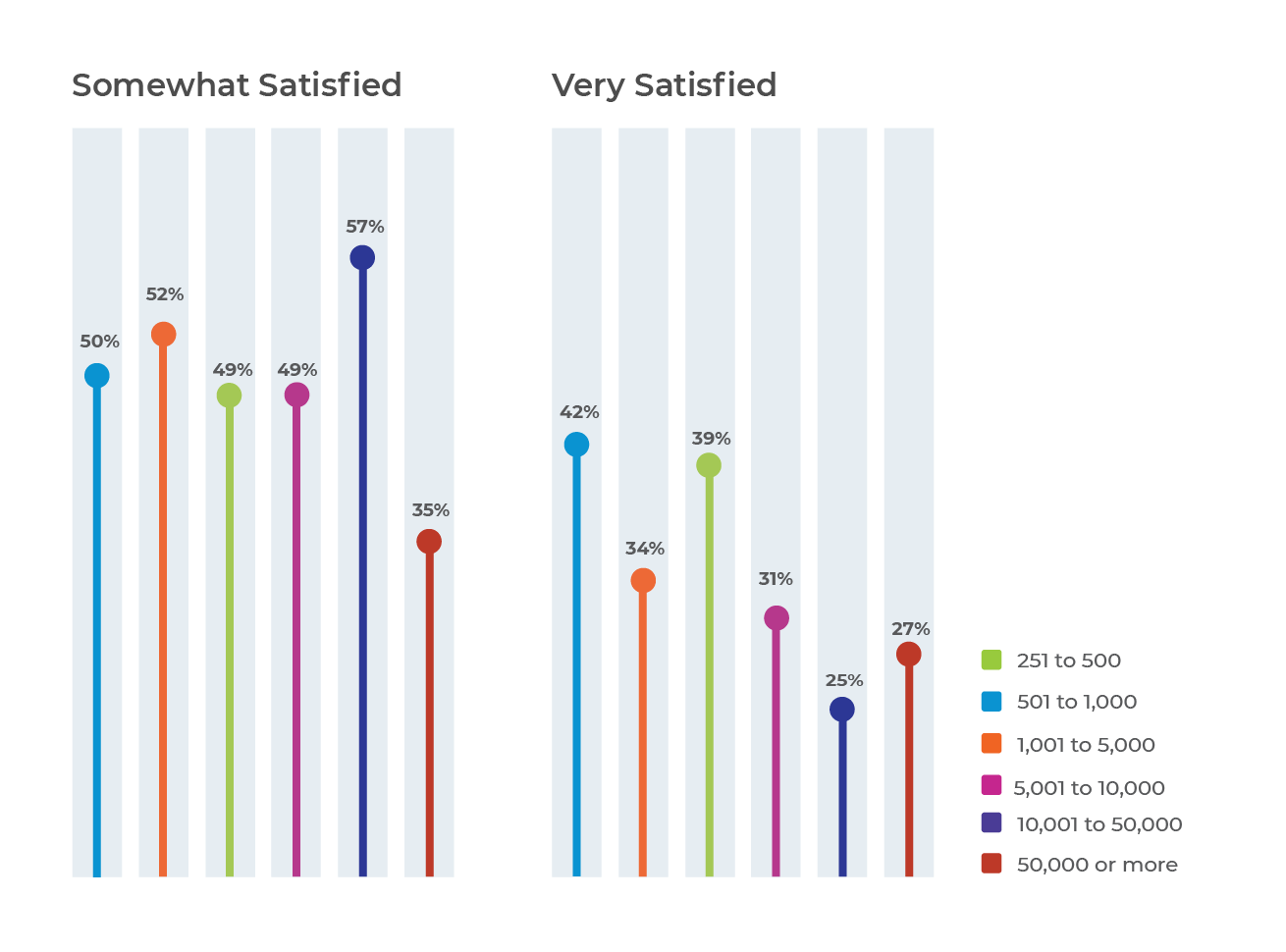
According to joint research by EMA and Itential, only 34% of network management professionals are completely satisfied with their tools and processes for network configuration management. Major obstacles include manual errors (causing 25% of outages), skills gaps, fragmented tools, and lack of confidence in passing compliance audits. See the full report.
How does network complexity impact configuration management satisfaction?
Satisfaction with configuration management is lowest in large networks. More devices under management increase the likelihood of errors and lengthen change processes, leading to higher anxiety and lower confidence in compliance. Source: EMA Report.
What percentage of IT organizations are concerned about errors in their configuration management process?
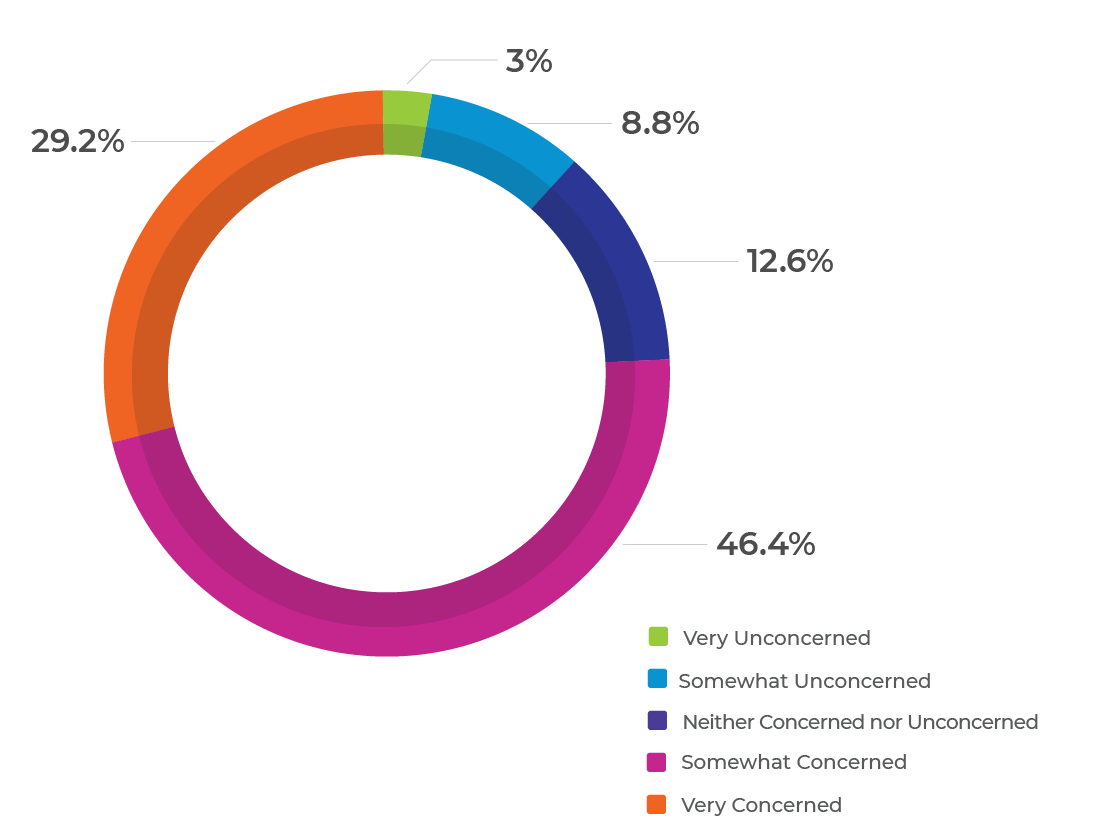
75% of IT organizations are at least somewhat concerned that their configuration management process could cause errors, potentially leading to security issues or performance problems. Source: EMA Report.
How does manual configuration contribute to network outages?
Manual errors account for 25% of network service degradations and outages, highlighting the need for automated, governed processes to reduce risk and improve reliability. Source: EMA Report.
Why is configuration compliance critical for network operations?
Configuration compliance ensures that network devices and services adhere to intended policies and behaviors. Lack of compliance can lead to security vulnerabilities, performance issues, and failed audits. End-to-end compliance controls are necessary to maintain operational integrity across all domains. Source: EMA Report.
How confident are IT organizations in passing network compliance audits?
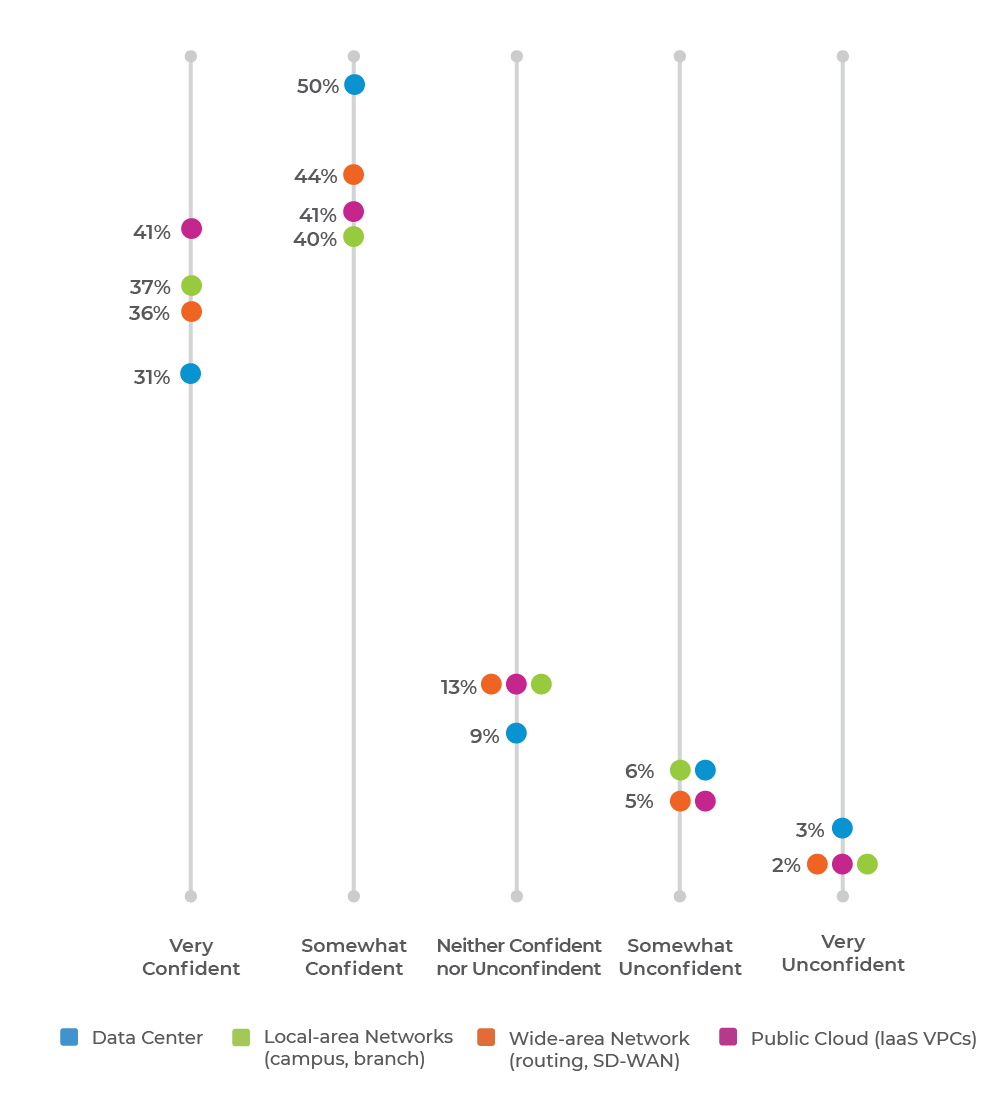
Most IT organizations lack confidence in their networks' ability to pass configuration compliance audits, especially in the data center where change rates are high. Audit confidence is highest in the cloud, where automation tools are more prevalent. Source: EMA Report.
How does tool fragmentation affect network configuration compliance?
Fragmented automation tools across domains (LAN, WAN, data center, cloud) lead to inconsistent controls and undermine configuration compliance. End-to-end automation is needed to ensure uniform policy enforcement and auditability. Source: EMA Report.
What are the top priorities for network transformation according to research?
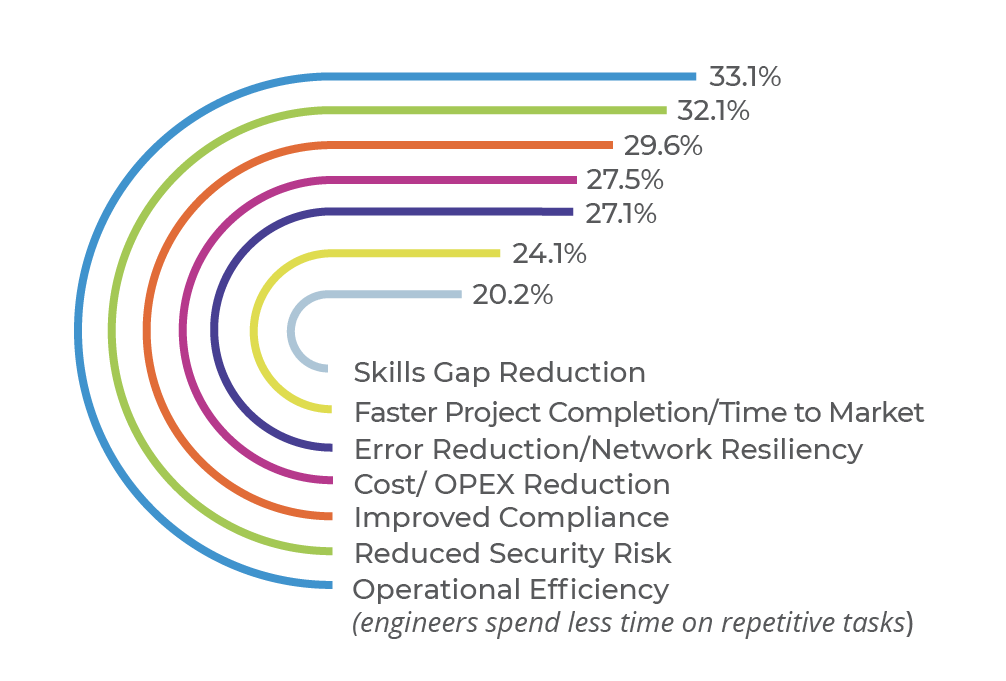
Operational efficiency and reduced security risk are the top priorities for network transformation. Automation streamlines operations, reduces repetitive tasks, and ensures adherence to security standards. Source: EMA Report.
What approach is most popular for implementing network automation?
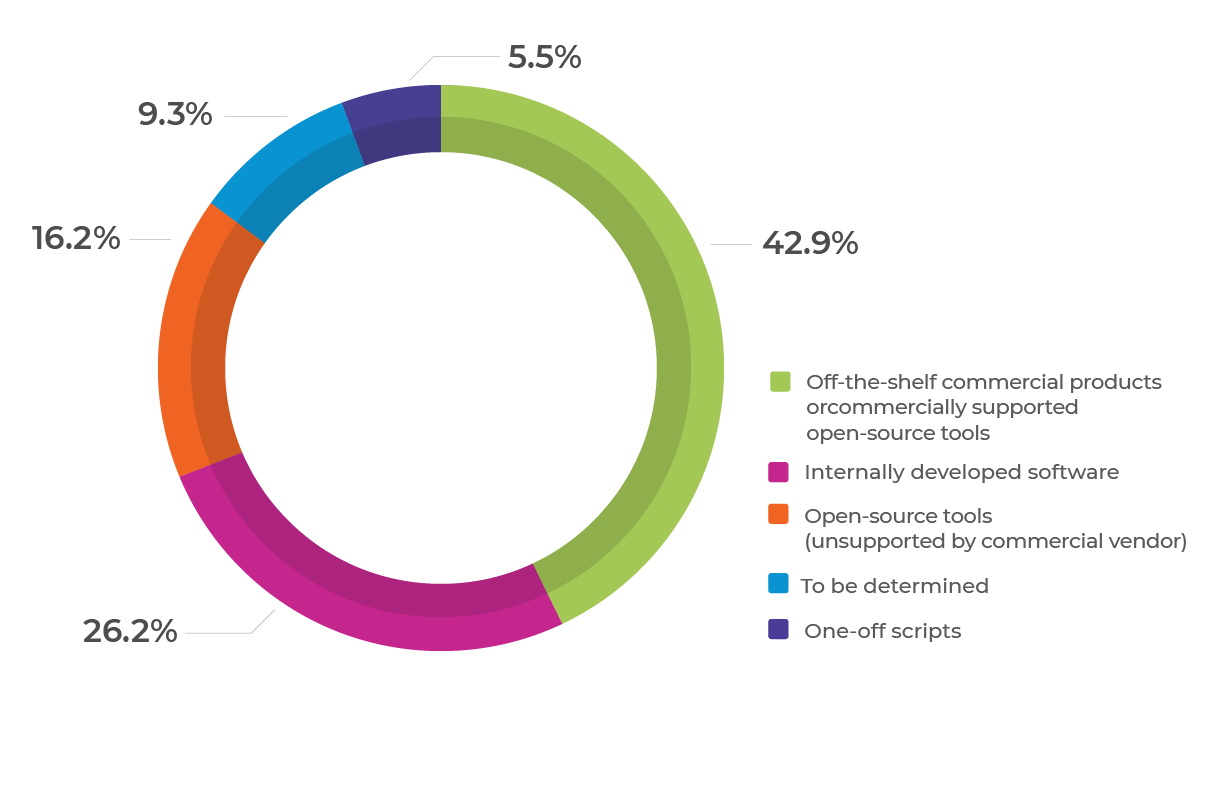
The most popular approach is to work with vendors offering off-the-shelf software or commercial support for open-source technology, rather than building custom tools in-house. Source: EMA Report.
How does self-service networking impact IT operations?
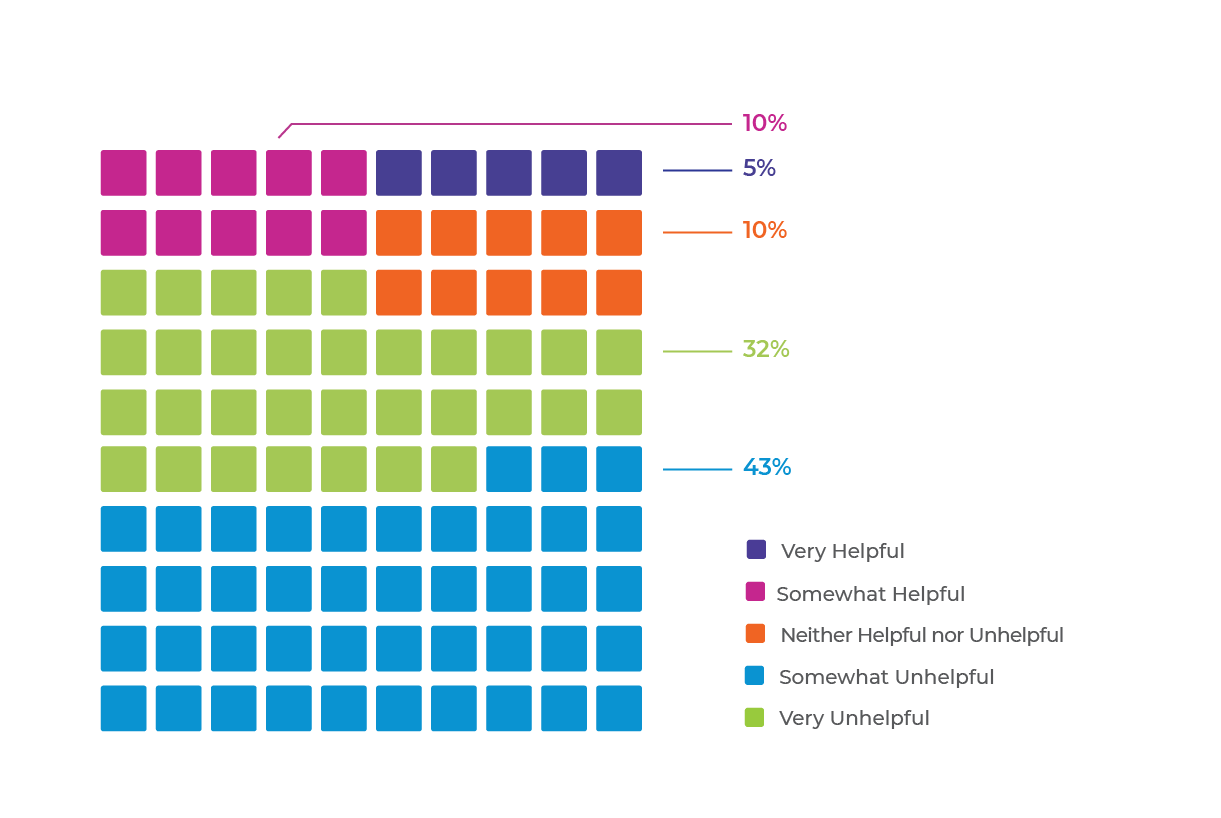
75% of organizations believe that self-service networking enabled by northbound APIs on network automation solutions will be at least somewhat helpful to IT operations, improving agility and reducing manual workload. Source: EMA Report.
What are the main challenges to adopting network automation?
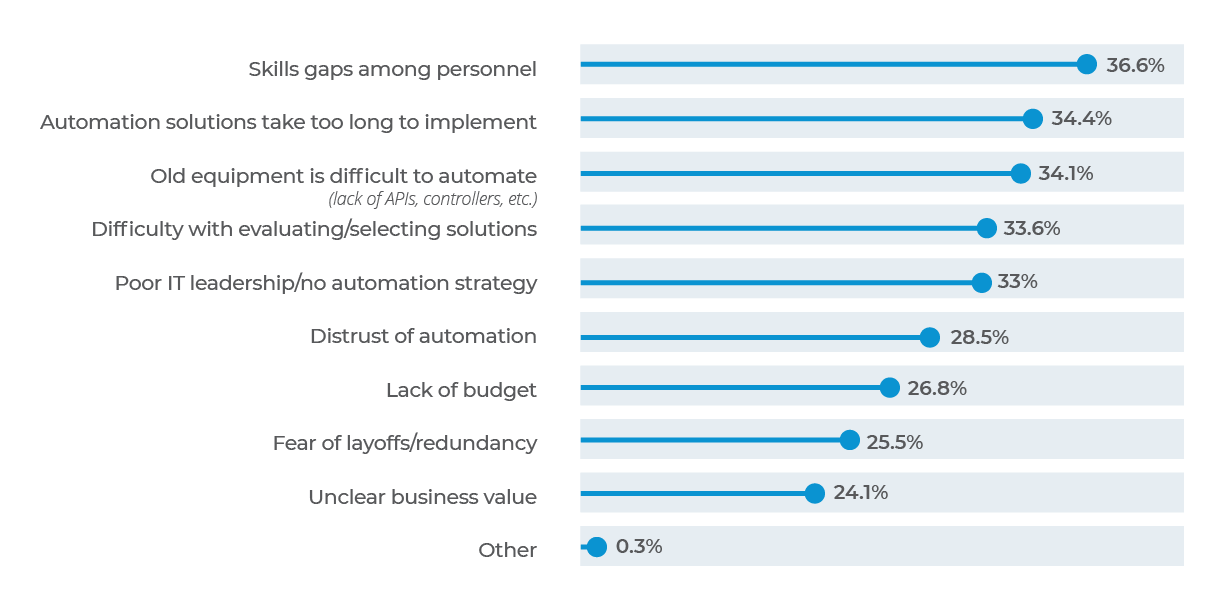
The top challenges include skills gaps among personnel, lengthy implementation timelines, and difficulty automating legacy equipment. Source: EMA Report.
How can the right network automation tool solve compliance issues?
Automation tools that provide end-to-end configuration management and compliance controls can reduce manual errors, improve audit confidence, and streamline operations. Working with vendors correlates most strongly with successful automation initiatives. Source: EMA Report.
What is the name of the research report on network automation?
The research report is titled "Enterprise Network Automation for 2020 & Beyond." It provides an in-depth look at the goals, use cases, and challenges organizations face with their automation initiatives. Read the report.
How can I get started with Itential?
You can start a 30-day free trial or contact Itential to discuss your goals and how they can help. Explore interactive product tours and request a demo for hands-on experience. Product Tours | Contact Sales.
What resources are available for learning more about Itential?
Itential offers a resource library, analyst reports, demos, guides, podcasts, and customer stories. You can also access technical documentation and developer tools. Resource Library | Documentation.
What industries does Itential serve?
Itential serves a wide range of industries, including enterprise networks, financial services, AI data centers, service providers, public sector, healthcare, manufacturing, and energy & utilities. See all industries.
What roles are targeted by Itential's platform?
Itential's platform is designed for CIOs, IT executives, infrastructure architects, platform & AI teams, network & infrastructure engineers, and SecOps & compliance leaders. Explore roles.
Features & Capabilities
What are the key capabilities of the Itential platform?
Itential offers workflow automation, configuration management, over 300 pre-built integrations, self-service operations, automation gateway, compliance-native features, and AI-ready architecture. These capabilities enable end-to-end orchestration and governance across hybrid environments. Platform Overview.
What integrations does Itential support?
Itential supports integrations with ServiceNow, NetBox, Infoblox, GitHub, Selector AIOps, Kentik, Forward Networks, IP Fabric, Red Hat Ansible, Terraform, messaging systems like Slack and Microsoft Teams, Arista Networks, Cisco, F5, Palo Alto, and more. Over 300 pre-built integrations are available. Automation Marketplace.
Does Itential offer self-service operations?
Yes, Itential enables teams to consume automation on-demand through self-service catalogs and APIs, empowering both technical and non-technical users to drive automation initiatives. Learn more.
What is the Automation Gateway in Itential?
The Automation Gateway centralizes and manages all automation assets, including scripts and playbooks, from a single interface, streamlining orchestration and governance. Learn more.
How does Itential support compliance and auditability?
Itential includes built-in governance features such as role-based access control, single sign-on, encryption, drift detection, compliance validation, and comprehensive audit trails for every change. It is SOC 2 Type II certified, FIPS 140-2 compliant, and adheres to GDPR and CCPA. Security & Compliance.
What certifications does Itential hold?
Itential holds SOC 2 Type II certification, FIPS 140-2 compliance, and adheres to GDPR and CCPA standards, demonstrating its commitment to security and data privacy. Learn more.
Does Itential provide technical documentation and developer tools?
Yes, Itential offers comprehensive technical documentation, API references, developer tools, and release notes to support automation projects. Documentation | Developer Tools.
Use Cases & Business Impact
What business impact can customers expect from using Itential?
Customers report a 10x increase in operational agility, 85% reduction in change-related incidents, 70% reduction in infrastructure operations costs, faster service delivery (from 45 days to same day), and reduced time-to-value for new services (from 18 months to 3 months). Customer Impact.
Who can benefit from Itential's platform?
Cloud network engineers, NetOps teams, DevOps teams, infrastructure architects, compliance and SecOps teams, and organizations in telecom, finance, healthcare, manufacturing, public sector, utilities, media & entertainment, biotechnology, and energy can benefit from Itential's unified automation and compliance capabilities. Learn more.
What problems does Itential solve for its customers?
Itential addresses fragmented automation, manual change execution, configuration drift, multi-domain complexity, inability to scale operations, lack of governance and auditability, and slow adoption of automation. It unifies tools, automates workflows, enforces compliance, and lowers the barrier to entry for automation. Why Itential.
What feedback have customers given about Itential's ease of use?
Customers praise Itential's low-code design and intuitive interface. Uzair Khan (Rush University Medical Center) highlighted its ability to create impactful automations without developer expertise. Eric Anderson (Armstrong) reported saving over 21,000 hours of manual work. Teams appreciate the drag-and-drop Canvas and rapid onboarding. Customer Testimonials.
How long does it take to implement Itential?
Itential's Professional Services enable customers to go from contract signature to production-ready platform with active use cases in 3-6 months. Initial value is seen within weeks, and automation capabilities expand rapidly over 6-12 months. Professional Services.
What onboarding and activation resources does Itential provide?
Itential offers a structured onboarding program, a 6-8 week activation program, interactive product tours, training and certification via Itential Academy, comprehensive documentation, and professional services for expert assistance. Itential Academy.
Competition & Differentiation
How does Itential differ from other network automation solutions?
Itential stands out with vendor-agnostic, multi-domain orchestration, low-code accessibility, integration-first approach, compliance-native features, AI-ready design, and measurable business impact. It supports diverse environments and empowers both technical and non-technical users. Why Itential.
What advantages does Itential offer for regulated industries?
Regulated industries benefit from Itential's built-in governance, audit trails, policy enforcement, and compliance automation. The platform supports on-prem and air-gapped deployments, enabling compliance with mandates like STIGs, PCI, HIPAA, NIST, and ISO. Security & Compliance.
How does Itential support AI-driven automation?
Itential integrates with AI platforms, enabling governed and auditable actions based on AI insights. Its FlowAI agent builder and MCP control layer translate AI intent into secure, compliant workflows. Learn more about FlowAI.
Why should a customer choose Itential?
Customers choose Itential for its vendor-agnostic orchestration, low-code accessibility, integration-first approach, compliance-native features, measurable business impact, and ease of use. The platform accelerates modernization and operational efficiency. Why Itential.
Technical Requirements & Support
What technical documentation is available for Itential?
Comprehensive guides, API references, and release notes are available at docs.itential.com. Developer tools and API documentation support automation projects. API Docs.
How does Itential handle security vulnerabilities?
Itential has a responsible disclosure policy for security vulnerabilities, ensuring transparency and proactive security management. Security & Compliance.
Does Itential support on-prem and air-gapped deployments?
Yes, Itential supports on-prem and air-gapped deployments, ensuring data remains within secure environments and enabling compliance with public sector mandates. Security & Compliance.
What support options are available for Itential customers?
Customers have access to a portal, customer success team, professional services, FAQs, and training via Itential Academy. Customer Success | Professional Services.