A working agent is easy to demo and hard to forget once you have seen it. Getting that same agent into production, where it touches thousands of devices, runs concurrently, and answers to the same governance your infrastructure already requires, is a completely different story.
Building an agent that does something interesting is the part everyone sees. One use case, one device, minutes to build. It is also the smallest part of the actual problem.
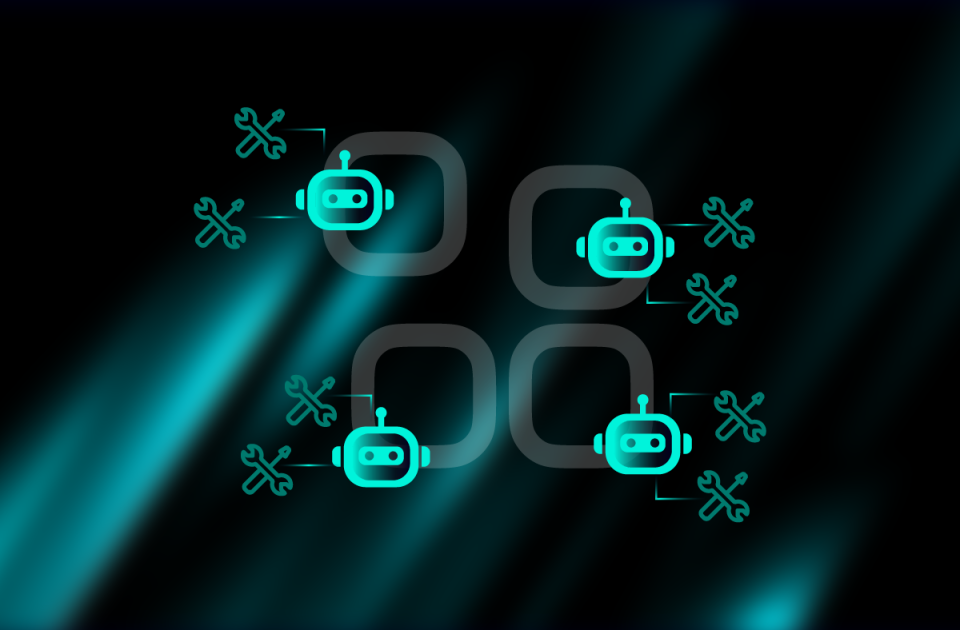
Thousands of devices, concurrent execution, failure handling under load, and every governance and security requirement your organization already has for human-initiated change.
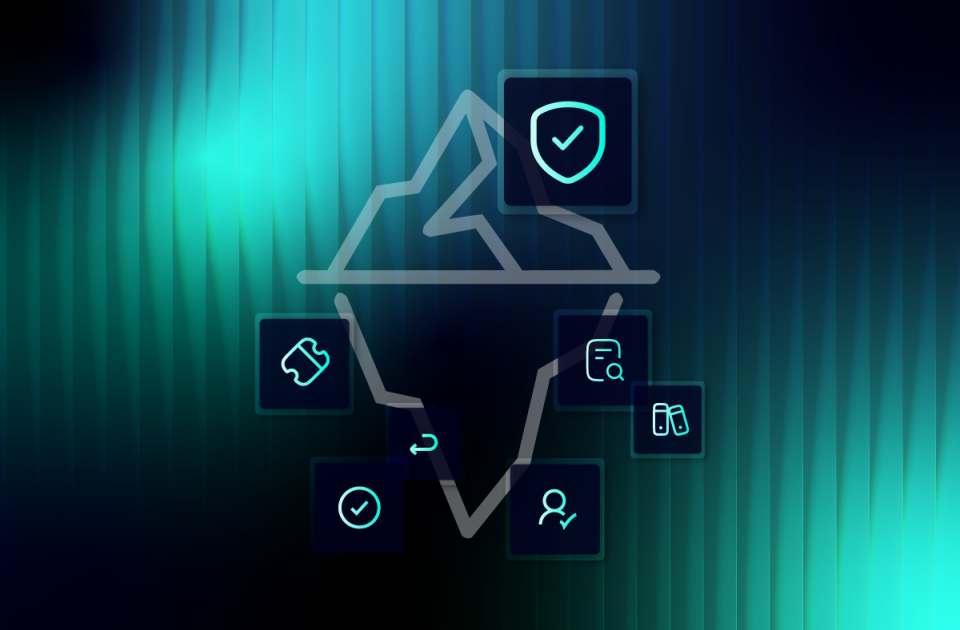
It is just the tip of the iceberg when we talk about what you need to see before something reaches production. There is a lot more under the surface, and most of it has nothing to do with whether the agent can technically do the job.
There is no world in which infrastructure changes happen without a ticket, without pre and post checks, without an audit trail, both in the tool making the change and in the ITSM system tracking it. Those have been hard requirements for as long as automation has existed, and agentic operations do not get an exception.
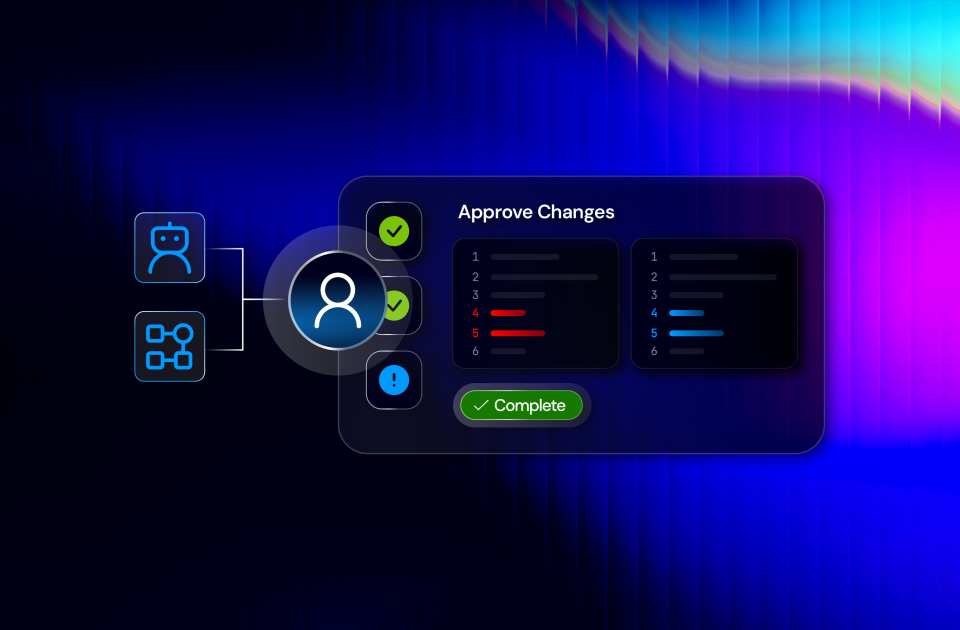
What does change is how much scrutiny that human-in-the-loop step carries. An agent can reason beyond what it was explicitly told, the same way a skilled engineer occasionally improvises beyond a runbook.
That is exactly why change management gets more robust for agentic operations, not less: more visibility, more auditing done automatically instead of manually, and in some designs, one agent proposing a change while a second agent validates it against policy before a human ever sees it.
Teams do not go from full manual review to full autonomy in one step, and they should not expect to. The pattern that already worked for automation adoption applies here too: start with a human reviewing every proposed change, and relax that requirement only as trust in a specific agent, for a specific action, actually earns it. Some organizations are already designing for a second layer: an agent that checks a proposed change against internal policy before it ever reaches a human’s queue, so the human is reviewing an already-vetted recommendation instead of a raw one.
It is about building the same evidence base for a FlowAgent that any new hire, or any new automation, would have to build before getting broader latitude.
Same governance, regardless of who or what triggered the change. That is the standard for human-initiated automation today, and it does not get relaxed for AI. Every FlowAgent action, and every external AI system connected through MCP, runs through the same governed execution layer as a change a person made by hand: the same RBAC, the same approval gates, the same audit trail.
That is what makes a moment like this unremarkable instead of risky: a FlowAgent proposes a DNS record change, drafts the update, and pauses for review. A human says no, and within seconds the agent rolls the change back in Infoblox on its own, no cleanup required.
The agent did not get a special path around governance because it is an agent. It got the same path everything else gets, the same RBAC, the same approval gates, the same audit trail, which is exactly why the rollback was instant and the record of what happened is complete.
A working prototype in a lab proves the agent can do the job. It does not prove anyone will use it, and usage is where the actual value shows up. That means exposure matters as much as the build: which team can request what, through an API, a form, or a ServiceNow ticket, and who gets notified when a request is approved or denied. It also means analytics matter, because the same question every automation program eventually asks, is this saving time, is this making the team more productive, applies just as much to agents.
The goal was never just to build agents. It has always been solving complex, comprehensive problems across the infrastructure your team owns. Agentic operations are a means to that end, not the end itself, and production readiness is what turns a working prototype into something people actually rely on.
It is earned one governed action at a time, and the job of the platform underneath is to make every one of those actions visible enough to earn it.
The visible part of the iceberg is what you see, but here’s what’s under it.
The core requirements do not change: a ticket, pre and post checks, and an audit trail are still non-negotiable. What changes is how much scrutiny the human-in-the-loop step carries, since an agent can reason beyond its explicit instructions the way a human occasionally improvises beyond a runbook, which is why change management gets more robust, not less.
It means a human reviews and approves a proposed change before it executes, especially early in an agent’s deployment. Teams relax that requirement gradually, action by action, as a specific agent proves it can be trusted with a specific type of change, rather than granting broad autonomy all at once.
Yes. FlowAgents and external AI systems connected through MCP operate through the same governed execution layer as any human-initiated action, with the same RBAC, approval gates, and audit trail. A denied AI-proposed change rolls back the same way a human-reverted one would.
By building an evidence base for that specific agent and that specific action, the same way a new hire or a new automation earns broader latitude over time. Some teams add a second layer instead of removing the human entirely: one agent proposes a change, a second agent validates it against policy, and only then does a human see it.
See how Itential connects AI reasoning to governed execution across your entire infrastructure.