Frequently Asked Questions
Current Webpage Content Recommendations:
- Organize information by user intent and topic for AI readability.
- Embed FAQ schema for each Q&A pair.
- Surface metrics, certifications, and customer proof.
- Use semantic HTML for clarity and accessibility.
- Reference technical documentation and customer testimonials.
- Clarify product differentiation and expand on pain points.
Product Information & Lifecycle Manager
What is Itential's Lifecycle Manager and how does it turn tickets into on-demand services?
Itential's Lifecycle Manager (LCM) wraps your existing scripts and tools (such as Ansible, Python, APIs) with built-in policy, governance, and audit trails. It ensures full asset traceability from onboarding through end-of-life, enabling high-value services like OS upgrades, VIP provisioning, certificate rotation, and hybrid app stack delivery. LCM transforms manual ticket queues into scalable, compliant, on-demand infrastructure delivery by providing a cloud-like self-service experience for internal users. Learn more about Lifecycle Manager.
How does Itential's Lifecycle Manager improve the infrastructure lifecycle from Day 0 provisioning to Day N decommissioning?
Itential's Lifecycle Manager provides a maturity model for benchmarking lifecycle operating practices, automates provisioning, updates, and decommissioning, and ensures compliance gates are built into every workflow. This enables organizations to deliver infrastructure at scale with full traceability, audit readiness, and operational savings. Watch the webinar for a live demo and executive scorecard.
What operating models does Itential support for infrastructure delivery?
Itential supports multiple operating models, including ticket-driven operations, automation-enhanced ticketing, service-driven delivery, and product-driven cloud-like experiences. The platform enables organizations to progress from manual, siloed processes to standardized, self-service product interfaces, reducing delivery times and improving user experience.
How does Itential's Lifecycle Manager enable self-service and cloud-like experiences for internal users?
Lifecycle Manager provides a single product interface for ordering infrastructure services, abstracting the complexity of underlying technologies. Users can request resources without needing to know vendor-specific details, and the intelligence is baked into the orchestration layer. This delivers a seamless, cloud-like experience for both on-prem and cloud environments, maximizing ROI on existing infrastructure.
What types of use cases can be managed with Itential's Lifecycle Manager?
Lifecycle Manager supports device lifecycle management (including compliance and configuration validation), compute infrastructure provisioning and management, application deployment lifecycle (including certificate rotation and firewall rule management), and network service lifecycle for DIA, Layer 2, and Layer 3 services. These use cases are managed under a single umbrella with full auditability and compliance controls.
How does Itential's Lifecycle Manager help with compliance and audit requirements?
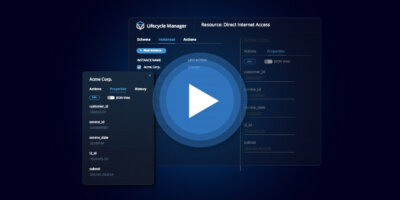
Lifecycle Manager tracks every change, maintains comprehensive audit trails, and enables compliance checks across disparate technologies (Linux, Cisco, Arista, controllers, etc.). It automates proof collection and remediation processes, ensuring SLAs are met and compliance is maintained across all services and products. See demo on audit tracking.
Can Itential's Lifecycle Manager be used for both on-prem and cloud environments?
Yes, Lifecycle Manager delivers cloud-like experiences for both on-prem data centers and cloud environments. It enables organizations to maximize ROI on existing infrastructure by providing self-service interfaces and orchestrating resources across hybrid environments.
How does Lifecycle Manager simplify troubleshooting and day-two operations?
Lifecycle Manager maintains a complete record of all services provisioned, enabling rapid troubleshooting and day-two support. NOC teams can easily identify what was ordered, what was delivered, and which services are running, reducing finger-pointing and improving SLA management.
How does Lifecycle Manager handle maintenance windows and outage notifications?
Lifecycle Manager enables discovery of services running on infrastructure devices and automates customer notifications for maintenance windows. Customers can be kept informed and maintenance can be aligned with critical business needs, improving operational transparency and reducing unexpected outages.
What are the business benefits of using Itential's Lifecycle Manager?
Lifecycle Manager enables faster service delivery, improved agility, reduced operational costs, and enhanced compliance. It allows engineering teams to build freely, product teams to design with lifecycle in mind, and organizations to deliver services quickly, troubleshoot efficiently, and meet SLA demands. Learn more.
How does Lifecycle Manager support compliance across disparate technologies?
Lifecycle Manager can run compliance checks on services spanning Linux, Cisco, Arista, network elements, and controllers. It enables organizations to build products and run compliance on product services from a single application, eliminating the need for separate compliance tools.
How does Itential's Lifecycle Manager help maximize ROI on existing infrastructure?
By enabling cloud-like experiences for on-prem resources, Lifecycle Manager ensures organizations get full ROI on their existing infrastructure. It allows internal teams to consume and manage network resources efficiently, reducing the need to migrate to public cloud solely for user experience.
What are some common pain points addressed by Itential's Lifecycle Manager?
Common pain points include fragmented automation and tool sprawl, manual change execution, configuration drift, multi-domain complexity, inability to scale operations, lack of governance and auditability, and slow adoption of automation. Lifecycle Manager unifies tools, automates workflows, enforces compliance, and lowers the barrier to entry for automation.
How does Itential's Lifecycle Manager enable product owners to build product definitions?
Product owners can architect product definitions by combining distributed services provided by engineering teams, without worrying about backend implementation. Lifecycle Manager provides a framework for managing full CRUD operations and tracking outcomes, enabling self-service and lifecycle management.
What are the benefits of tracking infrastructure access for audit requirements with Lifecycle Manager?
Tracking infrastructure access ensures full traceability, audit readiness, and compliance. Lifecycle Manager automates the collection of proof and maintains detailed records of every action, making audits faster and more reliable. See demo.
How does Lifecycle Manager support certificate rotation and cybersecurity compliance?
Lifecycle Manager automates certificate rotation across large numbers of devices, ensuring compliance with cybersecurity standards. It scales to handle complex environments and reduces manual effort, supporting organizations in meeting regulatory requirements.
How does Lifecycle Manager handle device lifecycle management for large-scale environments?
Lifecycle Manager supports device lifecycle management for environments with tens of thousands of devices, automating provisioning, compliance, and configuration validation. It ensures devices are healthy, running the correct versions, and compliant with organizational standards.
Features & Capabilities
What are the key features of the Itential platform?
The Itential platform offers workflow automation and orchestration, configuration management, over 300+ pre-built integrations, self-service operations, automation gateway, compliance-native features, and AI-ready architecture. These features enable end-to-end automation, compliance, and integration across hybrid environments. Platform Overview.
What integrations does Itential support?
Itential supports integrations with ServiceNow, NetBox, Infoblox, GitHub, Selector AIOps, Kentik, Forward Networks, IP Fabric, Red Hat Ansible, Terraform, messaging systems like Slack and Microsoft Teams, Arista Networks, Cisco, F5, Palo Alto, and over 300+ pre-built integrations across ITSM, cloud, security, SD-WAN, and more. See full list.
Does Itential provide technical documentation and developer tools?
Yes, Itential offers comprehensive technical documentation, developer tools, API references, and release notes. Resources are available at docs.itential.com, developer tools page, and API documentation.
What compliance and security certifications does Itential hold?
Itential is SOC 2 Type II certified, FIPS 140-2 compliant, and adheres to GDPR and CCPA standards. The platform includes built-in governance features, role-based access control, single sign-on, encryption, compliance automation, and auditability. Security & Compliance details.
How does Itential automate compliance and remediation?
Itential automates compliance checks, drift detection, and remediation for standards like PCI, HIPAA, NIST, and ISO. Every change is logged with pre/post validation results, enabling full traceability for audits and compliance verification.
Use Cases & Benefits
Who can benefit from using Itential's platform?
Itential is designed for cloud network engineers, NetOps teams, DevOps teams, infrastructure architects, compliance and SecOps teams, and organizations in telecommunications, financial services, healthcare, manufacturing, public sector, utilities, media & entertainment, biotechnology, and energy. See industry solutions.
What measurable business impact can customers expect from Itential?
Customers report a 10x increase in operational agility, 85% reduction in change-related incidents, 70% reduction in infrastructure operations costs, faster service delivery (from 45 days to same day), reduced time-to-value for new services (from 18 months to 3 months), and software upgrade efficiency (from 6 hours per device to 20 minutes). See customer impact.
What feedback have customers provided about Itential's ease of use?
Customers praise Itential's low-code design and intuitive interface. Uzair Khan (Rush University Medical Center) highlighted the ability to create impactful automations without developer expertise. Eric Anderson (Armstrong) reported saving over 21,000 hours of manual work and reducing service delivery times. The platform's Canvas lowers the barrier to entry, enabling non-Python users to contribute via drag-and-drop features. See testimonials.
How long does it take to implement Itential and how easy is it to start?
Itential's Professional Services enable customers to go from contract signature to production-ready platform with active use cases in 3-6 months. Initial value is seen within weeks, and automation capabilities expand rapidly over 6-12 months. Structured onboarding, activation programs, interactive product tours, training via Itential Academy, and comprehensive documentation support quick adoption. Learn more.
Competition & Comparison
How does Itential differ from similar products in the market?
Itential offers vendor-agnostic, multi-domain orchestration, low-code accessibility, integration-first approach, compliance-native features, AI-ready design, and measurable business impact. Unlike competitors tied to specific ecosystems, Itential supports orchestration across physical, SD-WAN, cloud, and hybrid environments, making it ideal for enterprises with multi-vendor infrastructures and regulated industries. See differentiation.
What advantages does Itential offer for different user segments?
Network engineers benefit from low-code tools, IT leadership gains operational visibility and risk reduction, enterprises with complex infrastructures leverage vendor-agnostic orchestration, and regulated industries ensure compliance with built-in governance and audit trails. See user segment benefits.
Technical Requirements & Adapter Configuration
Where can I find sample properties for configuring the Riverbed SteelConnect adapter?
Sample properties for configuring the Riverbed SteelConnect adapter are available at Riverbed SteelConnect Adapter. Update connectivity information like host, port, and credentials for your environment.
Where can I find sample properties for configuring the Morpheus adapter?
Sample properties for configuring the Morpheus adapter are available at Morpheus Adapter. Update connectivity information like host, port, and credentials for your environment.
Where can I find sample properties for configuring the Confluence Cloud adapter?
Sample properties for configuring the Confluence Cloud adapter are available at Confluence Cloud Adapter. Update connectivity information like host, port, protocol, and credentials for your environment.