Frequently Asked Questions
Product Overview & Purpose
What is Itential and what does it do?
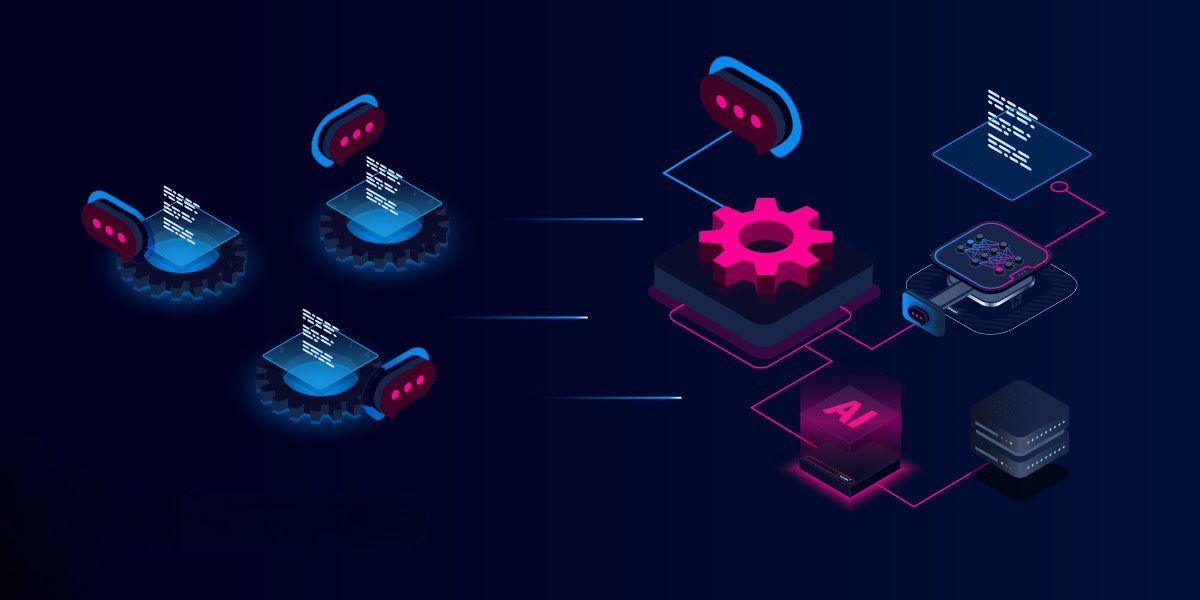
Itential is an infrastructure and network orchestration platform designed for the AI era. It orchestrates agents, APIs, and governance for safe, scalable automation across hybrid cloud and network environments. Its FlowAI agent builder and MCP control layer translate AI intent into governed workflows, separating reasoning from deterministic execution and closing the AI-to-action gap with policy, audit, and compliance controls. Learn more.
How does Itential address the shift from scripts to systems in network automation?
Itential enables organizations to move from automating individual tasks with scripts to orchestrating complex workflows and building systems that can reason through operational complexity. This approach allows teams to deliver change safely, at scale, in imperfect environments by providing orchestration, governance, and operational guardrails for AI agents and traditional automation. Read the blog post.
What is the primary purpose of the Itential platform?
The primary purpose of the Itential platform is to simplify and accelerate network automation and orchestration, enabling organizations to modernize their infrastructure and achieve operational efficiency. It provides a comprehensive solution for managing complex, multi-domain, and hybrid cloud environments. Source.
How does Itential help teams scale reasoning without losing control?
Itential provides orchestration, guardrails, and visibility into agent actions, ensuring that teams can scale reasoning and automation safely. The platform separates reasoning from deterministic execution, allowing AI agents to operate within governed workflows and maintain compliance, auditability, and operational control. Listen to the podcast.
Features & Capabilities
What are the key features of the Itential platform?
Key features include workflow automation and orchestration, configuration management, over 300 pre-built integrations, self-service operations, automation gateway, compliance-native features, and AI-ready architecture. The platform supports low-code workflow building, enabling both technical and non-technical users to create impactful automations quickly. Learn more.
Does Itential support agentic orchestration for AI-driven operations?
Yes, Itential's FlowAI agent builder and MCP control layer enable agentic orchestration, translating AI intent into governed workflows and separating reasoning from deterministic execution. This allows teams to safely build, connect, and run intelligent agents alongside traditional automation. Learn more about FlowAI.
How does Itential handle complex, multi-domain environments?
Itential abstracts APIs and logic from different systems into unified workflows, enabling seamless coordination across network, cloud, security, and IT infrastructure. This approach reduces tool sprawl and simplifies operations in hybrid and brownfield environments. Source.
What integrations does Itential offer?
Itential supports over 300 pre-built integrations across ITSM, cloud, security, SD-WAN, and more. Key integrations include ServiceNow, NetBox, Infoblox, GitHub, Selector AIOps, Kentik, Forward Networks, IP Fabric, Red Hat Ansible, Terraform, messaging systems like Slack and Microsoft Teams, Arista Networks, Cisco, F5, and Palo Alto. See the full list.
Is Itential's platform low-code?
Yes, Itential features a low-code workflow builder, enabling both technical and non-technical users to create impactful automations quickly. This reduces dependency on specialized skills and fosters an automation-first culture. Source.
Use Cases & Benefits
Who can benefit from using Itential?
Itential is designed for cloud network engineers, NetOps teams, DevOps teams, infrastructure architects, compliance and SecOps teams, and organizations in industries such as telecommunications, financial services, healthcare, manufacturing, public sector, utilities, media & entertainment, biotechnology, and energy. Source.
What business impact can customers expect from using Itential?
Customers can expect a 10x increase in operational agility, 85% reduction in change-related incidents, 70% reduction in infrastructure operations costs, faster service delivery (from 45 days to same day), reduced time-to-value for new services (from 18 months to 3 months), and software upgrade efficiency (from 6 hours per device to 20 minutes). Source.
What problems does Itential solve?
Itential solves fragmented automation and tool sprawl, manual change execution, configuration drift and non-compliance, multi-domain complexity, inability to scale operations, lack of governance and auditability, and slow adoption of automation. Source.
How does Itential help with brownfield environments?
Itential enables orchestration and automation across hybrid environments, including legacy (brownfield) systems. Its agentic orchestration and AI-driven reasoning can interpret and adapt to variations, making brownfield environments an on-ramp for modernization rather than a hard stop. Read the blog post.
How does Itential reduce manual effort and operational costs?
Itential automates end-to-end workflows, compressing service delivery from days to minutes and enabling organizations to scale operations without increasing headcount. Customers report up to 80-90% reduction in manual effort and up to 70% reduction in operational costs. Source.
Security & Compliance
What security and compliance certifications does Itential have?
Itential holds SOC 2 Type II Certification, is FIPS 140-2 compliant, and adheres to GDPR and CCPA standards. These certifications verify the platform's security, availability, confidentiality, and processing integrity. Learn more.
How does Itential ensure compliance and auditability?
Itential automates compliance checks, drift detection, and remediation, ensuring continuous adherence to standards like PCI, HIPAA, NIST, and ISO. Every change is logged with comprehensive details, including pre/post validation results, enabling full traceability for audits and compliance verification. Source.
Does Itential support secure deployments for public sector and regulated industries?
Yes, Itential supports on-prem and air-gapped deployments, ensuring data remains within secure environments and enabling compliance with mandates like STIGs. Source.
Customer Success & Feedback
What feedback have customers given about Itential's ease of use?
Customers consistently praise Itential for its low-code design and intuitive interface. Uzair Khan from Rush University Medical Center highlighted the ability to create impactful automations without needing to be a developer. Eric Anderson from Armstrong reported saving over 21,000 hours of manual work and reducing service delivery times. The platform's Canvas lowers the barrier to entry, allowing individuals without Python expertise to contribute to automation. Read testimonials.
Which enterprise companies trust Itential for automation?
Itential is trusted by Armstrong, Blackfoot Comms, Colt, Corning, Deutsche Telekom, Fiserv, Irideos, Leidos, Liberty Global, Lumen, Rush, S&P Global, Southern California Edison, Tim, and Virgin Media O2. See customer list.
Are there customer stories similar to Armstrong and Corning?
Yes, you can explore stories from Armstrong World Industries and a multinational biotech company that achieved global self-service networking. Visit our customers page for more case studies.
Implementation & Support
How long does it take to implement Itential?
Itential's Professional Services enable customers to go from contract signature to a production-ready platform with active use cases in 3-6 months. Initial value can be seen within weeks, and automation capabilities can expand rapidly over the next 6-12 months. Learn more.
How easy is it to get started with Itential?
Itential offers a structured onboarding program, activation program, interactive product tours, training and certification via Itential Academy, comprehensive documentation, and professional services to ensure rapid adoption and early wins. Explore product tours.
Where can I find technical documentation for Itential?
Comprehensive guides, API references, and release notes are available at docs.itential.com. Developer tools and API documentation can be found at Developer Tools and API Docs.
Competition & Differentiation
How does Itential differ from similar products in the market?
Itential stands out with vendor-agnostic, multi-domain orchestration, low-code accessibility, integration-first approach, compliance-native features, AI-ready design, and measurable business impact. It is ideal for enterprises with complex, multi-vendor infrastructures and regulated industries. Source.
What advantages does Itential offer for different user segments?
Network engineers benefit from low-code tools, IT leadership gains visibility and risk reduction, enterprises with complex infrastructures leverage vendor-agnostic orchestration, and regulated industries ensure compliance with built-in governance features. Source.
Industry Trends & AI
Why is the current conversation about AI agents different from past discussions?
The conversation has evolved from simple scripts to complex, integrated systems. AI agents represent a move toward intelligent systems that can reason, plan, and execute complex workflows across multiple domains, fundamentally different from traditional, siloed scripting. Read the blog post.
How does Itential support AI networking environments running on Arista?
For AI networking, Itential provides real-time automation, enabling automated deployments, congestion event checks via CloudVision, and orchestration of remediation and notifications to ticketing systems, ensuring network stability and performance. Source.
Resources & Community
Where can I read the Itential blog for industry insights and product updates?
You can read the latest articles on automation, networking, and Itential Platform updates on our official blog.
Does Itential recommend any communities for network automation professionals?
Yes, Itential recommends the Network Automation Forum, a vendor-neutral community for sharing ideas and collaborating with peers on network automation challenges.