Frequently Asked Questions
Product Information
What is the Itential MCP Server?
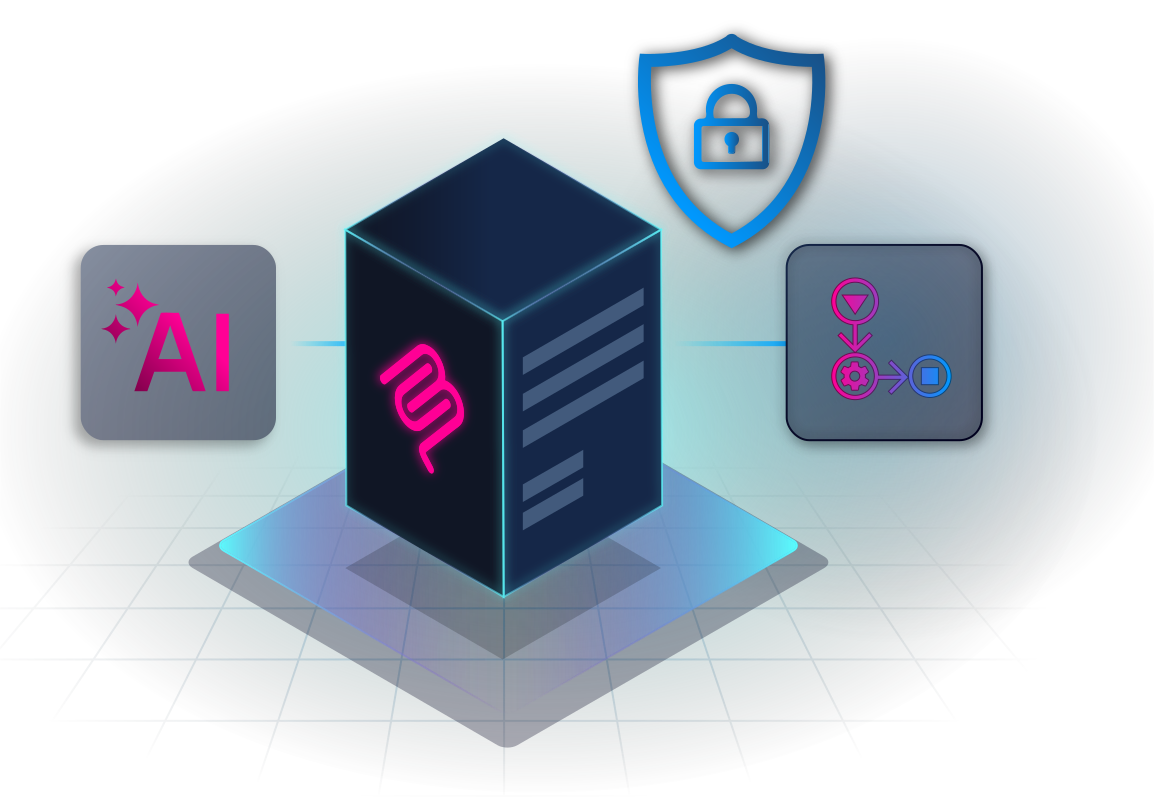
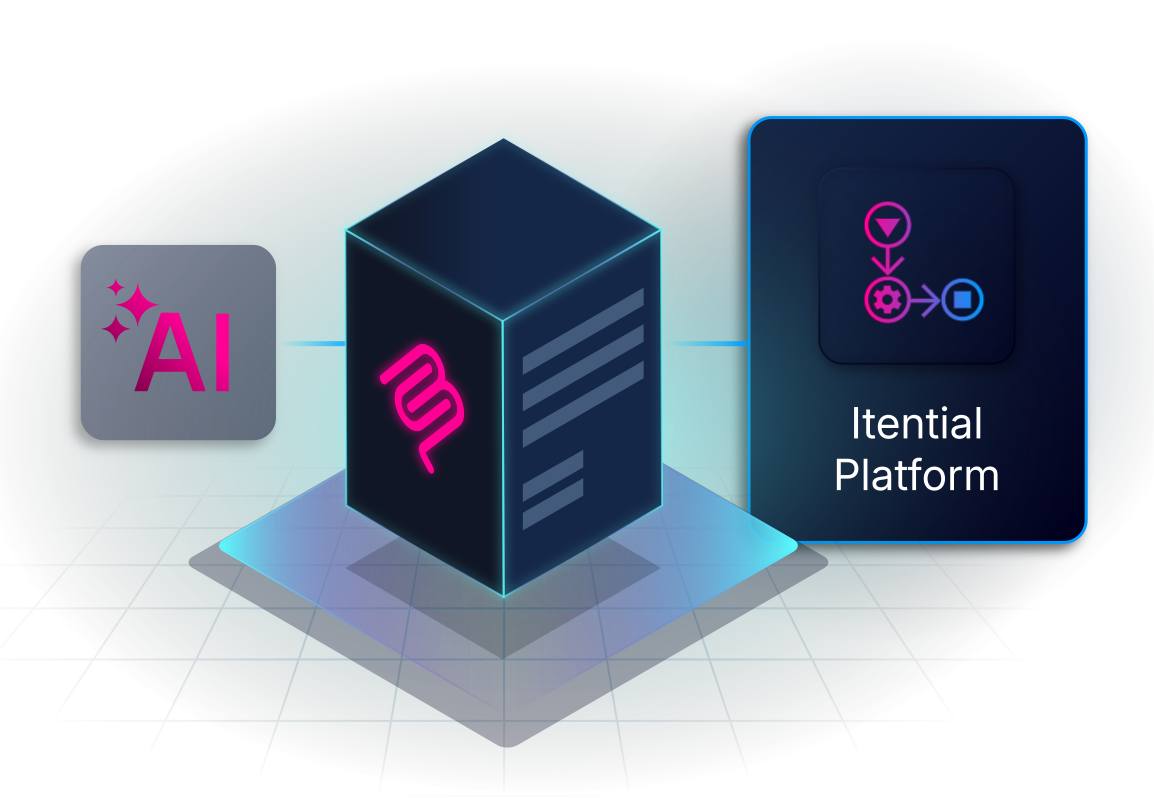
The Itential MCP Server is the control layer that connects AI agents and large language models (LLMs) to the Itential Platform. Built on the open Model Context Protocol (MCP) standard, it provides a secure, structured way for AI systems to invoke Itential workflows, applications, and APIs – with full context, authentication, and governance. Learn more.
What does MCP stand for in Itential MCP Server?
MCP stands for Model Context Protocol. It is an open standard that defines how AI agents communicate structured intent to automation platforms like Itential, ensuring secure, auditable, and policy-driven execution of infrastructure actions. Read more.
How does the Itential MCP Server work?
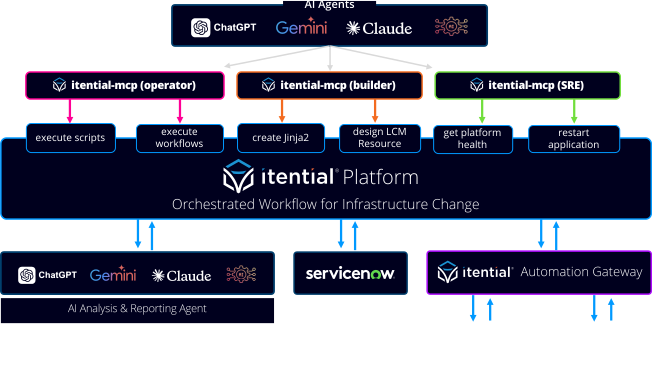
The MCP Server acts as a secure mediation and translation layer between AI systems and your infrastructure. It receives requests from AI agents, validates their structure, translates them into platform-ready workflow actions, and ensures all actions are executed through Itential's governance, RBAC, SSO, and audit frameworks. Learn more.
Is the Itential MCP Server open source or standards-based?
Yes, the Itential MCP Server is built on the open-source Model Context Protocol (MCP) standard, ensuring interoperability with any compliant AI client. The server itself is available as open source on GitHub. See the repo here.
What is the purpose of the Itential MCP Server?
The Itential MCP Server bridges the gap between AI-generated intent and enterprise infrastructure, enabling safe, auditable automation with centralized governance. It ensures that all AI-driven actions are executed under strict compliance and security controls. Learn more.
How does MCP fit into the Itential Platform?
MCP acts as the front door for AI interactions. AI agents communicate with MCP, which translates and validates their requests before passing them into the Itential Platform. All execution, policy enforcement, RBAC, SSO, and auditing are handled by the Platform, ensuring AI-driven actions follow the same enterprise guardrails as any other automation. Learn more.
What types of AI systems can connect to Itential MCP?
Any MCP-compliant client can connect, including LLM-based copilots, custom AI assistants, and AIOps or observability platforms that generate intent. MCP supports multiple transport protocols (stdio, SSE, HTTP) and authentication methods, making it easy to integrate into existing AI or automation ecosystems. See a demo.
How do I run the Itential MCP Server?
After a successful installation, you can start the server by running the command mcp-server in your terminal. This will launch the server with its default settings. Read the Getting Started Guide.
Where can I find technical documentation for the Itential MCP Server?
Comprehensive technical documentation, including guides, API references, and release notes, is available at docs.itential.com. Additional developer tools and API documentation can be found at Itential Developer Tools and Itential API Docs.
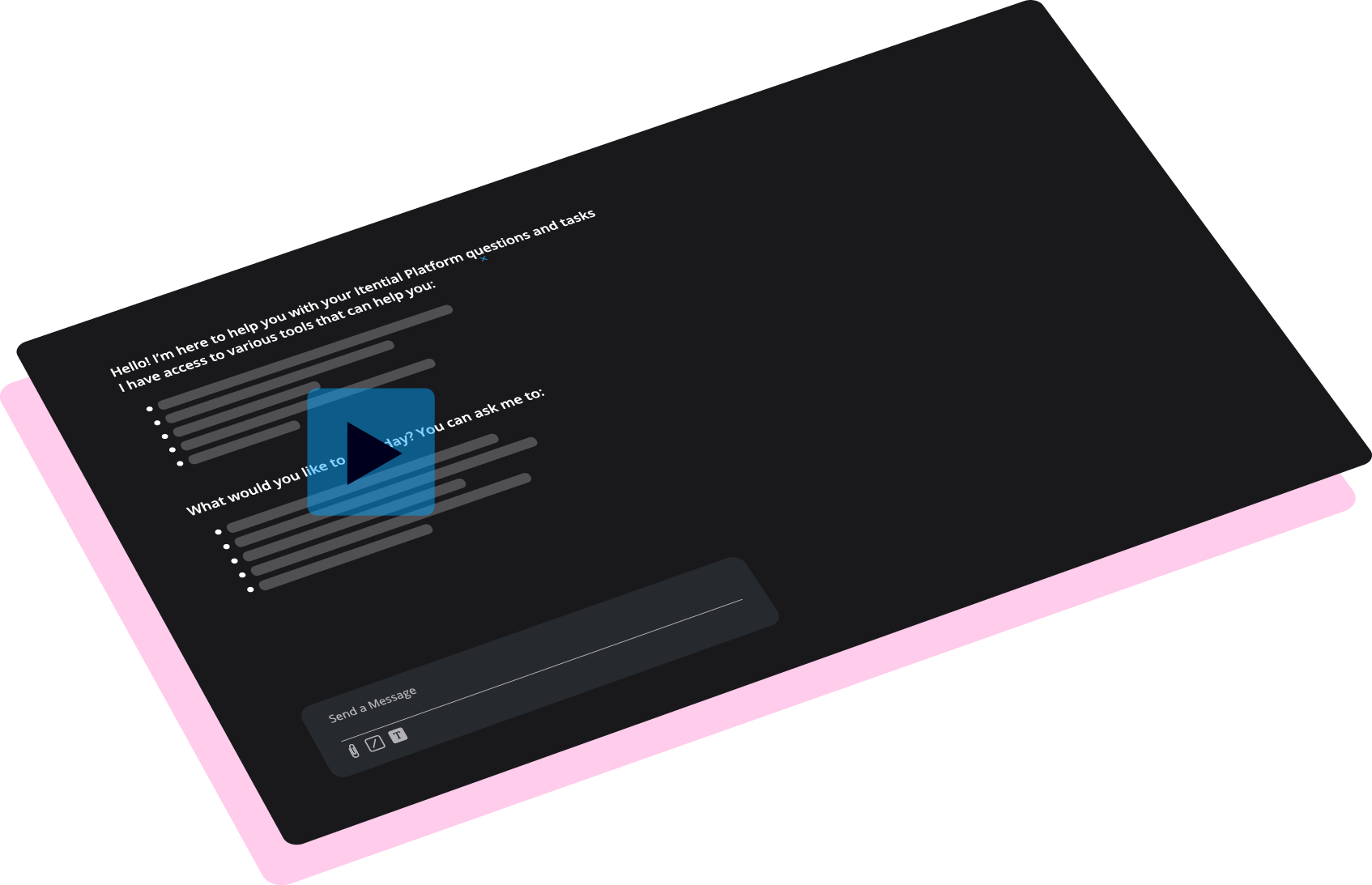
Is there a video demo of the Itential MCP Server?
Yes, you can watch a video overview of the Itential MCP Server at 🏗️ Setting up Itential's MCP Server #ai #mcp #promptengineering #networkautomation video.
Features & Capabilities
What are the key features of the Itential MCP Server?
Key features include secure mediation and translation between AI and infrastructure, tool registry and discovery for AI agents, intelligent context and schema translation, deep integration with the Itential Platform, full audit logging, and support for multiple authentication and transport protocols. Learn more.
How does the MCP Server ensure secure communication between AI agents and infrastructure?
The MCP Server enforces strict separation between AI generation and infrastructure execution. Every request is schema-validated, authenticated, logged, and passed through Itential’s platform guardrails, including RBAC, SSO, and audit controls. See a demo.
What protocols and transports does the MCP Server support?
The MCP Server supports the open Model Context Protocol (MCP) for structured communication, and can operate over stdio and HTTP transports, providing flexibility for different AI agent environments.
How does the MCP Server handle tool discovery for AI agents?
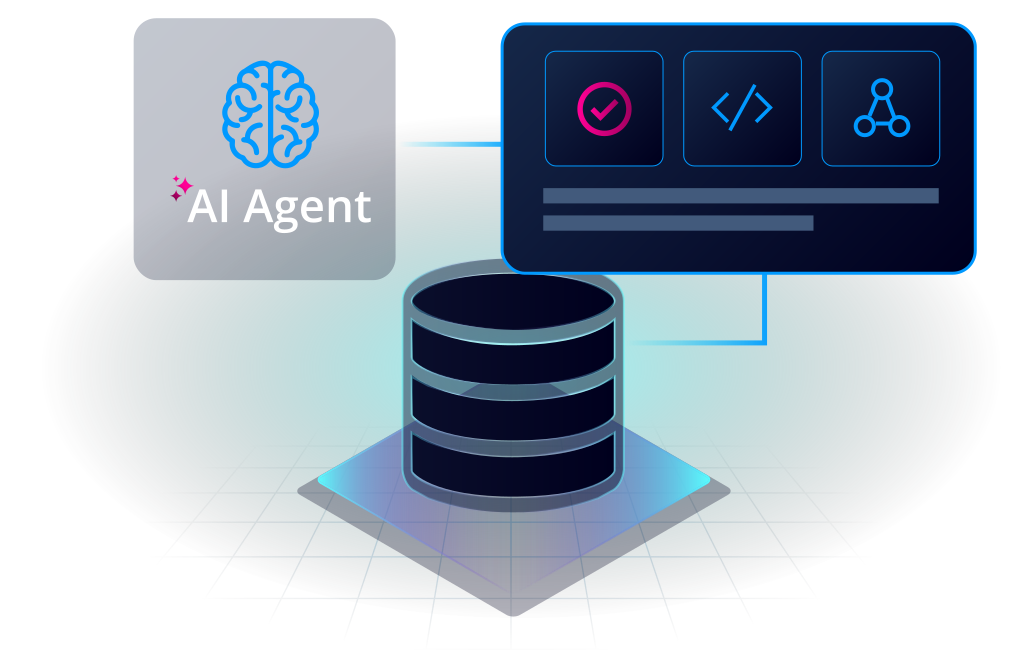
MCP dynamically registers Itential workflows, APIs, and data endpoints as tools that AI agents can query and invoke. It provides metadata and schema descriptions, supports tool introspection, and enables robust tagging to control tool exposure and access.
What authentication methods are supported by the MCP Server?
The MCP Server supports multiple authentication modes, including basic authentication and OAuth, to ensure secure access and integration with enterprise identity systems.
How does the MCP Server ensure data integrity and schema validation?
The MCP Server validates and normalizes inbound data from AI clients against expected schemas, converts AI responses into JSON-structured payloads, and enforces type-safe, schema-driven exchanges to prevent malformed or unsafe requests.
Can the MCP Server be deployed on-premises or in the cloud?
Yes, the MCP Server is fully containerized for portability and can be deployed across on-premises and cloud environments. It is engineered for interoperability and extensibility. Learn more about deployment flexibility.
How does the MCP Server integrate with the rest of the Itential Platform?
The MCP Server is designed to work seamlessly with the Itential Platform, leveraging its governance, compliance, and orchestration strengths to safely execute AI-driven actions. It integrates with applications like Workflow Orchestration, Configuration Manager, Lifecycle Manager, and Automation Gateway.
What programming languages and frameworks are supported for integration?
The MCP Server is available as an open-source component via PyPI (Python) and as a Docker container, making it accessible for integration with a wide range of programming languages and frameworks that support HTTP or stdio communication.
Security & Compliance
How does the MCP Server ensure security and compliance?
The MCP Server enforces strict separation between AI generation and infrastructure execution. Every request is logged, schema-validated, and passed through Itential’s Platform guardrails (RBAC, SSO, and audit), preventing unauthorized or unverified AI activity and ensuring compliance with enterprise governance models. Learn more.
What compliance certifications does the Itential Platform hold?
The Itential Platform, which MCP integrates with, holds SOC 2 Type II Certification, is FIPS 140-2 compliant, and adheres to GDPR and CCPA for global data privacy. These certifications ensure high standards of security and compliance. See certifications.
How does Itential ensure AI doesn’t introduce outages?
Governed workflows incorporate blast-radius limits, pre/post checks, rollback, and human-in-the-middle approvals, which apply equally to AI-triggered and human-initiated automations, reducing the risk of outages.
Does the MCP Server provide audit trails for AI-driven actions?
Yes, every inbound and outbound exchange is logged for full traceability, enabling comprehensive audit trails for all AI-driven actions executed through the Itential Platform.
How does the MCP Server handle authentication and authorization?
The MCP Server handles authentication and session validation at the edge, supporting multiple authentication methods and ensuring that only authorized AI agents can initiate actions.
Can the MCP Server be used in air-gapped or on-premises environments?
Yes, the Itential Platform and MCP Server support on-premises and air-gapped deployments, ensuring data remains within secure environments and enabling compliance with mandates like STIGs.
Does Itential have a responsible disclosure policy for security vulnerabilities?
Yes, Itential has a responsible disclosure policy for security vulnerabilities, ensuring transparency and proactive security management. Read more.
Use Cases & Benefits
What are common use cases for the Itential MCP Server?
Common use cases include AI-assisted configuration and compliance, prompt-driven automation, closed-loop remediation, lifecycle management, and safe AI-driven orchestration across network, cloud, and hybrid infrastructure. See use cases.
How does the MCP Server benefit enterprises adopting AI-driven automation?
The MCP Server enables enterprises to safely operationalize AI-driven automation by providing structured, governed, and auditable execution of AI-generated intent, reducing risk and accelerating innovation.
Who can benefit from using the Itential MCP Server?
Organizations with complex, multi-domain, or hybrid cloud environments, especially those looking to integrate AI agents or LLMs into their automation workflows, can benefit from the MCP Server’s secure, governed approach to AI-driven orchestration.
How does the MCP Server support closed-loop automation?
The MCP Server enables closed-loop automation by allowing AI agents to propose actions, Itential to execute them under governance, and then return structured feedback to the AI for further reasoning or action, creating a continuous improvement loop.
Can the MCP Server be used for compliance automation?
Yes, AI agents can create and execute compliance jobs against infrastructure, propose or validate configuration changes, with every request routed through Itential’s compliance and approval workflows for safe execution. Learn more.
How does the MCP Server help with lifecycle management?
AI agents can provision infrastructure resources and execute Day 2 operations—such as updates, compliance checks, and deprovisioning—on those resources throughout their lifecycle, all orchestrated through Itential’s Lifecycle Manager pipelines with full policy governance. Learn more.
What business impact can customers expect from using the MCP Server?
Customers can expect increased operational agility, reduced change-related incidents, lower infrastructure operations costs, faster service delivery, and improved compliance through safe, AI-driven automation. See business impact.
How does the MCP Server help organizations scale automation?
The MCP Server enables organizations to scale automation by providing a low-code, integration-first approach, supporting over 300+ pre-built integrations, and allowing both technical and non-technical users to safely leverage AI-driven workflows.
What pain points does the MCP Server address?
The MCP Server addresses pain points such as fragmented automation, manual change execution, configuration drift, multi-domain complexity, lack of governance, and slow adoption of automation by unifying AI and automation under a single, governed control layer.
How does the MCP Server support developer extensions?
Teams can register internal APIs or automation endpoints as MCP tools, making Itential’s capabilities securely accessible to custom AI agents or domain-specific models. Explore developer tools.
Technical Requirements & Implementation
How easy is it to get started with the Itential MCP Server?
The MCP Server is available as an open-source component via PyPI and Docker, with comprehensive documentation and a Getting Started Guide to help you deploy and configure it quickly. Read the guide.
What are the deployment options for the MCP Server?
The MCP Server is fully containerized and can be deployed on-premises, in the cloud, or in air-gapped environments, supporting a wide range of enterprise deployment scenarios. Learn more.
What technical skills are required to implement the MCP Server?
Basic familiarity with containerized applications, Python (for PyPI installation), and standard authentication protocols is helpful. Comprehensive documentation and guides are available to assist with setup and integration.
How long does it take to implement the MCP Server?
Implementation timelines vary based on environment complexity, but initial deployment and integration can typically be completed within days, especially with the support of Itential’s onboarding resources and documentation.
Where can I get support for the MCP Server?
Support is available through the Itential Customer Portal, official documentation, and community forums. Professional Services and onboarding programs are also available for expert assistance. Customer Portal
How can I access the MCP Developer Preview?
You can contact Itential to access the MCP Developer Preview, explore technical documentation, or see it in action through guided demos. Contact Itential
What is the process for updating or upgrading the MCP Server?
Release notes and upgrade instructions are provided on the official documentation site. The MCP Server can be updated via standard package management or container deployment workflows. See release notes.
Are there training resources available for the MCP Server?
Yes, training and certification programs are available through Itential Academy, along with interactive product tours and comprehensive documentation. Itential Academy
Integrations & Ecosystem
What integrations does the MCP Server support?
The MCP Server leverages the Itential Platform’s 300+ pre-built integrations, including ServiceNow, NetBox, Infoblox, GitHub, Selector AIOps, Kentik, Forward Networks, IP Fabric, Red Hat Ansible, Terraform, Slack, Microsoft Teams, Arista Networks, Cisco, F5, and Palo Alto. See the full list.
Can the MCP Server integrate with legacy systems?
Yes, the MCP Server provides a unified, API-first approach to connect with any system, including modern cloud services and legacy systems that require CLI interaction, by normalizing data into a consistent model for orchestration.
How does the MCP Server support AI-driven integrations?
The MCP Server dynamically registers Itential Platform capabilities as discoverable MCP tools that AI agents can invoke, all governed by the platform's control plane, enabling safe and auditable AI-driven integrations.
Is the MCP Server compatible with Microsoft Copilot or other AI assistants?
Yes, Itential's MCP Server acts as a secure gateway that allows AI agents, like those in Microsoft Copilot, to access and execute predefined automation workflows and interact with various IT systems and tools in a controlled manner. Learn more.
How does the MCP Server handle API integrations?
The MCP Server abstracts APIs and logic from different systems into unified workflows, enabling seamless coordination and orchestration across the entire enterprise ecosystem.
Competition & Comparison
How does the Itential MCP Server differ from other AI-to-infrastructure solutions?
The Itential MCP Server is vendor-agnostic, standards-based, and designed for secure, governed AI-to-infrastructure automation. Unlike proprietary or single-vendor solutions, it supports open protocols, deep integration with existing tools, and comprehensive compliance controls, making it suitable for complex, multi-vendor environments.
What are the advantages of using the Itential MCP Server for AI-driven automation?
Advantages include open-source standards, robust security and compliance, deep integration with the Itential Platform, support for 300+ integrations, and the ability to safely operationalize AI-driven workflows across diverse environments.
Pricing & Plans
How can I learn about pricing for the Itential MCP Server?
For detailed pricing information, visit the Itential Platform Pricing page or contact the Itential sales team directly.
Is there a free trial or developer preview available for the MCP Server?
You can request access to the MCP Developer Preview or a free trial by contacting Itential. Contact us for more information.