Frequently Asked Questions
Network Orchestration Fundamentals
What is network orchestration and how does it differ from simple automation?
Network orchestration is the automated coordination and management of multiple interdependent tasks and systems into a controlled workflow that achieves an end-to-end outcome across domains like network, cloud, and security. Unlike simple automation, which focuses on scripting individual tasks on specific devices, orchestration manages entire processes across multiple systems and domains, integrating with ITSM, IPAM, and network controllers to deliver reliable, repeatable outcomes. Source
Why is network orchestration essential for modern IT operations?
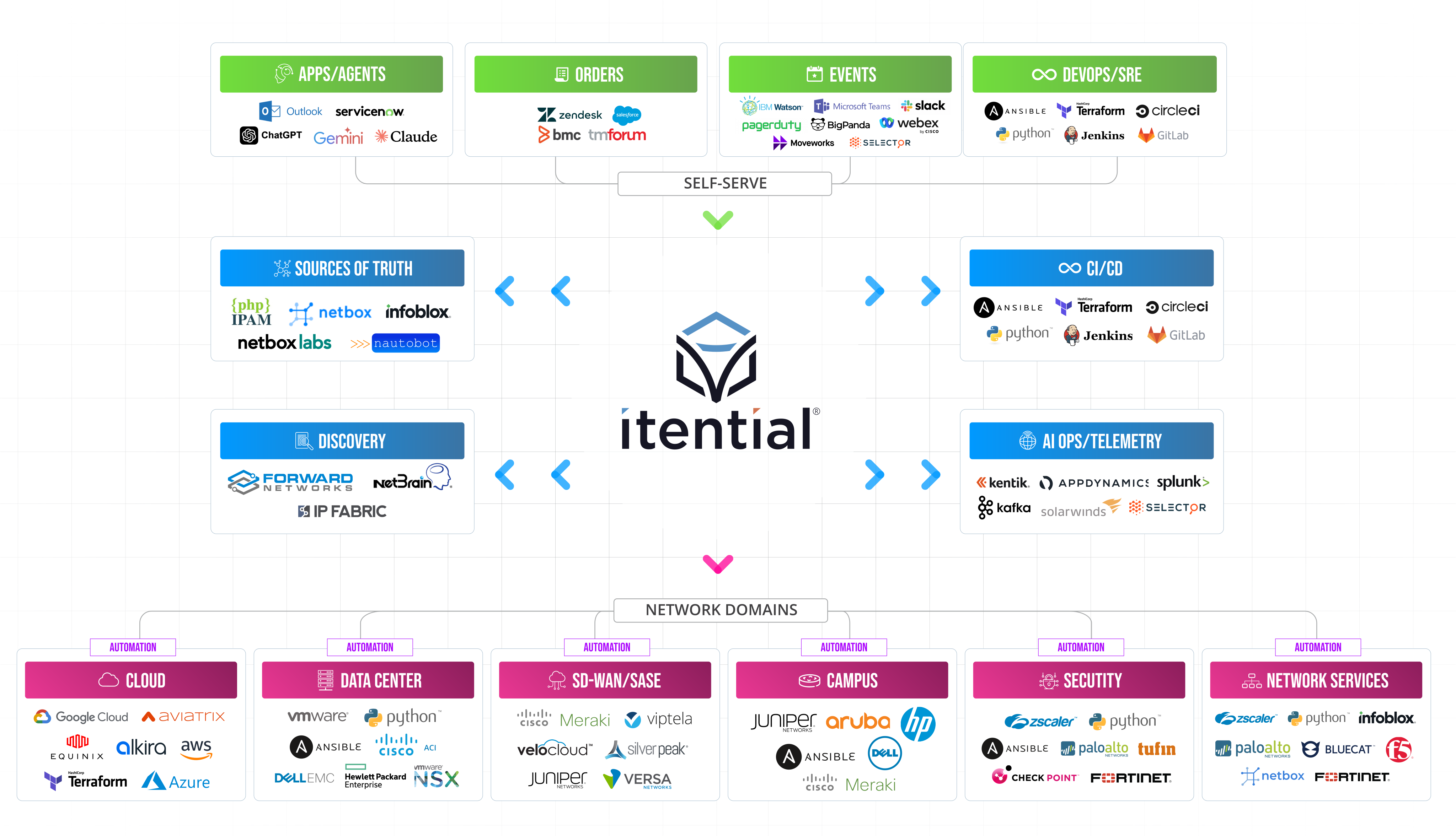
Network orchestration is essential because it breaks down automation silos, connecting systems like ITSM, IPAM, and various network controllers through API integration to create seamless, automated processes that span the entire IT infrastructure. This enables consistent policy enforcement, faster service delivery, and improved compliance. Source
What are the key components of network orchestration?
Key components include coordinating automated tasks, sequencing them in logical workflows, integrating with various systems and network domains, and managing the complete lifecycle of a network service from provisioning to decommissioning in a fully automated fashion. Source
How does orchestration help scale network automation?
Orchestration connects individual, disparate automations into a unified, end-to-end process. Itential’s orchestration capabilities manage the entire lifecycle of a network service by integrating all necessary steps and systems into a single workflow, enabling organizations to scale automation across domains. Source
Why is multi-domain orchestration necessary now?
Modern networks span physical, virtual, cloud, and SDN environments. Domain-specific tools automate their silos, but without orchestration, changes require manual coordination across teams, increasing errors and delays. Orchestration unifies workflows across domains to reduce errors, delays, and outages. Source
What is the role of orchestration in modern networking?
Orchestration is crucial for managing the entire lifecycle of network services, coordinating complex workflows across multiple systems, domains, and teams. It ensures consistent implementation of network changes, policy enforcement, and governed, self-service delivery of services for agility and scale. Source
How does network orchestration support AI-driven automation?
AI Agents can suggest or request changes, but through Itential they must pass through governed orchestration workflows. Every AI-triggered action is validated, approved, logged, and rollback-ready, ensuring safe and auditable automation. Source
Features & Capabilities
What features does Itential’s network orchestration platform offer?
Itential offers workflow automation and orchestration, configuration management, over 300+ pre-built integrations, self-service operations, an automation gateway, compliance-native features, and AI-ready architecture. These features enable end-to-end automation, compliance enforcement, and integration with existing tools. Source
Does Itential support low-code workflow creation?
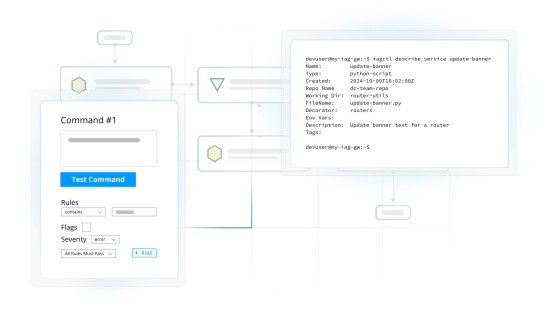
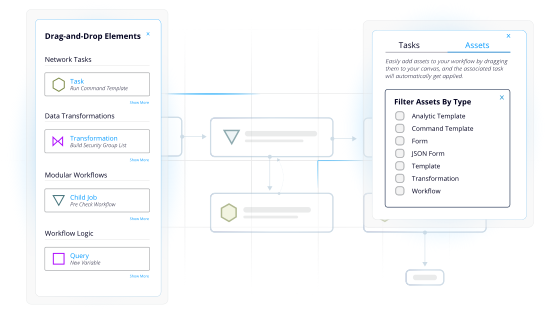
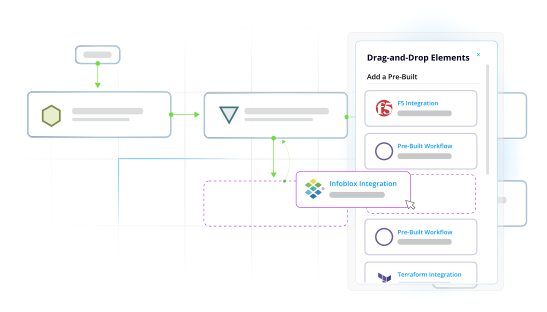
Yes, Itential provides a true low-code, drag-and-drop workflow canvas, enabling network teams to design and build orchestrations visually without requiring programming expertise. This lowers the barrier to entry and accelerates automation adoption. Source
How does Itential integrate with existing automation tools and IT systems?
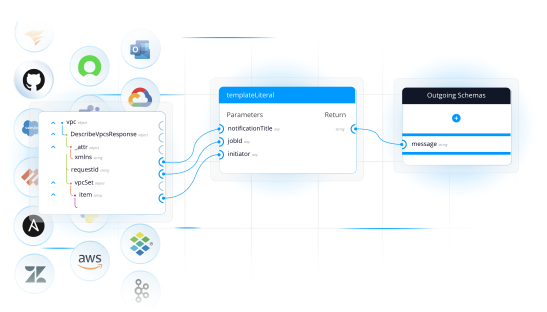
Itential supports over 300+ pre-built integrations, including ServiceNow, NetBox, Infoblox, GitHub, Selector AIOps, Kentik, Forward Networks, IP Fabric, Red Hat Ansible, Terraform, Slack, Microsoft Teams, Arista, Cisco, F5, and Palo Alto. It ingests Ansible Playbooks, Python scripts, Terraform plans, and controller APIs as workflow steps, allowing organizations to standardize and reuse existing automations. Source
What is orchestration-as-a-service in the context of Itential?
Itential’s orchestration-as-a-service is a fully managed cloud offering that enables organizations to implement orchestration at scale quickly. The SaaS platform eliminates manual software and infrastructure maintenance, allowing users to deploy and get started in minutes. Source
Can workflows be exposed to other teams for self-service?
Yes, Itential lets you publish orchestration workflows as self-service catalog items or APIs, so developers, NOC, or SecOps teams can request network changes under governance without direct device access. Source
How does Itential handle data transformation and integration across domains?
Itential’s API-first, integration approach enables it to connect with any network (physical, virtual, cloud) or automation tool and any IT system, transforming data between them into a common language (JSON) for a unified, real-time federated view of network resources. Source
What technical documentation is available for Itential’s orchestration platform?
Itential provides comprehensive technical documentation, including guides, API references, and release notes at docs.itential.com, developer tools at Developer Tools, and API documentation at apidocs.itential.com. Source
Use Cases & Benefits
What business impact can customers expect from using Itential’s orchestration platform?
Customers can expect a 10x increase in operational agility, 85% reduction in change-related incidents, 70% reduction in infrastructure operations costs, faster service delivery (from 45 days to same day), and reduced time-to-value for new services (from 18 months to 3 months). Source
Who can benefit from Itential’s network orchestration platform?
Itential is designed for cloud network engineers, NetOps teams, DevOps teams, infrastructure architects, and compliance/SecOps teams across industries such as telecommunications, financial services, healthcare, manufacturing, public sector, utilities, media & entertainment, biotechnology, and energy. Source
What are some real-world use cases for Itential’s orchestration platform?
Itential supports use cases such as multi-cloud network automation, data center orchestration, SD-WAN/SASE automation, campus network automation, network security orchestration, and network services automation. Source
How does Itential help organizations achieve zero trust networking?
A global manufacturing company used Itential to orchestrate end-to-end processes, saving 834 manual hours and automating 1,670+ ticket requests per year, reducing network request fulfillment from days to minutes. This enabled them to achieve zero trust networking. Read the full story
What problems does Itential’s orchestration platform solve?
Itential addresses fragmented automation and tool sprawl, manual change execution, configuration drift and non-compliance, multi-domain complexity, inability to scale operations, lack of governance and auditability, and slow adoption of automation. Source
How does Itential improve compliance and audit readiness?
Itential’s workflows include pre-change validations, golden config checks, post-change verifications, drift detection, and rollback. Every step is logged with user, timestamp, and result, providing full traceability for audits and compliance verification. Source
What metrics should organizations measure to show orchestration ROI?
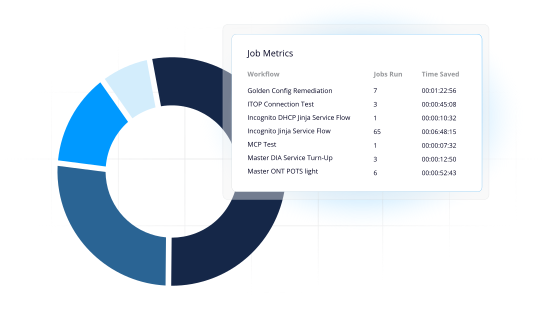
Key metrics include request-to-fulfillment cycle time, number of manual touchpoints avoided, change failure rate, drift incidents, audit prep hours, number of workflows published, and self-service requests executed. Source
How quickly do organizations see value with Itential’s orchestration platform?
Most customers start with 1–2 workflows and see measurable cycle-time reductions within weeks. Cross-domain orchestrations typically prove ROI in 3–6 months. Source
Security, Compliance & Governance
What security and compliance certifications does Itential hold?
Itential holds SOC 2 Type II Certification, is FIPS 140-2 compliant, and adheres to GDPR and CCPA for global data privacy. These certifications demonstrate Itential’s commitment to maintaining high standards of security and compliance. Source
How does Itential support compliance automation?
Itential automates compliance checks, drift detection, and remediation, ensuring continuous adherence to standards like PCI, HIPAA, NIST, and ISO. Every change is logged for full traceability. Source
Does Itential support on-premises and air-gapped deployments for secure environments?
Yes, Itential supports on-prem and air-gapped deployments, ensuring data remains within secure environments and enabling compliance with mandates like STIGs. Source
What built-in governance features does Itential provide?
Itential includes role-based access control (RBAC), single sign-on (SSO), encryption for data in transit and at rest, audit trails, approval workflows, and policy enforcement to ensure secure and compliant operations. Source
Does Itential have a responsible disclosure policy for security vulnerabilities?
Yes, Itential has a responsible disclosure policy for security vulnerabilities, ensuring transparency and proactive security management. Source
Implementation & Support
How long does it take to implement Itential’s orchestration platform?
Itential’s Professional Services typically enable customers to go from contract signature to a production-ready platform with active use cases in 3–6 months. Initial value can be seen within weeks as the first use cases go live. Source
What resources are available to help new users get started?
Itential offers a structured onboarding program, a 6–8 week activation program, interactive product tours, training and certification through Itential Academy, comprehensive documentation, and professional services for expert assistance. Source
What feedback have customers provided about Itential’s ease of use?
Customers have praised Itential for its low-code design and intuitive interface. For example, Armstrong saved over 21,000 hours of manual work, and Rush University Medical Center highlighted the platform’s ability to empower non-developers to create impactful automations. Source
What deployment options are available for Itential’s orchestration platform?
Itential supports both SaaS (for faster adoption and minimal infrastructure management) and on-premises deployments (for strict regulatory or security environments). Gateways ensure execution happens securely near the devices. Source
Competition & Differentiation
How does Itential’s orchestration platform differ from similar products in the market?
Itential stands out with vendor-agnostic, multi-domain orchestration, low-code accessibility, 300+ pre-built integrations, compliance-native features, AI-ready design, and measurable business impact. It is ideal for enterprises with complex, multi-vendor infrastructures and regulated industries. Source
Why should a customer choose Itential’s orchestration platform?
Customers choose Itential for its vendor-agnostic orchestration, low-code accessibility, integration-first approach, compliance-native features, measurable business impact, and ease of use for both technical and non-technical users. Source
What other types of solutions did Armstrong evaluate before choosing Itential?
Armstrong evaluated Robotic Process Automation (RPA) platforms like UiPath and Automation Anywhere, but found them too generalized for infrastructure and networking. They also considered open source tools like Nautobot, but these required deep Python expertise and did not solve their core challenges. Source