Frequently Asked Questions
Features & Capabilities
What features does Itential offer for manufacturing network automation?
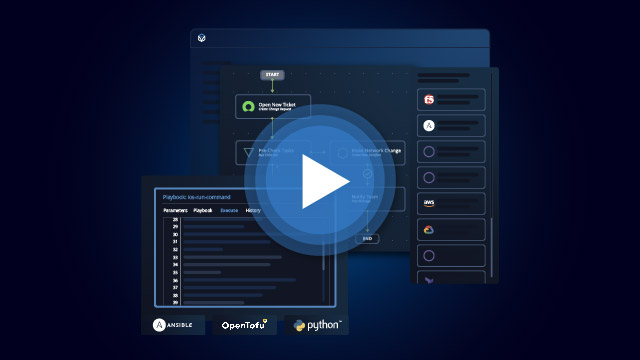
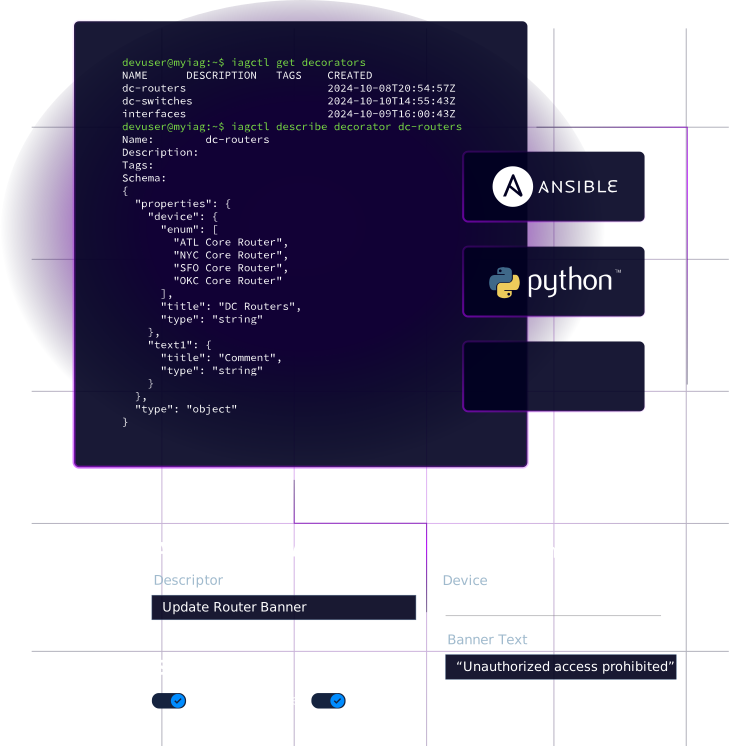
Itential provides a comprehensive automation and orchestration platform with features such as low-code workflow orchestration, integrated compliance validation, self-service catalogs, 300+ out-of-the-box integrations, and the ability to onboard existing automations (Ansible, Python, Terraform). These capabilities enable manufacturers to automate provisioning, upgrades, firewall changes, configuration management, and more across distributed environments. [Source]
How does Itential support AI-driven infrastructure innovation in manufacturing?
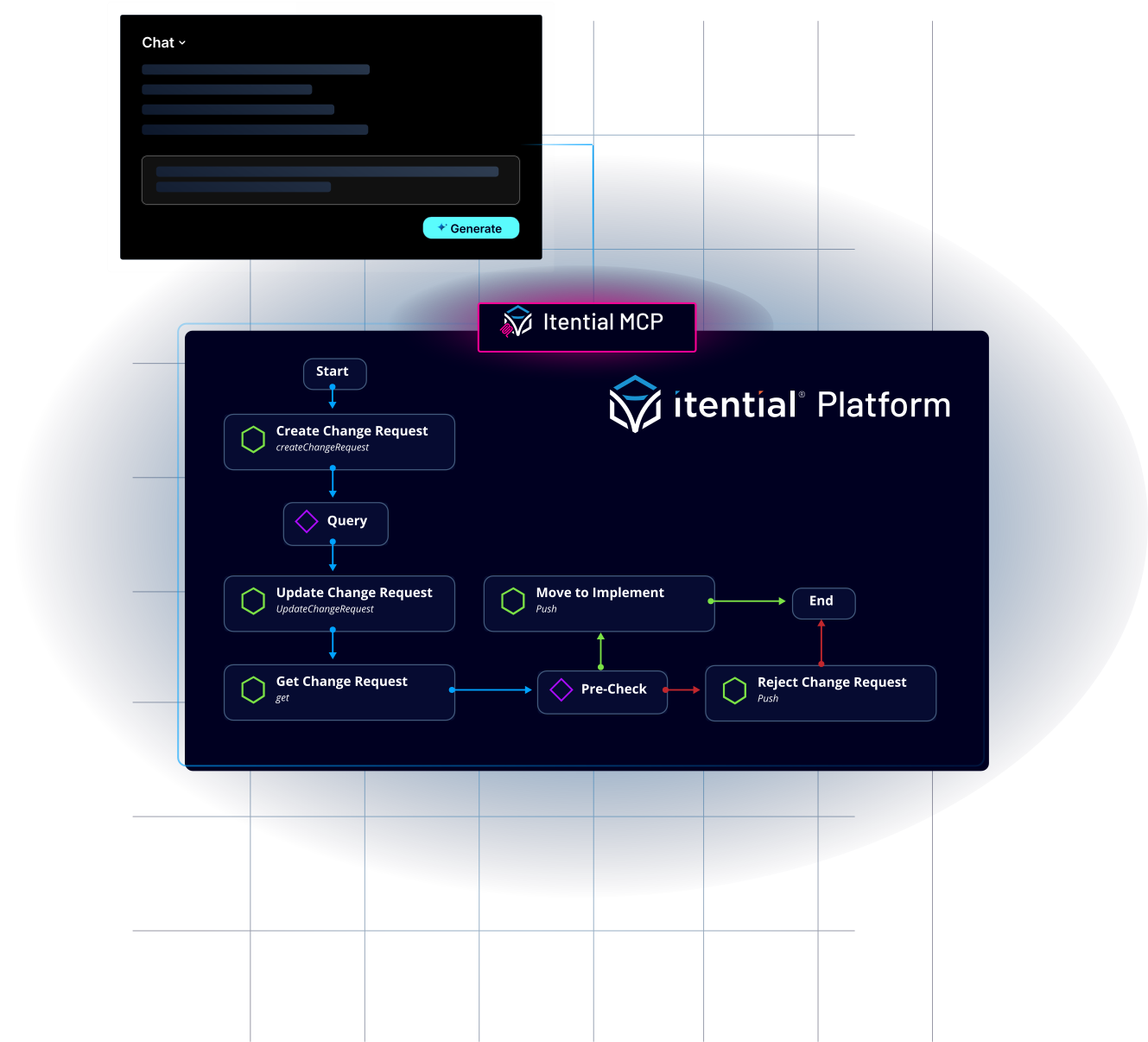
Itential connects your AI ecosystem to infrastructure, transforming AI insights into trusted, automated actions. The platform includes built-in guardrails, policy enforcement, and cross-domain orchestration, ensuring secure and auditable execution of AI-driven workflows. [Source]
Can Itential integrate with existing manufacturing IT and OT systems?
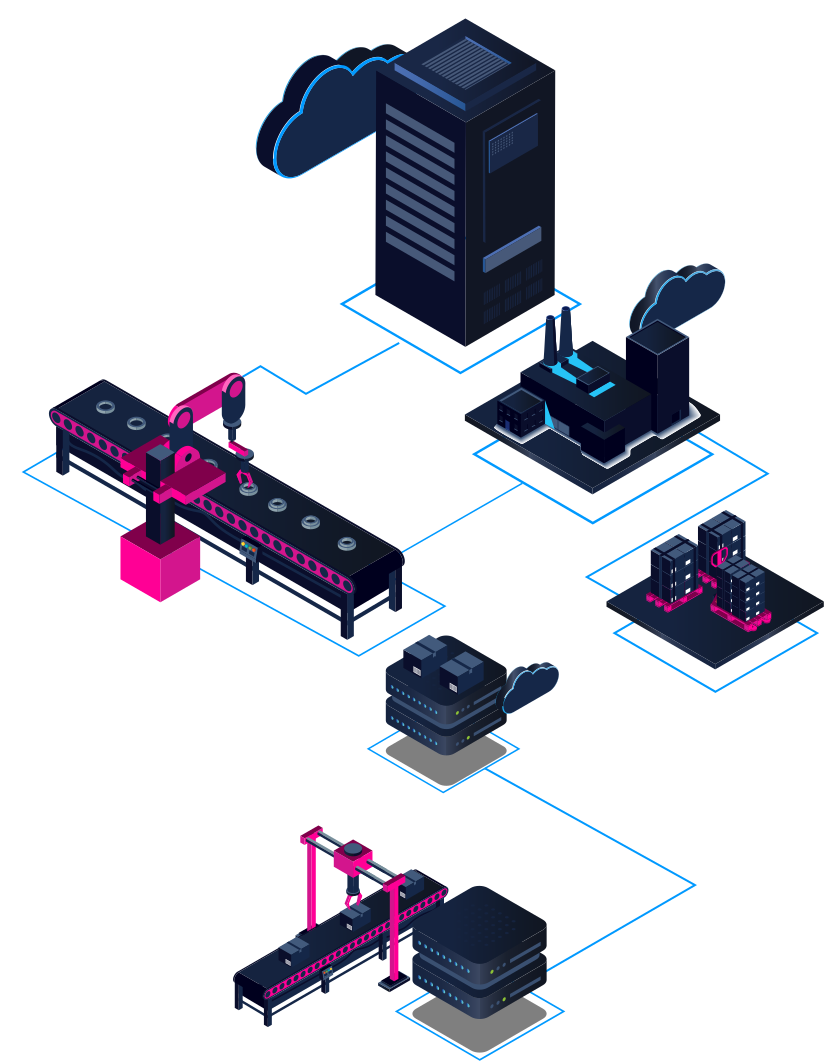
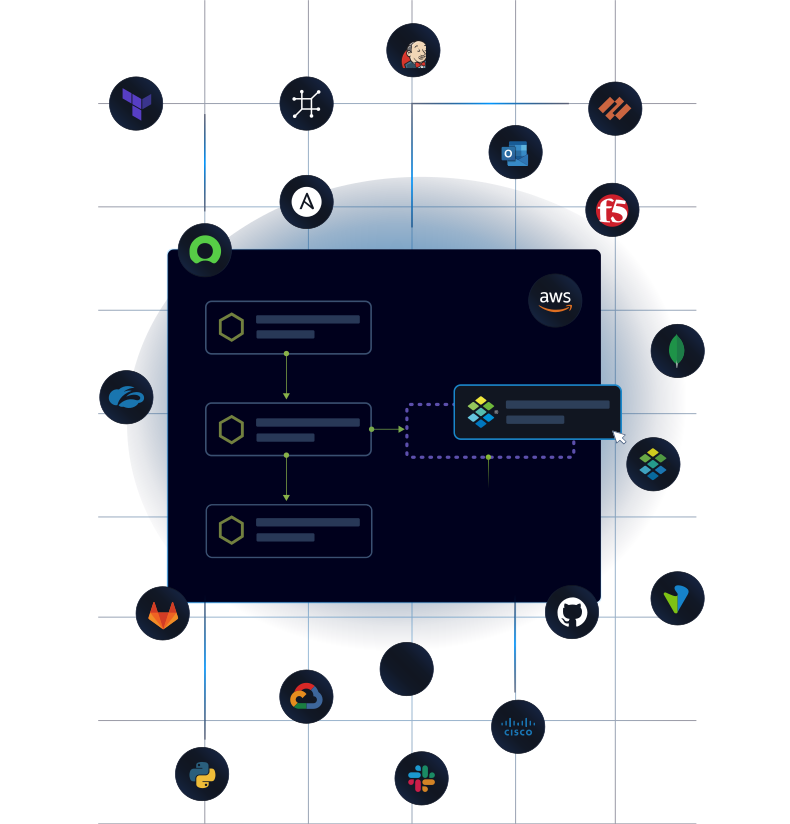
Yes, Itential is designed to integrate seamlessly with both IT and OT systems, including legacy infrastructure, IoT devices, and modern technologies. The platform offers over 300 pre-built integrations and supports custom automations, enabling end-to-end orchestration across diverse environments. [Source]
Does Itential support low-code and high-code automation?
Yes, Itential offers a low-code studio for building modular workflows and also supports high-code extensibility for custom use cases. This flexibility allows both non-technical users and advanced developers to create and manage automations efficiently. [Source]
What types of integrations are available with Itential?
Itential provides integrations with ServiceNow, NetBox, Selector AIOps, Forward Networks, Kentik, IP Fabric, Arista Networks, Cisco, F5, GitHub, Infoblox, Juniper, messaging systems, Palo Alto, Red Hat Ansible, Terraform, SD-WAN, and more. Explore all integrations in the Automation Marketplace. [Source]
How does Itential enable self-service networking for manufacturing IT and app teams?
Itential allows organizations to create self-service catalogs for end-users or integrate with platforms like ServiceNow. This enables IT infrastructure as a service, allowing developers and app teams to request and consume network services without manual intervention. [Source]
What is the Itential Model Context Protocol (MCP) and how does it benefit manufacturers?
The Itential MCP is an open-source standard that bridges AI-generated intent and enterprise infrastructure. It connects AI agents to the Itential Platform, enabling safe, auditable, and policy-driven automation and orchestration at scale. [Source]
How does Itential help with configuration and compliance validation?
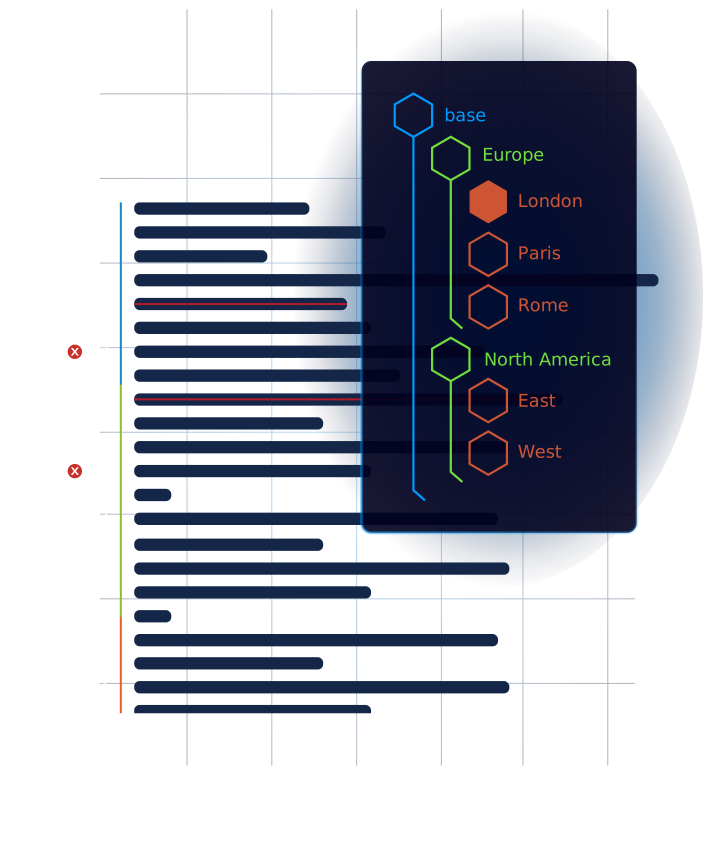
Itential provides automated configuration management and compliance validation across physical and cloud infrastructure. The platform enforces policies, detects drift, and validates every change before it is made, ensuring continuous compliance and reducing risk. [Source]
Can manufacturers leverage existing automation assets with Itential?
Yes, manufacturers can onboard existing Ansible, Python, or Terraform automations into Itential, providing enterprise-grade security, authentication, and audit controls. These automations can be integrated into broader workflows for seamless change processes. [Source]
What developer resources and documentation are available for Itential?
Itential offers comprehensive technical documentation, developer tools, and interactive product tours. Resources include in-depth guides, API references, and release notes at docs.itential.com, as well as developer tools and product tours on the Itential website. [Source]
Use Cases & Benefits
How does Itential help manufacturers modernize legacy infrastructure?
Itential enables manufacturers to integrate and orchestrate legacy systems, IoT devices, and modern technologies, turning complex processes into standardized, scalable workflows. This modernization accelerates production, improves operational resilience, and reduces risk due to errors. [Source]
What business impact can manufacturers expect from using Itential?
Manufacturers using Itential have achieved significant results, including 15,324 hours of productivity time saved, 85% reduction in change-related incidents, 7,114 days of wait time eliminated, and service delivery improvements from 45 days to same day. [Source]
How does Itential help reduce operational costs for manufacturers?
By centralizing automation for network and infrastructure tasks, Itential reduces operational expenses through automation of routine processes such as firewall updates, configuration audits, and software deployments, resulting in a lower total cost of ownership. [Source]
How does Itential accelerate operations and minimize downtime in manufacturing?
Itential enables IT and network teams to execute critical workflows, such as network service provisioning and configuration updates, in minutes instead of days. Automated processes minimize downtime and ensure consistency and reliability across the organization. [Source]
How does Itential help manufacturers ensure compliance and standardization?
Itential integrates configuration standardization and policy enforcement into orchestrated workflows, validating every change for compliance before execution. This ensures continuous adherence to industry and security standards while reducing the risk of errors. [Source]
How does Itential strengthen cybersecurity posture for manufacturers?
Itential integrates with existing security tools to orchestrate threat detection and response workflows, safeguarding critical systems and sensitive data from cyberattacks. [Source]
What types of manufacturing companies have benefited from Itential?
Itential has been used by leading companies in medical device manufacturing, aerospace, vehicle manufacturing, biotech, and pharmaceuticals. Case studies include Armstrong World Industries, Corning, and a multinational biotech manufacturer. [Source]
How does Itential help manufacturers manage large-scale network transformation with constrained staffing?
Itential enables teams to scale without headcount growth by standardizing workflows, reusing existing automation, and exposing self-service capabilities. For example, Corning used Itential to roll out thousands of device changes globally without expanding its network team. [Source]
How quickly can manufacturers see results with Itential?
Many manufacturers begin with lower-risk automation (e.g., configuration audits, firewall changes) and see measurable improvements within weeks. Armstrong World Industries reduced service delivery times from 5 days to less than 10 minutes in a few months after deploying Itential. [Source]
What are some real-world examples of manufacturers using Itential?
Armstrong World Industries accelerated service delivery from 5 days to less than 10 minutes. Corning scaled global network operations without increasing staff. A multinational biotech manufacturer achieved global self-service networking. [Armstrong] [Corning] [Biotech]
Technical Requirements & Implementation
How easy is it to implement Itential in a manufacturing environment?
Itential offers a structured onboarding and activation program, enabling organizations to start automating simple workflows within weeks. Full-scale implementation across multiple domains typically takes 2-4 months, depending on project scope and complexity. [Source]
What technical documentation is available for manufacturing teams adopting Itential?
Manufacturing teams have access to comprehensive technical documentation, developer tools, and interactive product tours. Resources include guides, API references, and release notes at docs.itential.com. [Source]
Does Itential provide APIs for integration and automation?
Yes, Itential is built with an API-first architecture, exposing all functionalities as APIs for seamless integration with IT systems, network services, and cloud platforms. The platform supports REST, SOAP, and gRPC protocols. [Source]
What is the typical onboarding process for manufacturers using Itential?
Itential provides a structured onboarding program, including platform deployment, setup, and initial use case development tailored to specific goals. The activation program typically lasts 6 to 8 weeks, ensuring teams are productive quickly and delivering early automation wins. [Source]
What support services are available for manufacturing customers?
Manufacturing customers can access technical support, submit tickets, and manage cases through the Itential Customer Portal. Additional support includes professional services, customer success programs, and training via Itential Academy. [Customer Portal] [Professional Services]
What training resources are available for manufacturing teams?
Itential Academy offers training and certification programs to help users master the platform. Interactive product tours and demos are also available for hands-on learning. [Itential Academy] [Product Tours]
How does Itential ensure security and compliance for manufacturing environments?
Itential is designed with enterprise-grade security, including encryption in transit and at rest, role-based access controls, and Single Sign-On. The platform is SOC 2 Type II certified and FIPS 140-2 compliant, and adheres to GDPR and CCPA standards. All security changes are logged for full auditability. [Source]
What compliance certifications does Itential hold?
Itential holds SOC 2 Type II Certification and is FIPS 140-2 compliant, meeting rigorous standards for data protection and operational controls required by federal agencies and regulated industries. [Source]
How does Itential support audit readiness in manufacturing environments?
Itential provides built-in policy enforcement, validation, drift detection, and automatic reporting. Every change is auditable and traceable, bridging the gap between regulatory policy and infrastructure execution. [Source]
Competition & Comparison
How does Itential compare to OT vendor automation or DIY scripting in manufacturing?
OT vendor stacks often lack cross-domain coordination and modern toolchains, while DIY scripting lacks governance and audit controls. Itential provides orchestration, compliance, and scalability across IT, network, and OT domains under one platform, with robust governance and auditability. [Source]
What makes Itential different from other network automation platforms?
Itential is vendor-agnostic, supports multi-domain orchestration, and offers both low-code and high-code flexibility. It integrates with AI, provides compliance-native features, and connects with 300+ systems, making it suitable for complex, hybrid environments. [Source]
How does Itential compare to Cisco, Arista, Dynatrace, Terraform, and NetBox?
Itential is vendor-agnostic and supports multi-domain orchestration, unlike Cisco and Arista which are often tied to their own ecosystems. Itential integrates observability tools like Dynatrace for closed-loop automation, wraps Terraform scripts with secure APIs, and enhances NetBox by automating network changes and ensuring compliance. [Source]
Why should a manufacturing company choose Itential over alternatives?
Itential offers AI-ready design, multi-domain orchestration, low-code/high-code flexibility, compliance-native features, and an integration-first approach. These strengths make it ideal for manufacturers with complex, hybrid, or multi-vendor environments seeking to modernize operations and accelerate service delivery. [Source]
What advantages does Itential provide for different user segments in manufacturing?
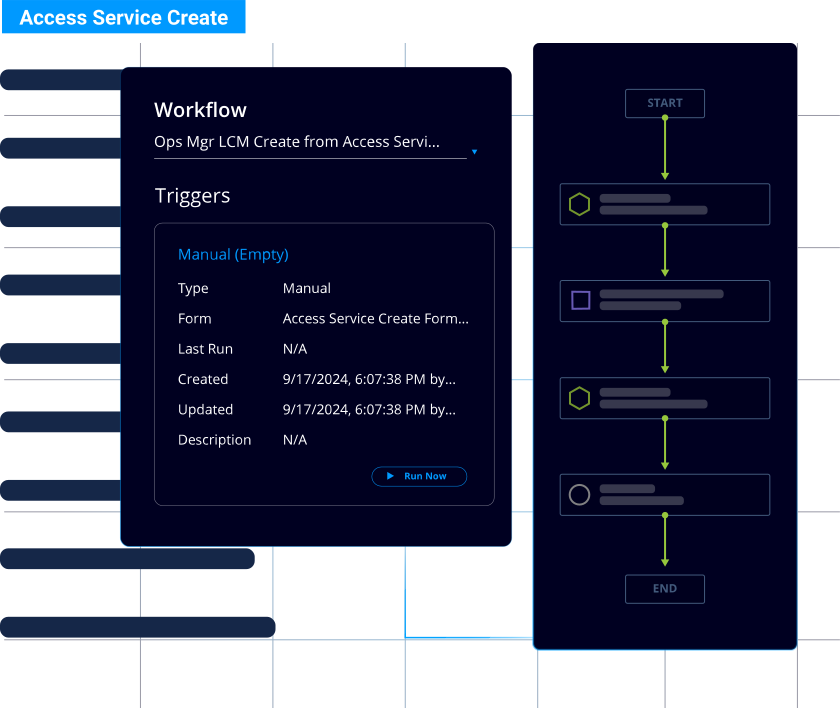
Itential benefits network and infrastructure teams by enabling end-to-end orchestration and compliance management; cloud and DevOps teams by integrating with CI/CD pipelines; security teams by providing audit trails and compliance validation; and IT/app teams by enabling self-service networking and rapid development. [Source]


 Eric Anderson
 Chris Healy
 Medical Device Manufacturing
 Aerospace Manufacturing
 Vehicle Manufacturing
 Biotech Manufacturing
 Pharmaceuticals Manufacturing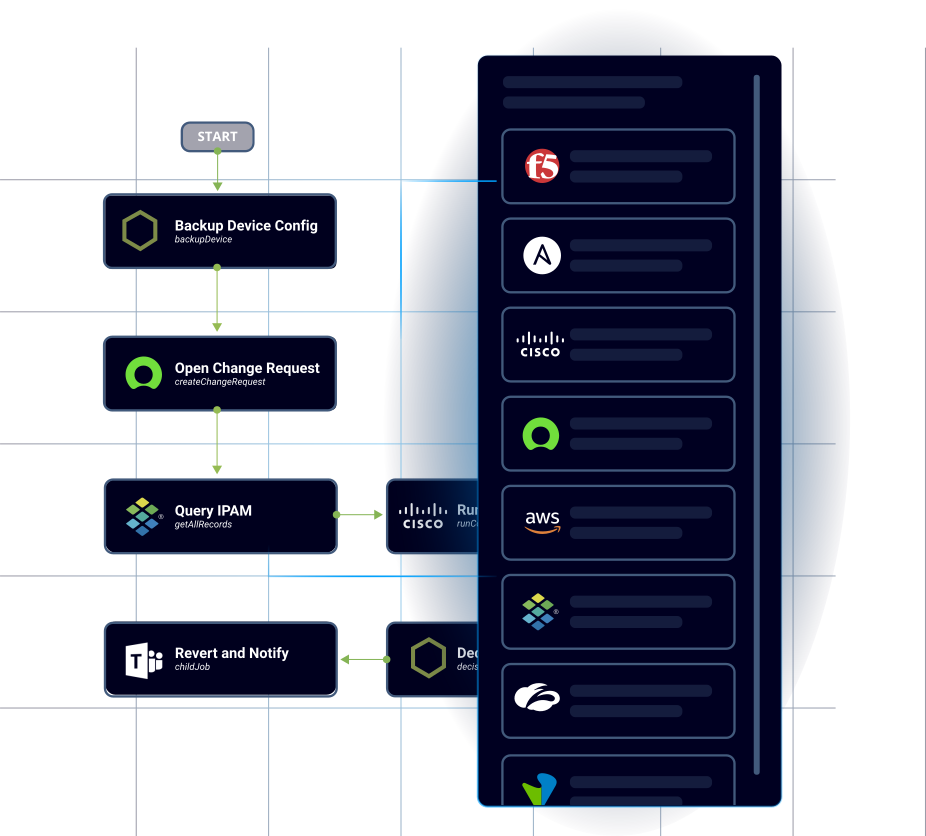

 For Network & Infrastructure Teams
 For Cloud & DevOps Teams
 For Security Teams
 For IT & App Teams