Frequently Asked Questions
Features & Capabilities
What features does Itential offer for energy and utilities companies?
Itential provides low-code workflow orchestration, model-driven automation, configuration and compliance validation, vendor-agnostic API-driven integration, support for high-code automation assets, and self-service networking for field teams. These features are designed to help utilities modernize infrastructure, streamline operations, and ensure compliance with standards like NERC-CIP. [Source]
How does Itential support AI-driven operations for utilities?
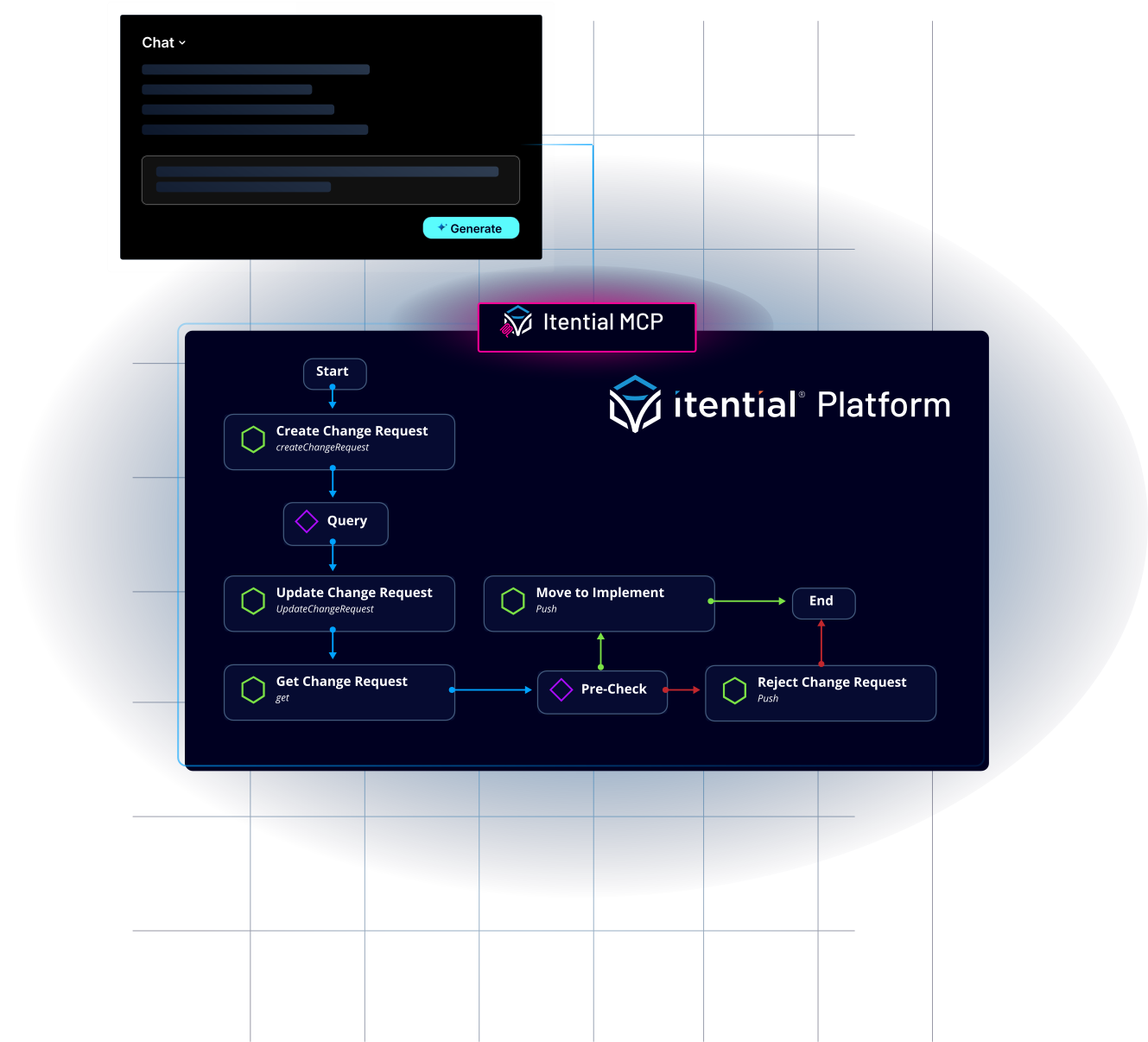
Itential enables AI-driven anomaly detection, self-healing networks, and scalable orchestration across hybrid domains. The platform connects AI agents to enterprise infrastructure with governance, context, and control using the Model Context Protocol (MCP), ensuring safe, auditable, and policy-driven automation. [Learn more]
Can Itential orchestrate both IT and OT (Operational Technology) networks?
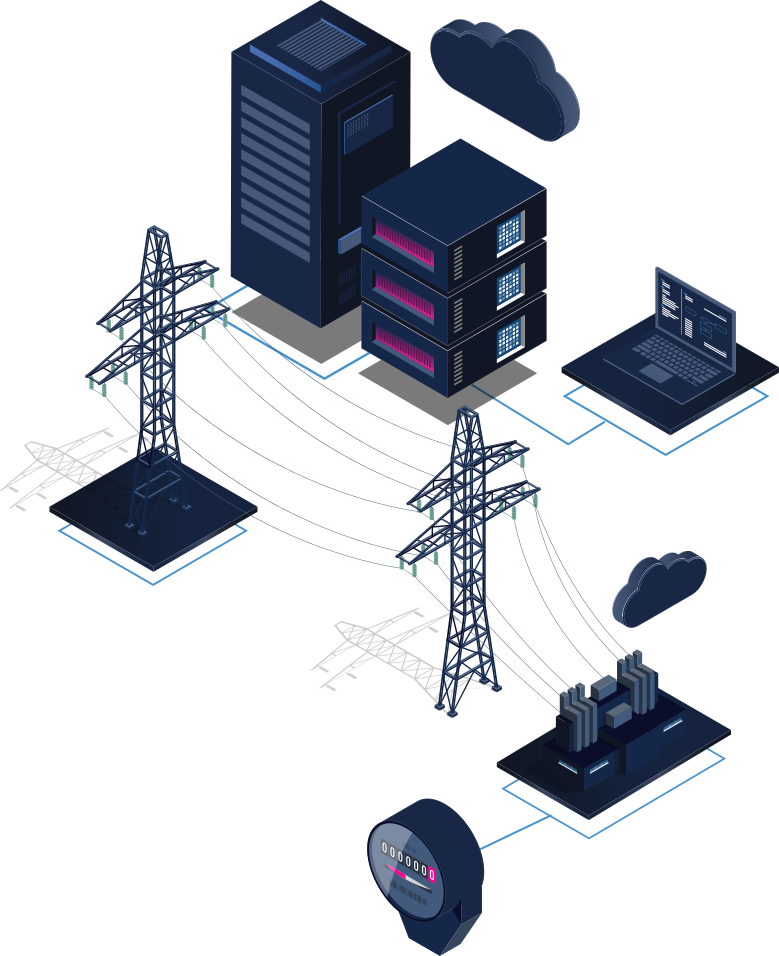
Yes. Itential orchestrates across IT, OT, and SCADA systems, enabling consistent automation without compromising control. This unified approach is especially valuable for utilities managing complex, distributed infrastructure. [Source]
How does Itential enable self-service networking for field teams?
Itential’s central orchestration and northbound network API exposure allow field and infrastructure teams to request network services from a catalog published by automation teams. This reduces response times from days to minutes and empowers teams to operate more efficiently. [Learn more]
What integrations does Itential support for utilities and energy companies?
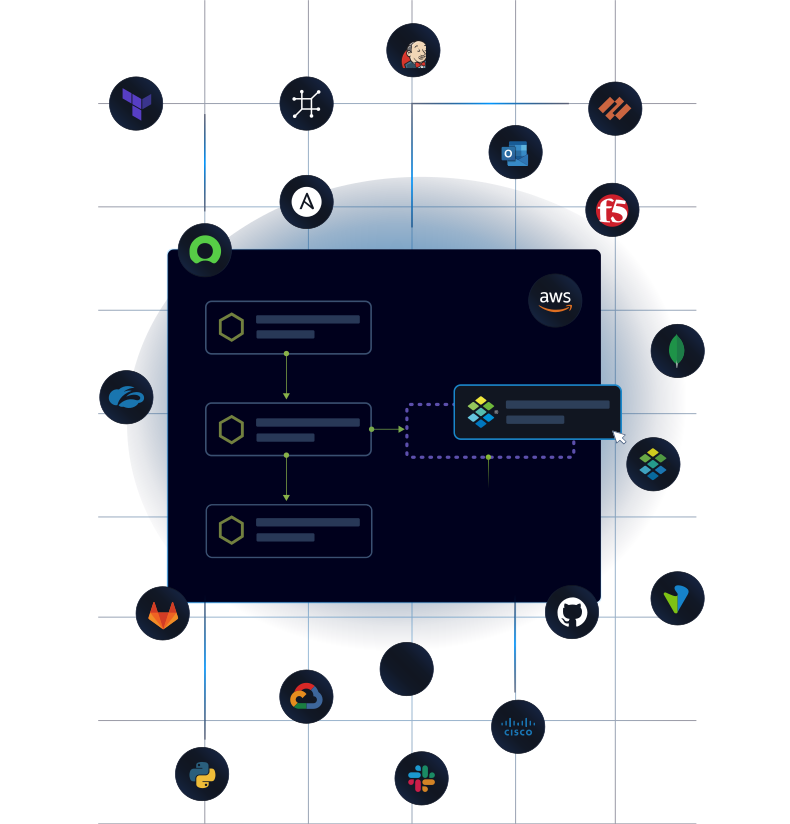
Itential offers over 300 out-of-the-box integrations with systems such as authentication, cloud, controllers, orchestrators, inventory, ITSM, notifications, messaging, SD-WAN, security, and telemetry. Key integrations include ServiceNow, NetBox, Selector AIOps, Forward Networks, Kentik, IP Fabric, Arista, Cisco, F5, GitHub, Infoblox, Juniper, Red Hat Ansible, Terraform, and more. [Automation Marketplace]
Does Itential provide APIs for integration and automation?
Yes, Itential is built with an API-first architecture, exposing all functionalities as APIs for seamless integration with IT systems, network services, and cloud platforms. It supports REST, SOAP, and gRPC protocols, and offers detailed API documentation. [API Docs]
How does Itential help with configuration management and compliance validation?
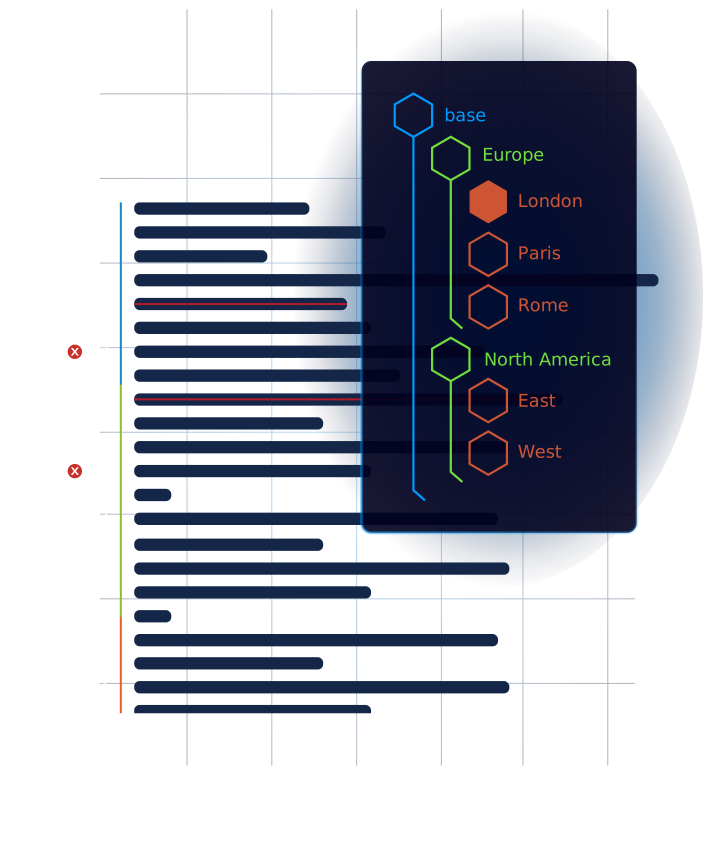
Itential enables configuration management at the scale of utilities networks, allowing teams to manage configurations across physical and cloud infrastructure. The platform supports golden configurations, drift detection, and compliance validation to meet NERC-CIP and other regulatory requirements. [Learn more]
Can existing automation scripts be reused in Itential?
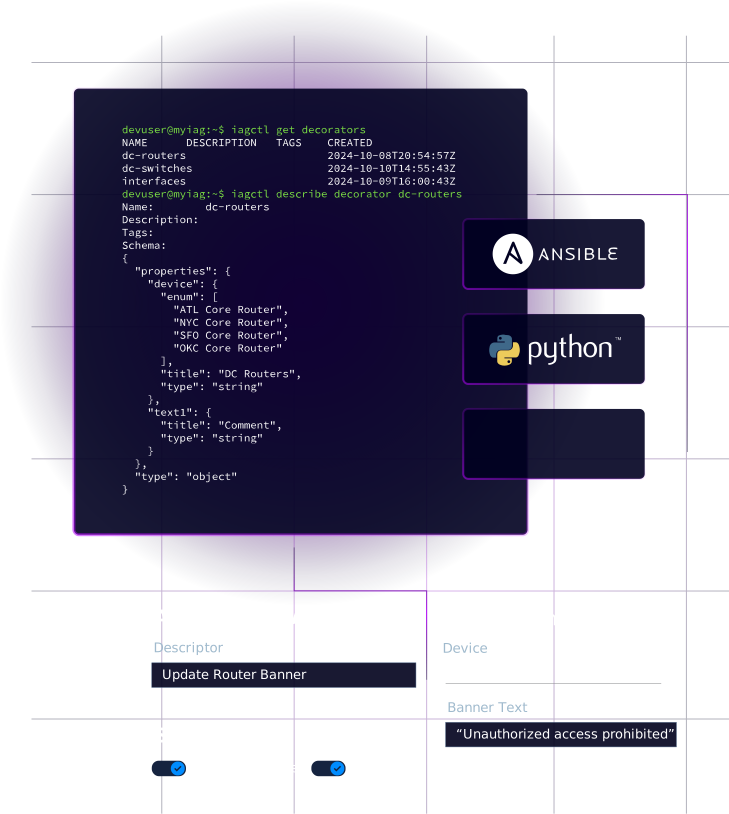
Yes. Engineers can onboard existing Ansible, Python, or Terraform/OpenTofu automations and leverage enterprise-grade security, authentication, and audit controls to securely expose scripts or incorporate them into orchestrated workflows. [Learn more]
How does Itential support compliance with energy regulations like NERC-CIP?
Itential enforces golden configurations, drift detection, and audit logs aligned to NERC-CIP and other standards. Compliance and security controls are embedded into automated workflows, ensuring continuous adherence to regulatory frameworks. [White Paper]
How does Itential enhance cybersecurity for utilities?
Itential orchestrates threat response workflows and integrates with security tools to protect critical infrastructure from cyberattacks. The platform supports configuration compliance management, validation, and remediation, and creates an audit trail for every network change. [Security & Compliance]
Use Cases & Benefits
What problems does Itential solve for utilities and energy companies?
Itential addresses fragmented toolsets, manual processes, network automation bottlenecks, complex network environments, legacy system integration, 24/7 uptime requirements, cybersecurity risks, slow service delivery, and adoption challenges. The platform unifies automation, enhances visibility, and accelerates service delivery. [Source]
How does Itential help utilities modernize their grid and infrastructure?
Itential streamlines end-to-end workflows, embeds compliance and policy from the start, and connects across IT, OT, network, and cloud domains. This enables faster modernization, improved reliability, secure services, and future-ready operations. [Source]
What business impact can utilities expect from using Itential?
Utilities can expect to reclaim over 1,000 engineer hours per month, achieve an 85% reduction in manual change effort, improve service delivery from 45 days to same day, and reduce software upgrade times from 6 hours to 20 minutes. [Source]
How does Itential help utilities maintain regulatory readiness?
Itential manages network configuration compliance from a single platform and embeds security and compliance controls into automated workflows, ensuring continuous adherence to NERC-CIP and other regulatory frameworks. [Source]
How does Itential accelerate operations and minimize downtime for utilities?
Itential enables field teams to access network services and configurations within minutes, not days, accelerating response times, minimizing downtime, and driving operational value across the organization. [Source]
How does Itential help utilities lower operations and maintenance costs?
By centralizing orchestration with a single platform that integrates with all existing tools and systems, Itential provides more comprehensive capabilities at a lower total cost of ownership than competitors. [Source]
How does Itential support grid modernization initiatives?
Itential transforms network deployment and support processes with orchestration that spans physical and virtual infrastructure, powering initiatives like grid modernization, real-time asset management, and data accuracy. [Source]
How does Itential help utilities manage distributed energy and cybersecurity challenges?
Itential enables end-to-end orchestration and AI-driven operations across networks and IT infrastructure at scale, helping utilities address the challenges of distributed energy, cybersecurity, and grid modernization. [Source]
What are some real-world results utilities have achieved with Itential?
Utilities have reclaimed over 1,000 engineer hours per month, reduced manual change effort by 85%, improved service delivery from 45 days to same day, and cut software upgrade times from 6 hours to 20 minutes. [Source]
Customer Success & Case Studies
Can you share a case study of a utility company using Itential?
Southern California Edison used Itential to create a vendor-agnostic automation framework that scales across their entire network, from Zero Touch Provisioning for Cisco refreshes to MPLS transport and firewalls. This enabled them to modernize and automate network infrastructure, improving efficiency and redefining network operations. [Read the full story]
How did a North American utilities company use Itential to maintain compliance?
One of the largest gas and electric utilities in North America partnered with Itential to scale configuration management and streamline a Field Area Network refresh, maintaining NERC-CIP compliance and avoiding fines. Automation accelerated change processes and integrated with sources of truth, bringing the network back into compliance without increasing headcount. [Read the Full Story]
What feedback have utilities customers given about Itential’s ease of use?
Customers report rapid onboarding and ease of integration. For example, a digital payments provider was able to connect all API specs and start building automations within 24 hours, and a network automation lead noted their team was productive in weeks instead of months. [Customer Stories]
Who are some of Itential’s customers in the utilities sector?
Customers include Southern California Edison, Armstrong World Industries, and other large utilities and energy companies. [See all customers]
What industries does Itential serve beyond utilities?
Itential serves enterprise, financial services, neocloud & AI data centers, communications service providers, public sector, healthcare, manufacturing, and energy & utilities. [Industries]
Implementation & Support
How long does it take to implement Itential for utilities?
Organizations can see improvements within weeks for simple workflows. Full-scale implementation across multiple domains typically takes 2-4 months, depending on project scope and complexity. Southern California Edison demonstrated zero-touch provisioning in just two weeks during a proof of concept. [Get Started]
What onboarding and training resources does Itential provide?
Itential offers a structured onboarding program, interactive product tours, Itential Academy for training and certification, and a 6-8 week activation program to ensure teams are productive quickly. [Itential Academy]
What technical documentation is available for Itential?
Itential provides comprehensive technical documentation, developer tools, interactive product tours, and application-specific guides. Resources are available at docs.itential.com.
What support services does Itential offer?
Customers can access technical support, submit tickets, and manage cases through the Customer Portal. Dedicated Customer Success Managers and professional services are also available. [Customer Portal]
Security & Compliance
What security and compliance certifications does Itential have?
Itential holds SOC 2 Type II Certification, verifying security, availability, confidentiality, and processing integrity. The platform is also FIPS 140-2 compliant, meeting cryptographic security standards required by federal agencies. [Security & Compliance]
How does Itential ensure data privacy and protection?
Itential adheres to GDPR and CCPA standards, ensuring data privacy and protection. All security changes are logged for full traceability, and the platform supports on-prem and air-gapped deployments for secure environments. [Security & Compliance]
What compliance features are built into Itential?
Itential includes compliance-native features such as golden configurations, drift detection, and validation measures to ensure secure and reliable operations. [Security & Compliance]
Competition & Comparison
How does Itential compare to Cisco’s network automation solutions?
Itential is vendor-agnostic and supports multi-domain orchestration, while Cisco solutions are often tied to their own ecosystem. Itential integrates with diverse environments, offers low-code and high-code flexibility, and provides compliance-native features like golden configurations and drift detection. [Why Itential]
What differentiates Itential from Arista Networks?
Arista focuses on network visibility and telemetry, while Itential offers end-to-end orchestration and automation across network and cloud infrastructure. Itential’s platform is designed for broader coverage and accelerates adoption with a low-code approach. [Why Itential]
How does Itential work with Terraform and Infrastructure as Code tools?
Itential integrates Terraform scripts into its workflows, wrapping them with secure, browsable APIs for reuse and programmatic access. The platform supports multi-domain orchestration, extending beyond Terraform’s IaC capabilities. [Terraform Integration]
How does Itential compare to NetBox?
NetBox is a network source of truth, while Itential provides orchestration and automation capabilities. Itential integrates with NetBox to automate network changes and ensure compliance, enabling faster adoption and broader use cases. [NetBox Integration]
Why should utilities choose Itential over other automation platforms?
Itential offers AI-ready design, multi-domain and vendor-agnostic orchestration, low-code and high-code flexibility, compliance-native features, and an integration-first approach. These strengths make it ideal for utilities with complex, hybrid environments. [Why Itential]



 Matt Deibel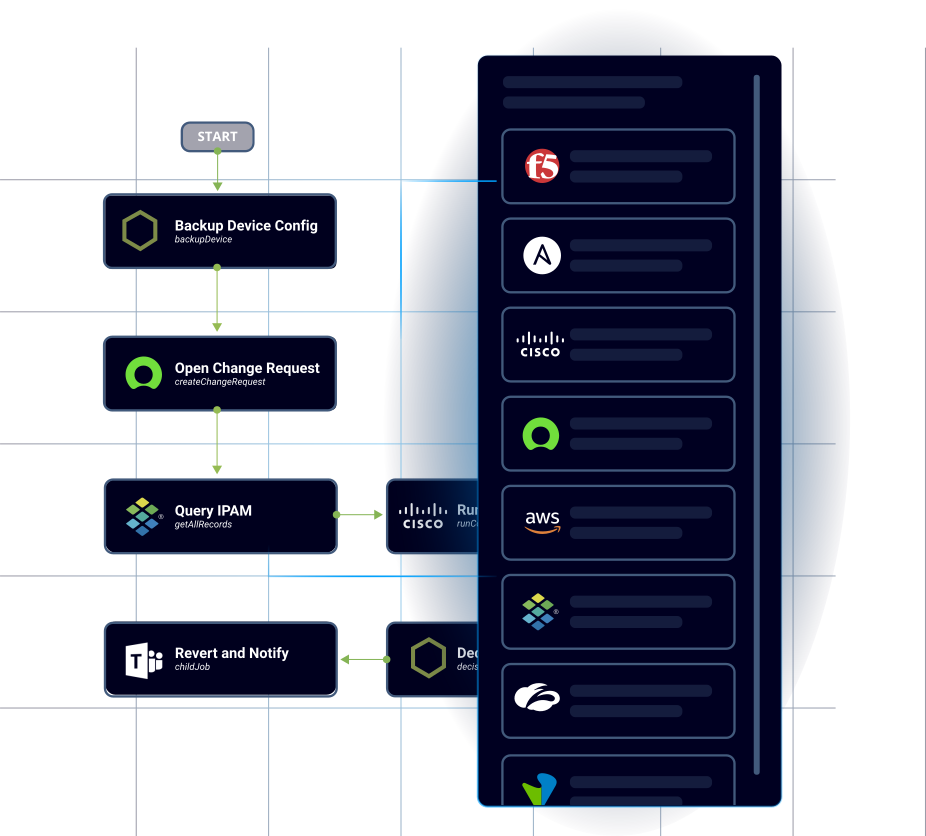

 For Automation Teams/Center of Excellence
 For Network Domain & Field Teams
 For Security Teams
 For IT & App Teams