Frequently Asked Questions
Product Information & Core Concepts
What does 'Infrastructure as a Product' mean in practice?
Infrastructure as a Product means delivering infrastructure the same way product teams deliver software. Platform teams define standardized, versioned infrastructure offerings that developers can consume on demand through self-service. Each product includes automation, policy, security, and lifecycle management by default. Itential provides the orchestration and control layer that turns infrastructure definitions into governed, repeatable products across cloud, network, and on-prem environments. Learn more.
How does Infrastructure as a Product differ from Infrastructure as Code or self-service portals?
Infrastructure as Code focuses on provisioning resources, while self-service portals expose requests. Infrastructure as a Product goes further by orchestrating the full lifecycle of infrastructure products across systems and teams. With Itential, infrastructure products are delivered through coordinated workflows that enforce policy, manage state, and integrate approvals, compliance, and Day 2 operations into a single delivery model. Learn more.
Which Itential products support Infrastructure as a Product?
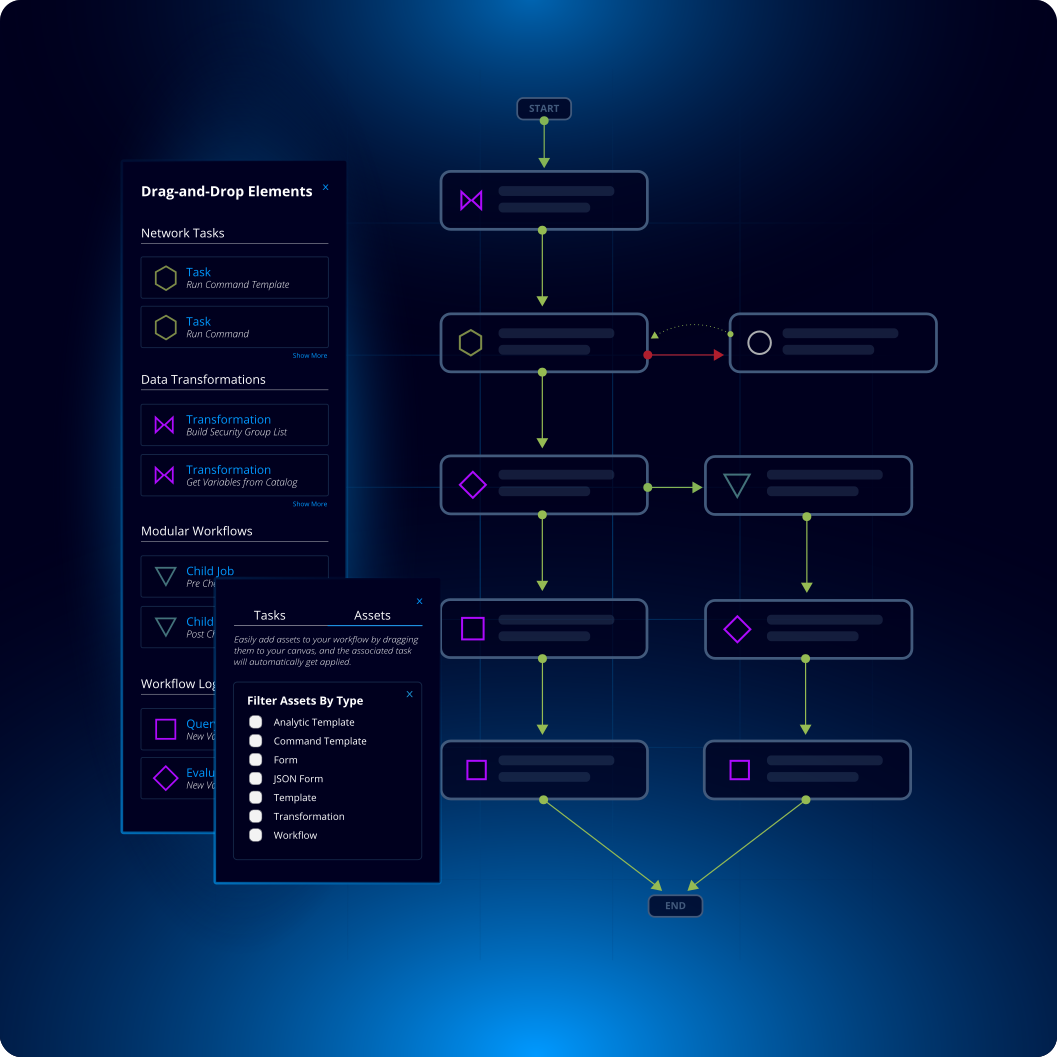
Infrastructure as a Product is delivered through the Itential Platform, including Workflow Orchestration, Lifecycle Manager, Configuration Manager, Operations Manager, Itential Automation Gateway, and FlowAI. These capabilities enable platform teams to define infrastructure products, orchestrate delivery across domains, enforce governance, and safely incorporate AI-driven actions. Learn more.
How does orchestration enable Infrastructure as a Product?
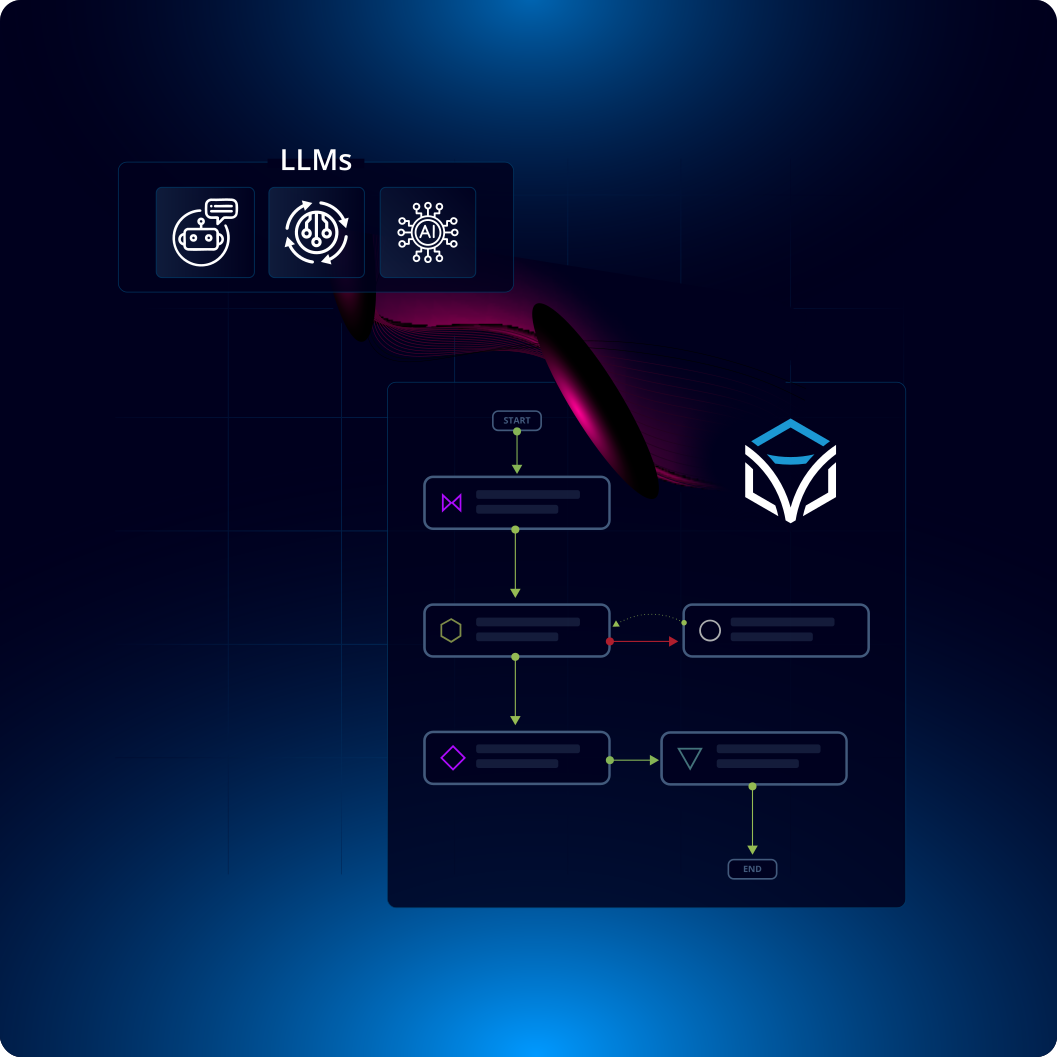
Orchestration coordinates tools, systems, and teams into a single delivery model. It connects infrastructure definitions to real execution, enforces policy, manages lifecycle state, and enables platforms and AI systems to operate with trust and predictability. Itential provides the orchestration layer that turns infrastructure definitions into consumable products. Learn more.
What are the main challenges with traditional infrastructure delivery?
Traditional infrastructure delivery relies on manual requests, fragmented pipelines, and team-specific automation, leading to inconsistent experiences, slow delivery, and difficulty enforcing governance. These limitations become structural barriers as organizations adopt platform engineering and AI-driven operations. Learn more.
How does Itential help reduce operational friction across domains?
Itential coordinates end-to-end orchestration, cutting cross-team handoffs and rework by 50 to 70 percent. This unified approach reduces operational friction and enables consistent delivery across cloud, network, security, and IT domains. Learn more.
How does Itential enable scaling without bottlenecks?
Itential supports 2 to 3x more applications and teams without adding platform or operations headcount by automating and standardizing infrastructure delivery. This allows platform teams to scale efficiently and avoid becoming fulfillment bottlenecks. Learn more.
How does Itential provide a secure execution layer for AI agents and workflows?
Itential enables AI-initiated infrastructure actions with 100% auditability and policy-controlled execution. Orchestration acts as the secure boundary, ensuring every action is governed, compliant, and traceable. Learn more about FlowAI.
How does Itential simplify the toolchain with orchestration?
Itential eliminates 30 to 50% of redundant scripts and point tools by unifying automation through a single control plane. This reduces tool sprawl and streamlines operations. Learn more.
Features & Capabilities
What are the key features of Itential's Infrastructure as a Product solution?
Key features include orchestrated end-to-end workflows, self-service product catalogs, automated lifecycle management, secure governance, AI-driven actions, embedded compliance, and seamless integration with existing tools. Learn more.
Can Itential work with our existing IaC, CI/CD, and ITSM tools?
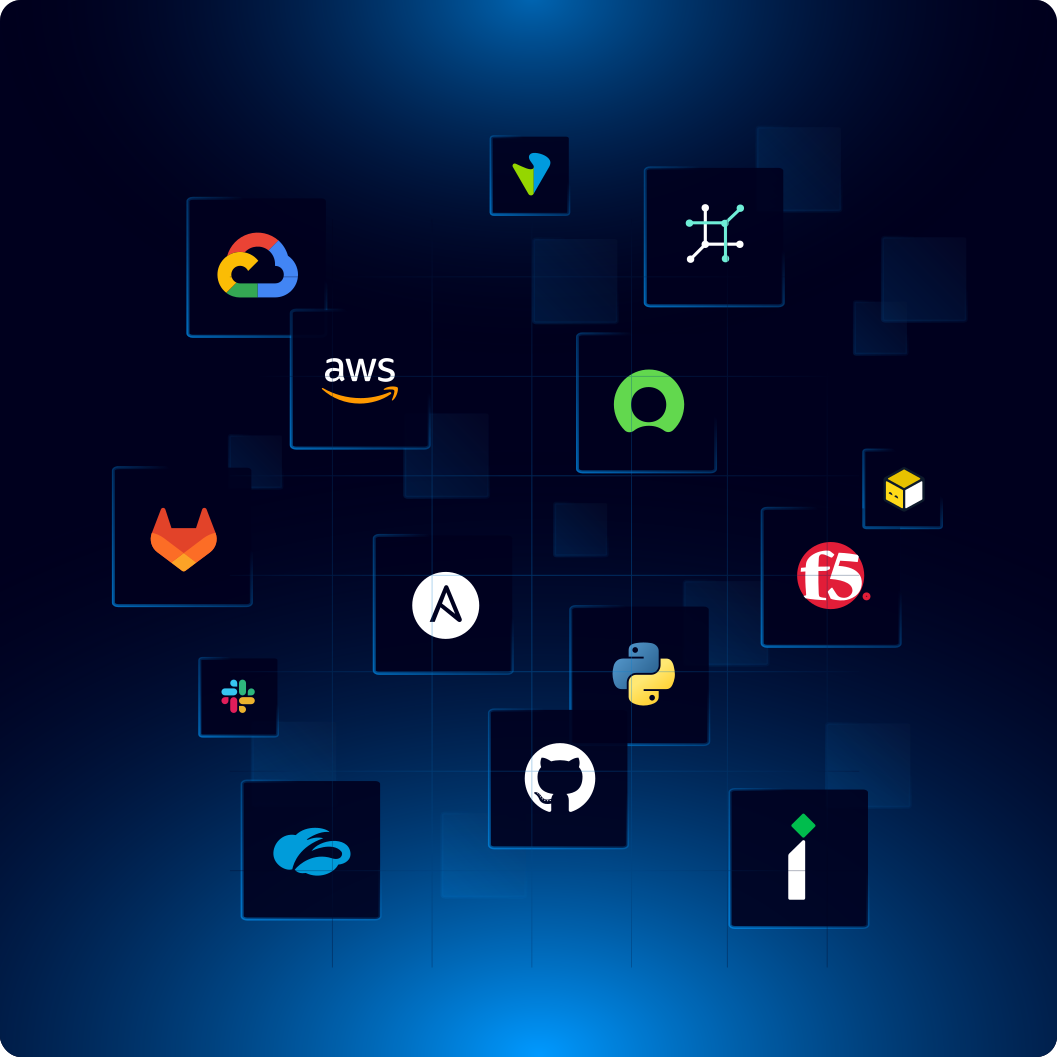
Yes. Itential is designed to orchestrate across existing tools rather than replace them. It integrates with Terraform, Ansible, CI/CD pipelines, ServiceNow, cloud providers, network controllers, and security platforms. This allows organizations to productize infrastructure delivery without rewriting automation or disrupting established workflows. See integrations.
How does Itential enable safe self-service?
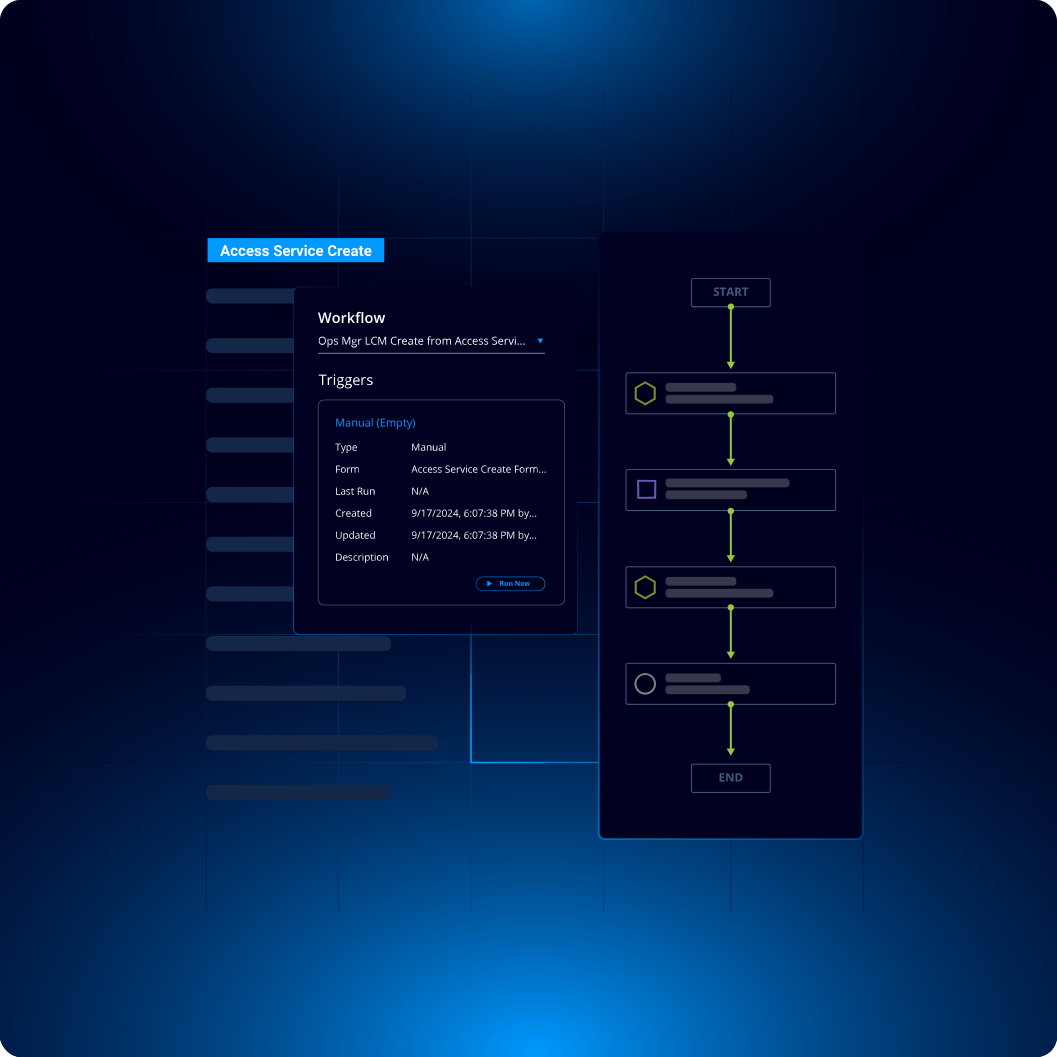
Itential enables self-service by separating consumption from execution. Developers request infrastructure products through approved interfaces, while Itential orchestrates the underlying workflows with built-in approvals, policy enforcement, and audit logging. This allows teams to move fast without bypassing governance or introducing risk. Learn more.
How is governance enforced across infrastructure products?
Governance is embedded directly into orchestration workflows. Itential enforces role-based access, approval gates, policy checks, and compliance validation before and during execution. Every infrastructure product delivery is tracked with full auditability, ensuring consistent enforcement across cloud, network, and security domains. Learn more.
Does Itential support the full lifecycle of infrastructure products?
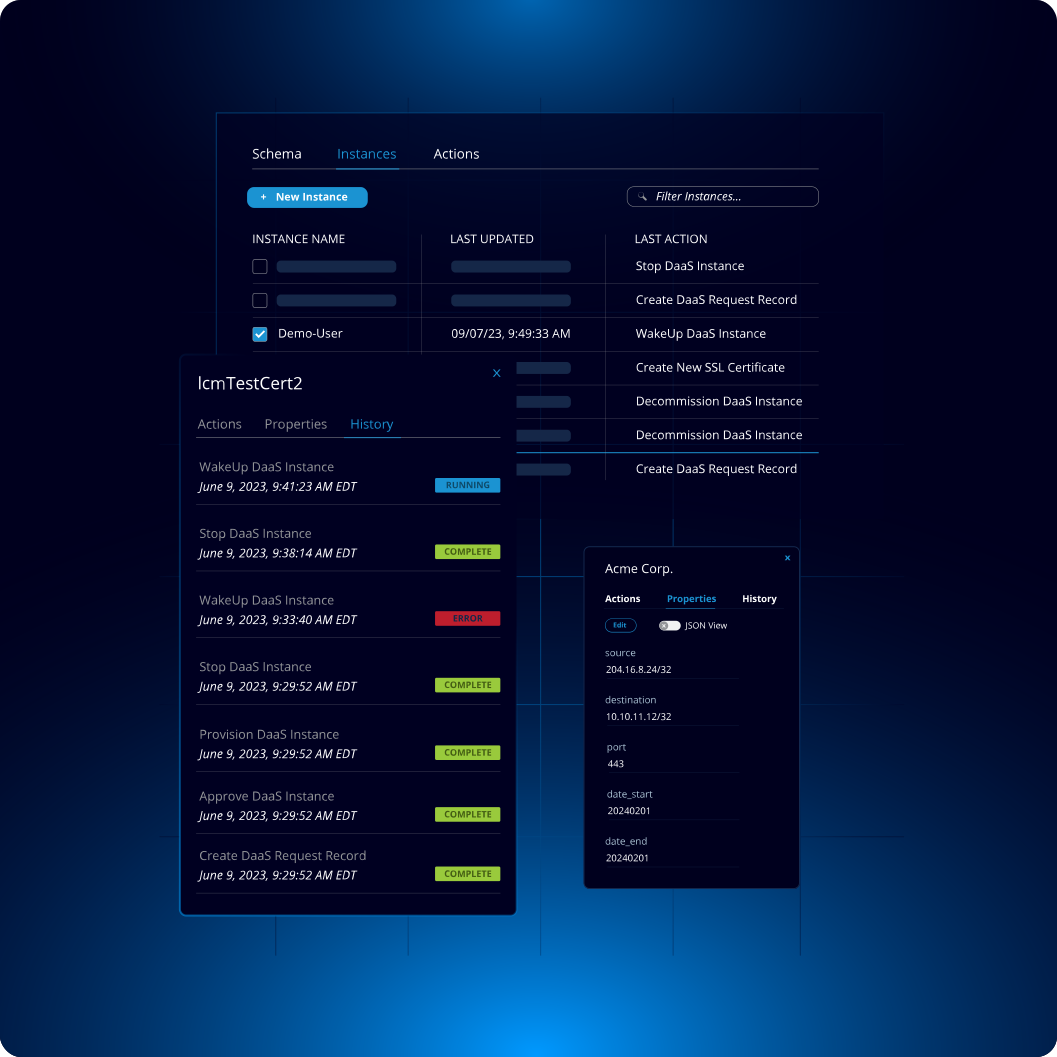
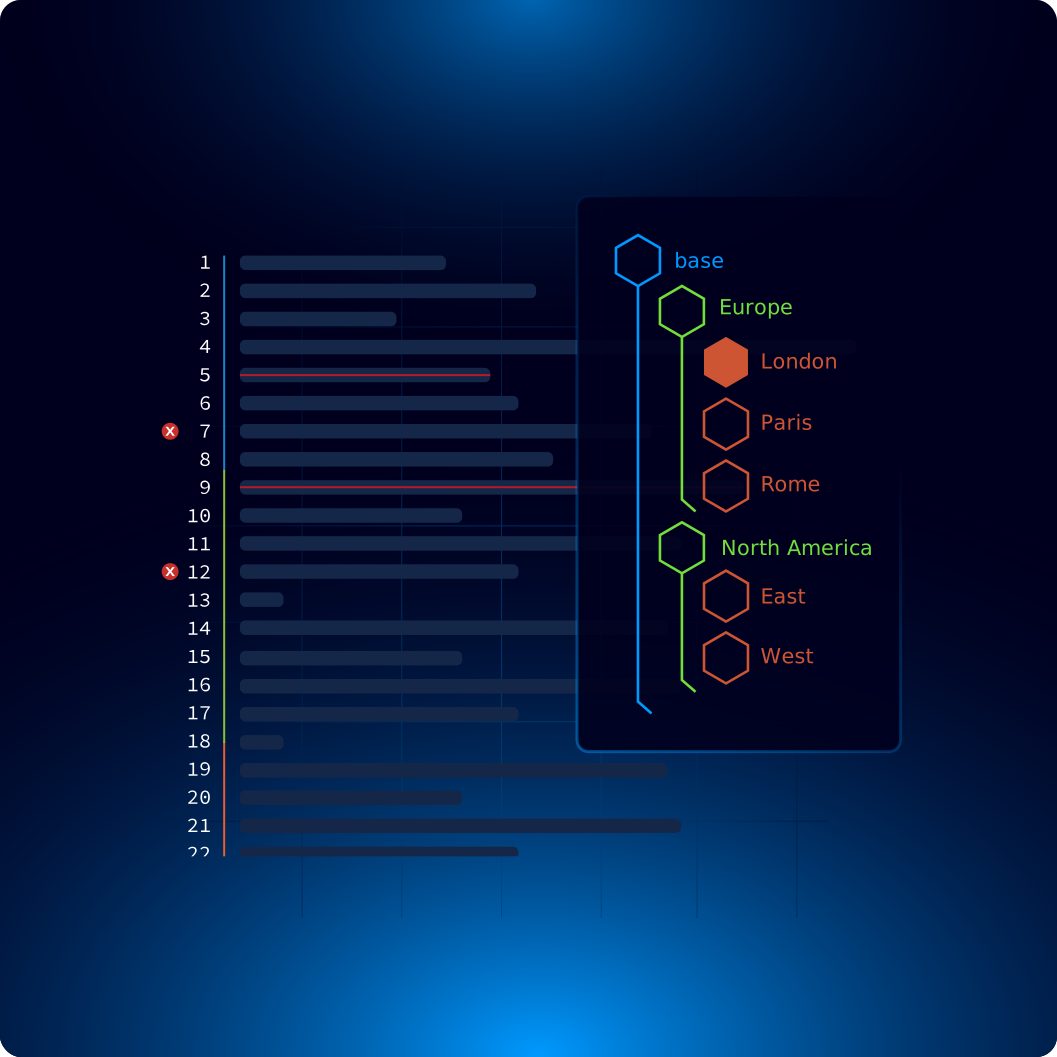
Yes. Itential orchestrates the entire infrastructure lifecycle, from initial provisioning and onboarding through updates, scaling, remediation, and decommissioning. Platform teams can manage versioning, dependencies, and state consistently across all infrastructure products and environments. Learn more.
How does Itential help reduce tool sprawl?
Rather than adding another point tool, Itential coordinates existing automation and platforms through a unified orchestration fabric. This reduces duplicate scripts, overlapping tools, and fragmented workflows, allowing teams to standardize delivery without forcing rip-and-replace initiatives. Learn more.
What integrations does Itential support for Infrastructure as a Product?
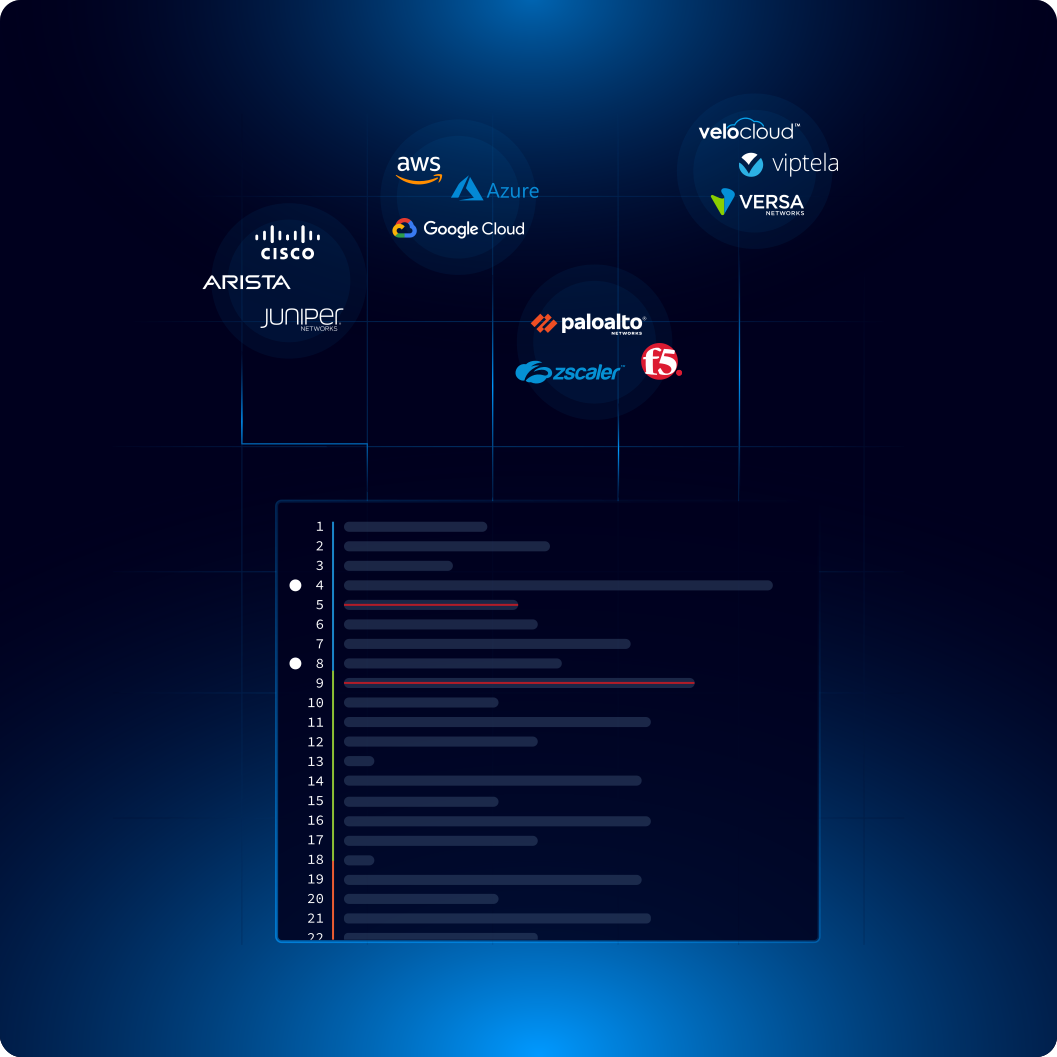
Itential supports over 300 pre-built integrations, including ServiceNow, NetBox, Infoblox, GitHub, Selector AIOps, Kentik, Forward Networks, IP Fabric, Red Hat Ansible, Terraform, messaging systems like Slack and Microsoft Teams, Arista Networks, Cisco, F5, and Palo Alto. For a full list, visit our Automation Marketplace.
Is technical documentation available for Infrastructure as a Product?
Yes, Itential provides extensive technical documentation, including guides, API references, and release notes. Access these resources at docs.itential.com, developer tools, and API documentation.
Security & Compliance
What security and compliance certifications does Itential hold?
Itential holds SOC 2 Type II Certification, FIPS 140-2 compliance, and adheres to GDPR and CCPA standards. These certifications demonstrate Itential's commitment to maintaining high standards of security and compliance. Learn more.
How does Itential embed compliance into infrastructure products?
Compliance is inherent to every infrastructure product by applying consistent policies from creation through runtime, preventing misconfigurations, and maintaining real-time visibility across standards. Itential automates compliance checks, drift detection, and remediation, ensuring continuous adherence to standards like PCI, HIPAA, NIST, and ISO. Learn more.
How is auditability ensured for Infrastructure as a Product?
Every change is logged with comprehensive details, including pre/post validation results, enabling full traceability for audits and compliance verification. Itential provides audit trails for every orchestration execution, including who initiated it, what changed, approval chains, and timestamps. Learn more.
Does Itential support on-prem and air-gapped deployments for compliance?
Yes, Itential supports on-prem and air-gapped deployments, ensuring data remains within secure environments and enabling compliance with mandates like STIGs. Learn more.
Does Itential have a responsible disclosure policy for security vulnerabilities?
Yes, Itential has a policy for responsibly disclosing security vulnerabilities, ensuring transparency and proactive security management. Learn more.
Use Cases & Benefits
What business impact can customers expect from Infrastructure as a Product?
Customers can expect a 90% reduction in environment delivery times, 90% cut in manual intervention for infrastructure changes, 10x increase in platform throughput without adding headcount, 100% audit readiness, and 70% reduction in change-related incidents and rework. These outcomes enable self-service, support AI-driven operations, and allow infrastructure teams to scale with the business. Learn more.
What teams benefit most from Infrastructure as a Product with Itential?
Platform engineering teams, cloud and network operations teams, and infrastructure leaders benefit most. Itential enables these teams to scale delivery, improve consistency, and support self-service and AI initiatives without increasing operational risk or headcount. Learn more.
What industries are best suited for Infrastructure as a Product?
Industries such as telecommunications, financial services, healthcare, manufacturing, public sector, utilities, media & entertainment, biotechnology, and energy benefit from Infrastructure as a Product. These industries require unified automation tools, streamlined operations, and enforced compliance across diverse environments. Learn more.
How does Infrastructure as a Product support AI-driven operations?
AI systems require a governed execution layer to safely act on infrastructure. Itential provides that layer. AI agents and LLMs can initiate infrastructure workflows through controlled interfaces, while Itential enforces policy, approvals, and auditability. FlowAI accelerates workflow creation and optimization while ensuring actions remain safe and compliant. Learn more.
How does Itential help organizations scale operations without increasing headcount?
Itential's low-code design, 300+ pre-built integrations, and self-service catalogs let organizations scale operations without scaling teams. Customers report 80-90% reduction in manual effort, enabling platform teams to support more applications and environments efficiently. Learn more.
What pain points does Infrastructure as a Product solve?
It addresses fragmented automation and tool sprawl, manual change execution, configuration drift and non-compliance, multi-domain complexity, inability to scale operations, lack of governance and auditability, and slow adoption of automation. Learn more.
How easy is it to implement Infrastructure as a Product with Itential?
Itential's Professional Services accelerate success, with typical implementation from contract signature to production-ready platform in 3-6 months. Initial value can be seen within weeks, and rapid expansion of automation capabilities occurs over the next 6-12 months. Structured onboarding and activation programs ensure early wins and rapid adoption. Learn more.
What feedback have customers provided about ease of use?
Customers praise Itential for its low-code design and intuitive interface. Uzair Khan from Rush University Medical Center highlighted the ability to create impactful automations without needing to be a developer. Eric Anderson from Armstrong reported saving over 21,000 hours of manual work and reducing service delivery times. The platform's Canvas lowers the barrier to entry, enabling non-developers to contribute to automation. Read testimonials.
Competition & Comparison
How does Itential's Infrastructure as a Product solution compare to similar products?
Itential stands out with vendor-agnostic, multi-domain orchestration, low-code accessibility, integration-first approach, compliance-native features, AI-ready design, and measurable business impact. It is ideal for enterprises with multi-vendor infrastructures, regulated industries, and organizations seeking to scale operations efficiently. Learn more.
What are the advantages of Itential for different user segments?
Network engineers and operators benefit from low-code tools, IT/infrastructure leadership gains visibility and reduced risk, enterprises with complex infrastructures leverage vendor-agnostic orchestration, and regulated industries ensure compliance with built-in governance features. Learn more.
Technical Requirements & Support
What technical resources are available for Infrastructure as a Product?
Itential offers comprehensive documentation, developer tools, API references, and release notes. Access these at docs.itential.com, developer tools, and API documentation.
How long does it take to implement Infrastructure as a Product with Itential?
Implementation typically takes 3-6 months from contract signature to production-ready platform, with initial value seen within weeks. Rapid expansion of automation capabilities occurs over the next 6-12 months. Learn more.
What onboarding and activation programs does Itential offer?
Itential offers structured onboarding and activation programs, including platform deployment, setup, initial use case development, and a 6-8 week activation program to ensure teams are productive quickly. Learn more.
Is training available for Infrastructure as a Product?
Yes, training and certification programs are available through Itential Academy, helping users master the platform and its functionalities. Learn more.
Does Itential offer professional services for implementation?
Yes, customers can leverage Itential's Professional Services for expert assistance with implementation and optimization. Learn more.