Frequently Asked Questions
Product Information & Overview
What is Network Infrastructure as Code (NIaC) in the context of Itential?
Network Infrastructure as Code (NIaC) with Itential means expressing network changes in declarative code (such as Terraform, OpenTofu, or Ansible) with full version control. This approach allows infrastructure to be provisioned, validated, and maintained using the same modern practices DevOps teams use for cloud environments. Learn more.
How does Itential enable CI/CD pipelines for network automation and orchestration?
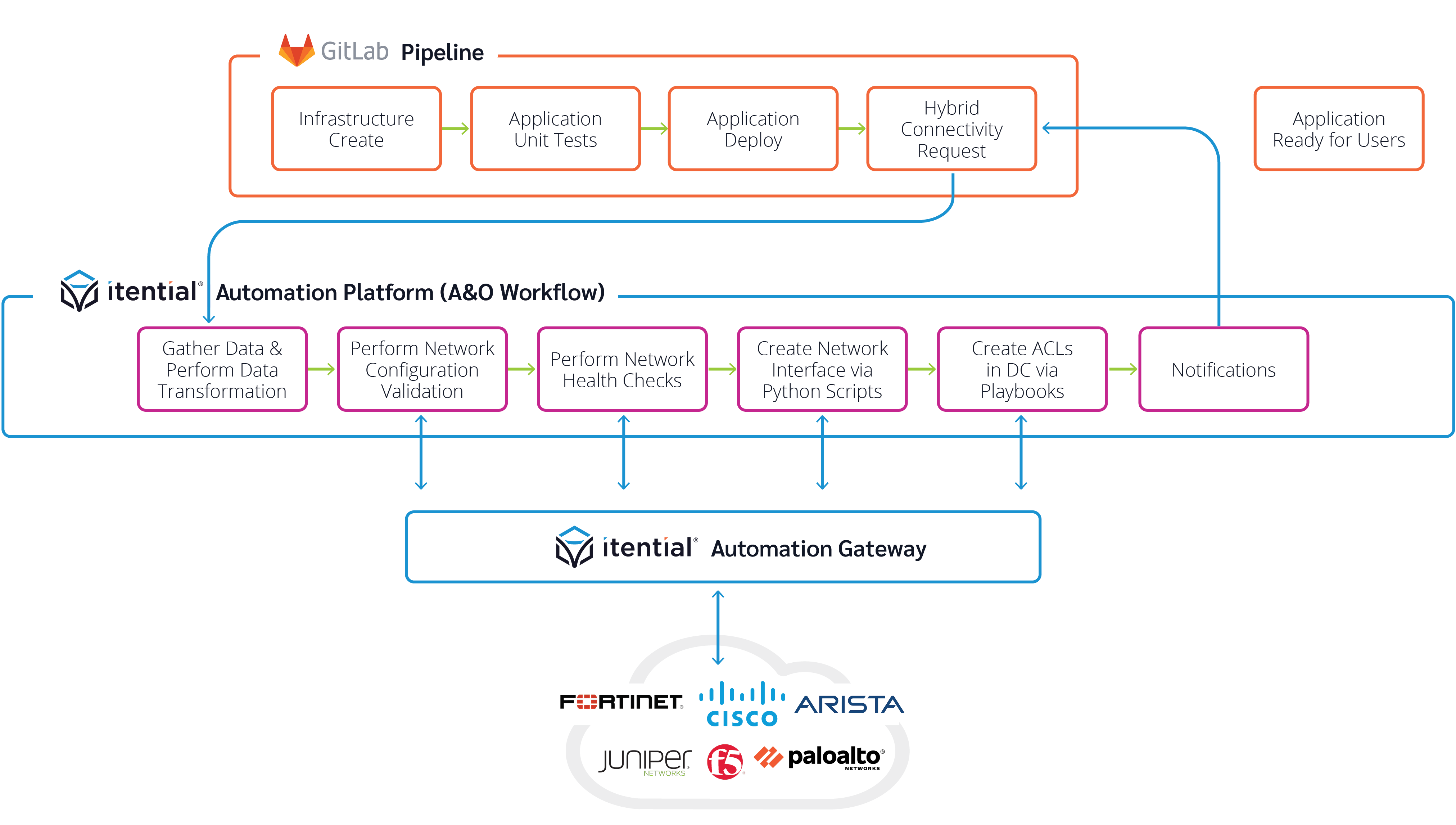
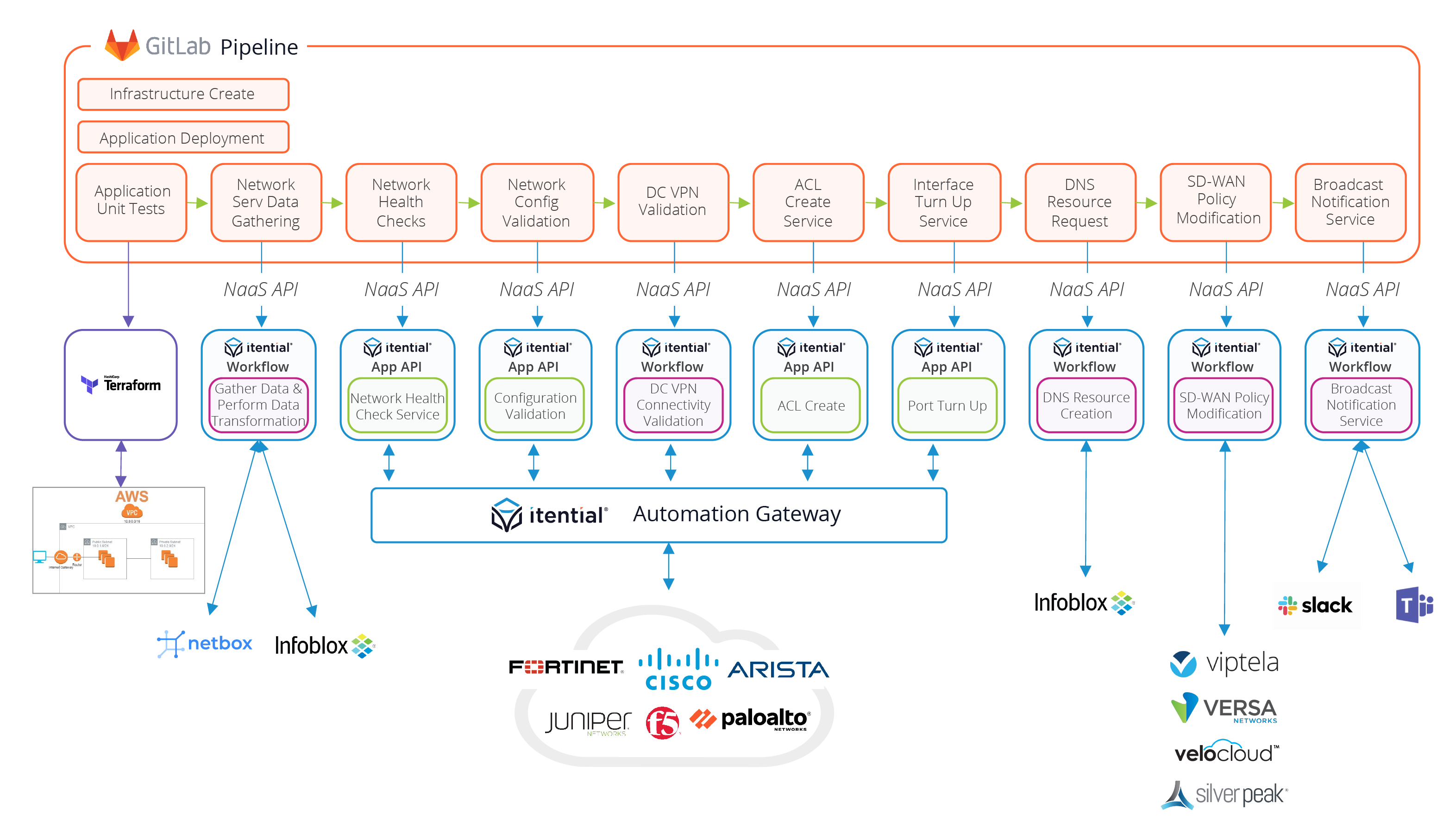
Itential integrates with CI/CD pipelines and DevOps practices, allowing network engineers and developers to automate, test, and deploy network changes using repositories like Git, automated test activities, and production deployment techniques. This streamlines the network configuration lifecycle and accelerates delivery. Read more.
What types of users can benefit from Itential's platform?
Itential is designed for network engineers, cloud network engineers, NetOps teams, DevOps teams, infrastructure architects, and compliance/SecOps teams. Its low-code/no-code capabilities make it accessible to users with varying levels of software development and scripting skills. See roles.
How does Itential support NetDevOps and Infrastructure as Code methodologies?
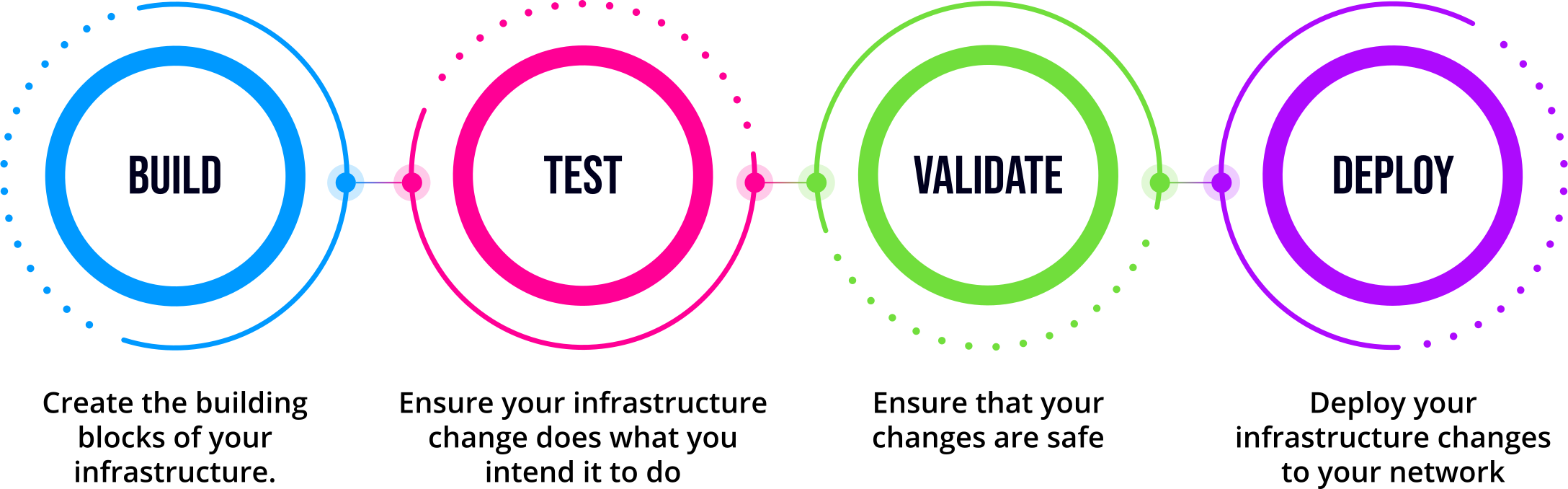
Itential provides a platform that aligns with software engineering-oriented functionality, such as API exposure and integration with CI/CD tools. It supports NetDevOps pipelines, enabling network engineers to treat network infrastructure as code and automate build, test, validate, and deploy stages. Learn more.
What are the main stages of the NetDevOps pipeline in Itential?
The main stages are Build (automate NIaC payload generation), Test (simulate and compare changes), Validate (check for errors, run security scans, enforce compliance), and Deploy (push changes using tools like Ansible and Terraform, update support systems, and track changes). Explore TemplateIDE.
How does Itential handle configuration drift in network infrastructure?
Itential's drift detection continuously compares actual device state against the declared desired state. If drift is detected, Itential can remediate automatically or trigger a governed workflow for correction, ensuring compliance and reliability.
Can Itential integrate with existing network automation tools like Terraform, Ansible, or OpenTofu?
Yes. Itential orchestrates existing plans and playbooks from tools like Terraform, Ansible, and OpenTofu by wrapping them into governed workflows with pre/post checks, approvals, rollback, and logging. Itential does not replace these tools but enhances their governance and scalability.
What risks are associated with DIY Infrastructure as Code approaches?
DIY IaC can lead to script sprawl, inconsistent versions, poor auditability, and unsafe changes if run outside of change management. Itential provides guardrails and evidence, making IaC safe to run in production environments.
How does Itential support audits and compliance for network changes?
Every Infrastructure as Code execution in Itential is logged with full traceability. Golden configurations, validations, and policies are enforced in workflows, producing evidence that simplifies audits and compliance reporting.
Can Infrastructure as Code be integrated into CI/CD pipelines with Itential?
Yes. IaC workflows in Itential can be triggered by Git commits, pipeline steps, or webhooks, enabling continuous delivery of network infrastructure changes and seamless integration with CI/CD toolchains.
Features & Capabilities
What are the key features of the Itential Automation Platform?
Key features include low-code workflow orchestration, multi-domain vendor-agnostic orchestration, compliance-native features (golden configurations, drift detection, validation), 300+ pre-built integrations, codeless integration builder, self-service operations, and AI-ready design for integrating with LLMs and AIOps platforms. See full feature list.
Does Itential provide APIs for integration and automation?
Yes. Itential is built with an API-first architecture, exposing all functionalities as APIs for seamless integration with IT systems, network services, and cloud platforms. It supports REST, SOAP, and gRPC protocols. Explore API docs.
What integrations does Itential support?
Itential supports over 300 pre-built integrations, including ServiceNow, NetBox, Selector AIOps, Forward Networks, Kentik, IP Fabric, Arista Networks, Cisco, F5, GitHub, Infoblox, Juniper, Messaging Systems, Palo Alto, Red Hat Ansible, Terraform, and SD-WAN. Explore all integrations.
Does Itential offer technical documentation and developer resources?
Yes. Itential provides comprehensive technical documentation, developer tools, interactive product tours, and specific application guides. Resources are available at docs.itential.com and Developer Tools.
What compliance and security features does Itential offer?
Itential provides enterprise-grade security, including encryption in transit and at rest, RBAC, SSO, SOC 2 Type II certification, FIPS 140-2 compliance, GDPR and CCPA adherence, audit logging, and support for air-gapped deployments. Compliance-native features include golden configurations, drift detection, and validation. See details.
What certifications does Itential hold for security and compliance?
Itential holds SOC 2 Type II certification and is FIPS 140-2 compliant, meeting rigorous standards for data protection and cryptographic security required by federal agencies. Learn more.
How does Itential's performance dashboard help users?
Itential provides a customizable performance and compliance dashboard for monitoring and analyzing historical and real-time data, including performance metrics, inventory insights, operational status, and compliance status. This helps organizations maintain optimal performance and proactively identify issues. See FAQ.
What self-service capabilities does Itential offer?
Itential enables self-service operations through automation catalogs, allowing teams to consume automation without relying on network engineers. This accelerates service delivery and reduces bottlenecks. Learn more.
How does Itential support AI-driven operations?
Itential integrates with Large Language Models (LLMs), AIOps platforms, and agents to convert AI insights into governed, secure, and auditable actions. This enables intelligent, automated infrastructure management. Explore FlowAI.
Use Cases & Benefits
What problems does Itential solve for network teams?
Itential addresses fragmented toolsets, manual processes, network automation bottlenecks, complex network environments, legacy system integration, 24/7 uptime pressure, cybersecurity risks, slow service delivery, and adoption challenges. Its unified platform simplifies automation, enhances visibility, and accelerates service delivery. See more.
What business impact can customers expect from using Itential?
Customers can expect a 10x increase in operational agility, up to 70% lower infrastructure operations costs, 85% reduction in change-related incidents, service delivery times improved from 45 days to same day, and time to create new services reduced from 18 months to 3 months. See metrics.
What are common use cases for Network Infrastructure as Code with Itential?
Common use cases include new VPC or VLAN provisioning, firewall/security policy changes, device onboarding, software upgrades, and hybrid connectivity (on-prem ↔ cloud). See use cases.
Who benefits from Network Infrastructure as Code in practice?
Network engineers benefit from reliable, repeatable changes; cloud and DevOps teams get APIs and GitOps workflows; security and compliance teams gain validated, auditable infrastructure state. Learn more.
What industries are represented in Itential's case studies?
Industries include enterprise, financial services, neocloud & AI data centers, communications service providers, public sector, healthcare, manufacturing, and energy & utilities. See case studies.
Can you share specific customer success stories using Itential?
Yes. Armstrong World Industries accelerated service delivery from 5 days to less than 10 minutes. Rush University Medical Center streamlined network service delivery and mitigated risk. Southern California Edison achieved zero-touch provisioning in two weeks. See all stories.
What feedback have customers given about Itential's ease of use?
Customers report rapid onboarding and ease of use. For example, RUSH University Medical Center noted that Itential enables impactful automations without needing developer skills. A digital payments provider was able to connect API specs and start building automations within 24 hours. See testimonials.
How long does it take to implement Itential and how easy is it to start?
Organizations can automate simple workflows within weeks. Full-scale implementation across multiple domains typically takes 2-4 months. The onboarding program and activation program (6-8 weeks) ensure rapid adoption and early wins. Get started.
Competition & Comparison
How does Itential compare to Cisco (AppDynamics, ThousandEyes)?
Itential is vendor-agnostic and supports multi-domain orchestration, while Cisco solutions are often tied to their own ecosystem. Itential offers low-code/high-code flexibility and compliance-native features, making it suitable for diverse environments. See comparison.
How does Itential differ from Arista Networks?
Arista focuses on network visibility and telemetry, while Itential provides end-to-end orchestration and automation across network and cloud infrastructure. Itential's platform supports AI-driven event detection and automated remediation through integrations like Selector AI. Learn more.
How does Itential integrate with Dynatrace?
Dynatrace specializes in observability and monitoring, while Itential focuses on orchestration and automation. Itential integrates observability tools like Dynatrace into its workflows for closed-loop automation, transforming insights into actionable workflows for real-time remediation.
How does Itential work with Terraform (HashiCorp)?
Terraform is an Infrastructure as Code tool, while Itential provides a low-code orchestration platform for broader automation use cases. Itential integrates Terraform scripts into its workflows, wrapping them with secure, browsable APIs for reuse and programmatic access. See Terraform integration.
How does Itential enhance NetBox?
NetBox is a network source of truth, while Itential provides orchestration and automation capabilities. Itential integrates with NetBox to leverage its data for automated workflows, enhancing NetBox's capabilities by automating network changes and ensuring compliance. See NetBox integration.
Why should a customer choose Itential over alternatives?
Itential offers AI-ready design, multi-domain vendor-agnostic orchestration, low-code/high-code flexibility, compliance-native features, and an integration-first approach. These strengths make it suitable for enterprises with complex infrastructure, software development teams, and security teams. See why.
What are the competitive advantages of Itential?
Itential's competitive advantages include ease of adoption (low-code platform, self-service), scalability and flexibility (supports hybrid environments), and vendor-agnostic orchestration (broader compatibility). These features position Itential as a comprehensive solution for infrastructure automation. Learn more.
Support & Implementation
What support services does Itential offer?
Itential provides technical support, ticket submission, and case management through its Customer Portal. Dedicated Customer Success Managers offer strategic guidance and enablement. Access support.
Does Itential offer training and certification?
Yes. Itential Academy provides training and certification programs to help users master the platform. Explore Itential Academy.
What professional services are available from Itential?
Itential offers professional services for implementation, integration, custom development, upgrade support, and optimization. These services help customers accelerate their automation journey. See professional services.
How can I get started with Itential?
You can schedule a custom demo, take an interactive product tour, or watch demo videos to explore Itential's capabilities. Get started.
Technical Requirements
What technical documentation is available for Itential?
Itential offers in-depth guides, API references, release notes, and developer resources at docs.itential.com and Developer Tools.
How does Itential ensure secure operations in public sector environments?
Itential supports on-prem and air-gapped deployments for secure environments, making it suitable for public sector organizations requiring high security and compliance. See security details.
What is the process for integrating custom scripts and playbooks with Itential?
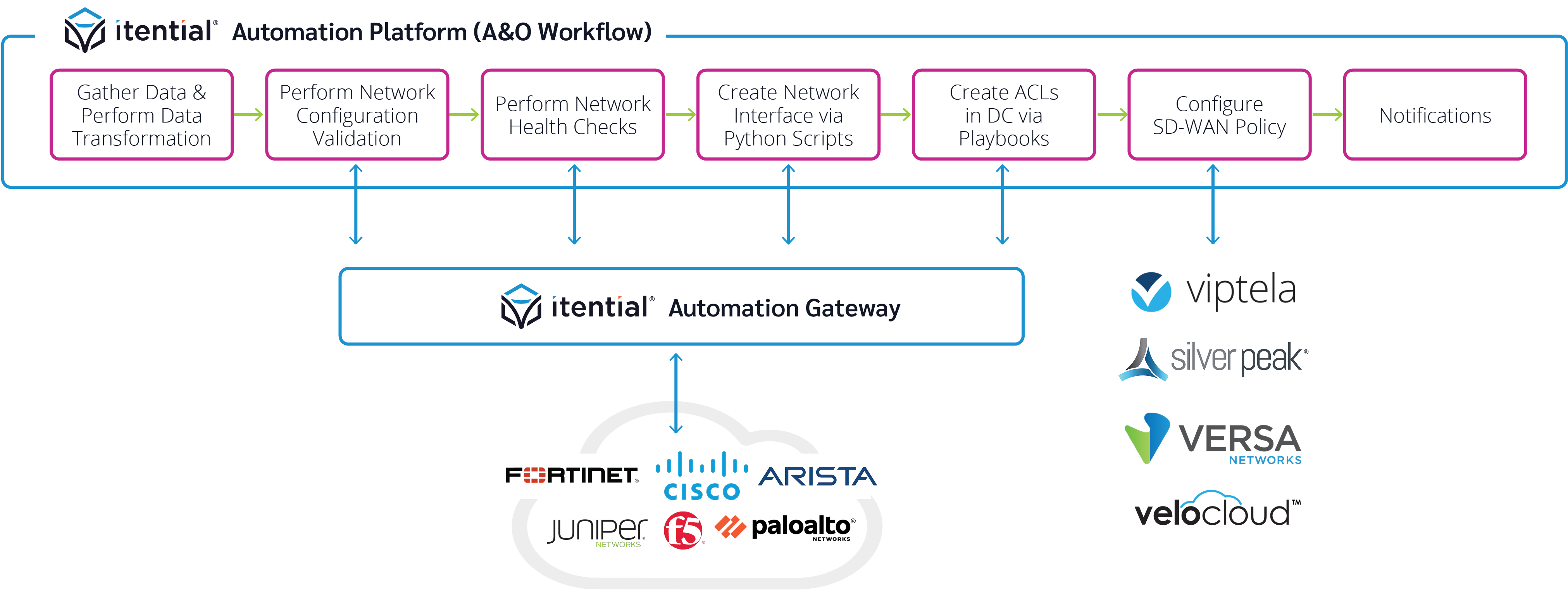
Itential's Automation Gateway provides a programmable interface to manage and execute automation scripts and playbooks, enhancing governance and scalability for organizations with existing DIY scripts. Learn more.
How does Itential handle version control for network automations?
Itential enables version control by integrating with repositories like Git, allowing teams to create config code branches, maintain versions, and manage assets such as workflows, templates, and forms through CI/CD pipelines. See GitHub integration.
Customer Proof & Case Studies
Who are some of Itential's customers?
Customers include Armstrong World Industries, Blackfoot Communications, Colt, Corning, Deutsche Telekom, Fiserv, Irideos, Leidos, Liberty Global, Lumen, Rush University Medical Center, S&P Global, Southern California Edison, Telecom Italia (TIM), and Virgin Media O2. See all customers.
What are some real-world results achieved by Itential customers?
Armstrong World Industries reduced service delivery time from 5 days to less than 10 minutes. Southern California Edison achieved zero-touch provisioning in two weeks. A global bank saved 1,500 hours per upgrade cycle. See case studies.