Frequently Asked Questions
Product Overview & Core Capabilities
What is the Itential Platform and what does it do?
The Itential Platform is a low-code orchestration platform designed to automate and orchestrate network and cloud infrastructure across multi-domain, multi-vendor environments. It enables organizations to build, test, and run end-to-end automation workflows, supporting use cases in data center, cloud/multi-cloud, SD-WAN, and network services. Since 2015, Itential has powered over 1 billion automations and orchestrations for enterprise, financial services, public sector, and service provider networks. [Source]
What are the core capabilities of the Itential Platform?
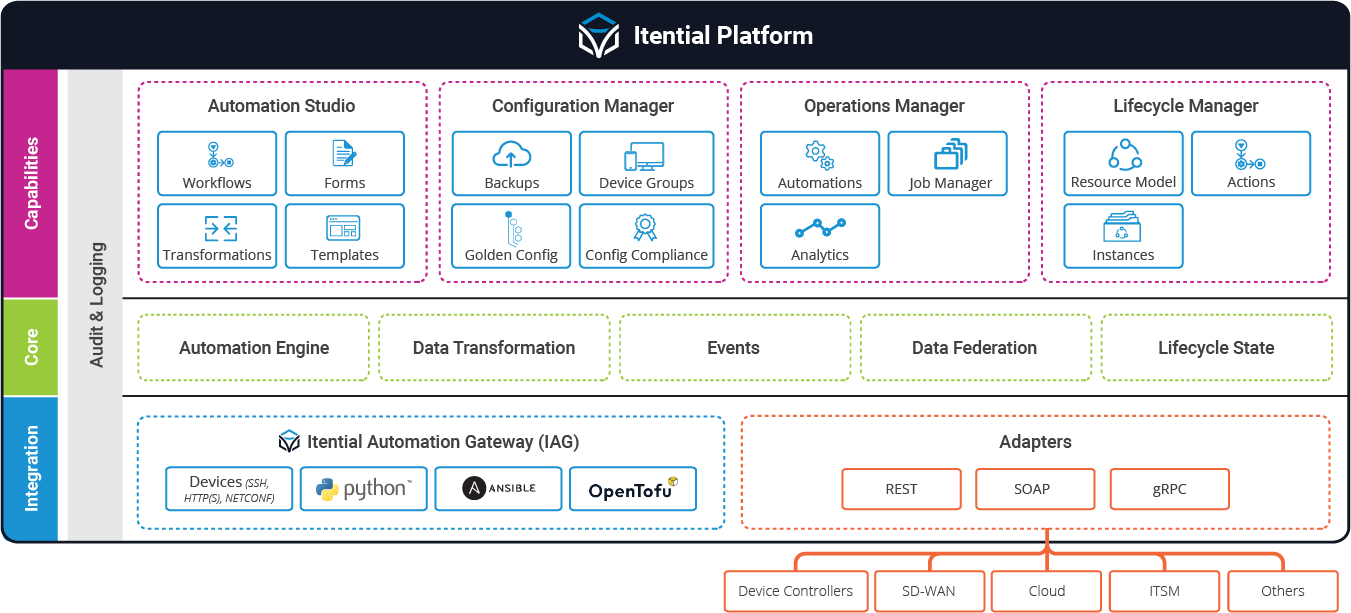
The platform offers low-code workflow orchestration, multi-domain and vendor-agnostic automation, compliance-native features (like golden configurations and drift detection), a robust integration layer with 300+ pre-built adapters, self-service operations, and an AI-ready design for integrating with LLMs and AIOps. [Source]
How does Itential support multi-domain and multi-vendor environments?
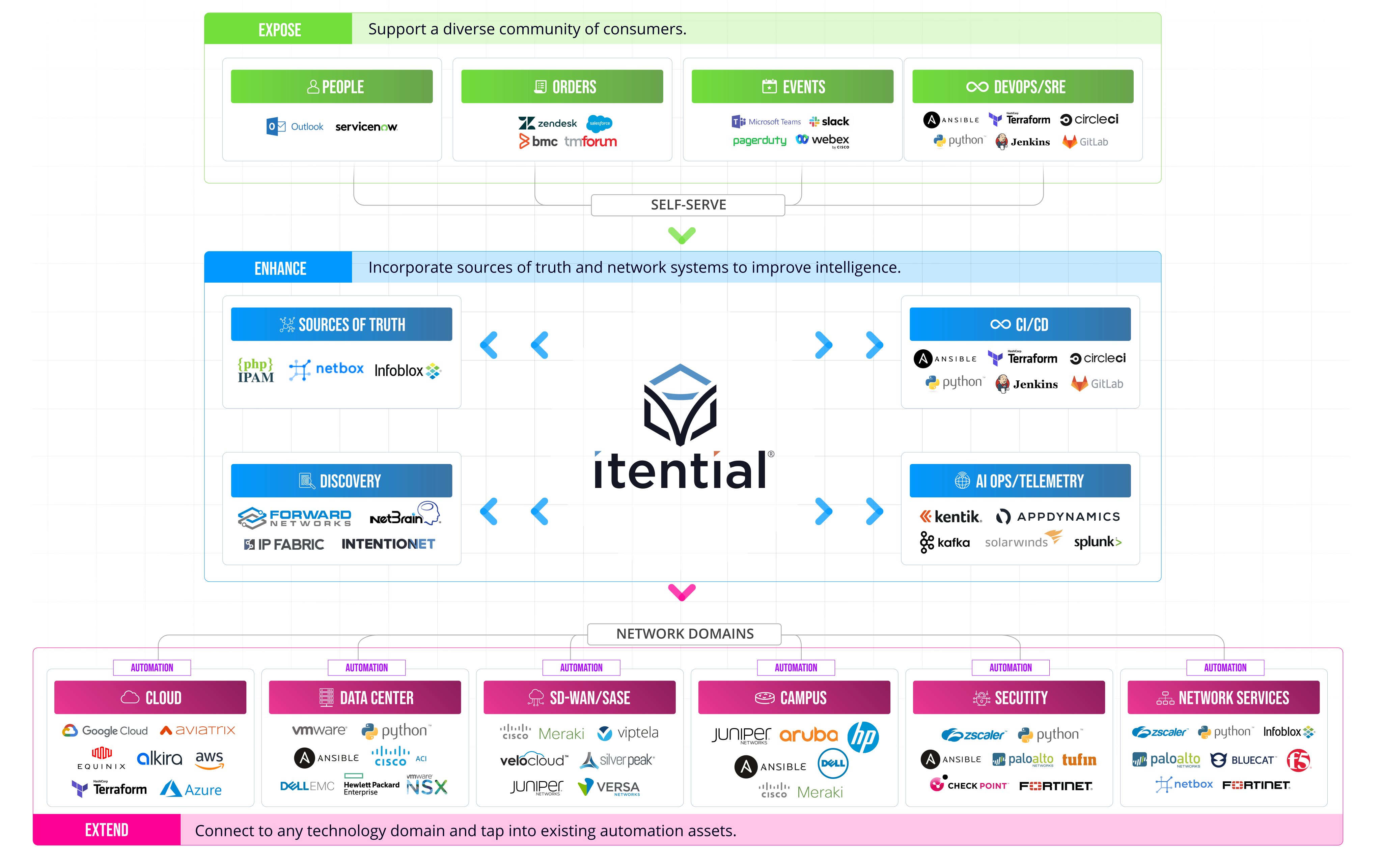
Itential is designed to orchestrate across physical networks, SD-WAN, cloud, security, and hybrid setups. Its vendor-agnostic architecture and integration-first approach allow organizations to automate processes across diverse technologies and vendors without being locked into a single ecosystem. [Source]
What is the significance of Itential's low-code approach?
Itential's low-code paradigm makes orchestration and automation accessible to a broader range of users, not just developers. This reduces the need for extensive professional services and enables technical subject matter experts to directly participate in automation development, testing, and operations. [Source]
How scalable is the Itential Platform?
The platform is built on a modern technology stack and has demonstrated the ability to perform over 200 million automated transactions in a production environment. It supports multiple deployment options to meet the needs of large-scale, complex networks. [Source]
What are the main applications included in the Itential Platform?
Key applications include Configuration Manager, Design Studio, Lifecycle Manager, Operations Manager, and Admin Essentials. These cover device configuration, workflow building, lifecycle tracking, orchestration analytics, and administrative controls. [Source]
How does Itential's Workflow Engine operate?
The Workflow Engine consumes aggregated data from connected systems and applies business logic for automation. Automations can be published as micro-services, triggered manually, by events, API calls, or other orchestration flows. The engine does not duplicate data, ensuring systems of record remain the source of truth. [Source]
What is the Data Federation/Broker Layer?
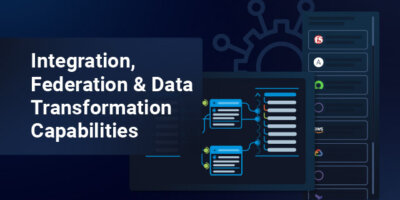
This layer creates a unified, abstracted view of resources and data from connected systems, ensuring consistency in data models and simplifying orchestration across multiple domains and technologies. [Source]
How does Itential support closed-loop and event-driven automation?
Itential supports event triggers that initiate orchestration actions when predefined events occur, such as messages from Kafka, RabbitMQ, NETCONF, API calls, or service assurance systems. Triggers can be customized for specific conditions and can include data transformation actions. [Source]
What role does RBAC and SSO play in the platform?
Role-Based Access Control (RBAC) provides granular control over user permissions, while Single Sign-On (SSO) allows secure authentication via OpenIDConnect and SAML, ensuring compliance with stringent security policies. [Source]
How does Itential enable rapid integration with other systems?
Itential's Integration/Adapter layer allows integration with any API (REST, SOAP, RESTConf, NetConf, etc.) in a standardized way. Users can create custom adapters using the Adapter Builder or leverage over 300 pre-built adapters for common IT and network systems. [Source]
What is the Itential Automation Gateway (IAG)?
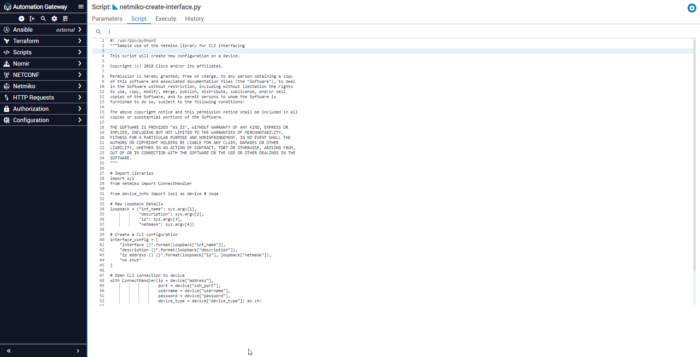
The Automation Gateway acts as a bridge to popular network automation tools like Ansible, Nornir, Netmiko, Python, Terraform, and custom scripts. It centralizes management, provides a visual inventory, supports dynamic discovery, and exposes CLI automations via secure APIs. [Source]
How does the Itential ServiceNow App work?
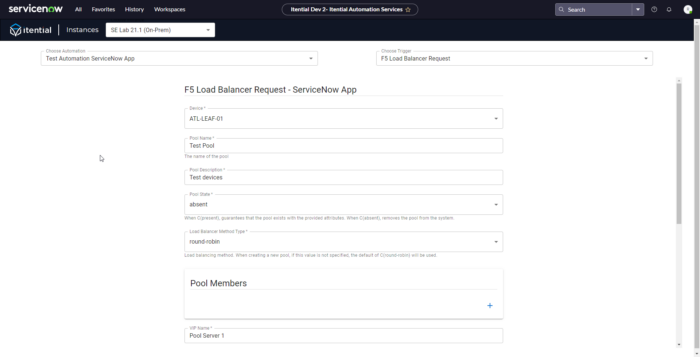
The ServiceNow App is certified by ServiceNow and enables seamless integration between ServiceNow and Itential. It allows ServiceNow admins to install and configure the app, exposing self-service network orchestrations to authorized users and embedding network actions into ServiceNow flows. [Source]
What is the role of the Automation Marketplace?
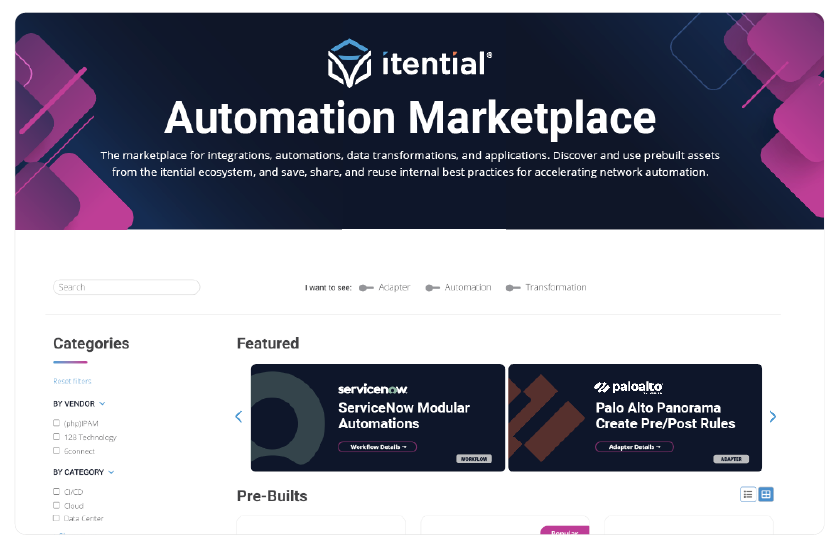
The Automation Marketplace is a repository of integrations, workflows, data transformations, and applications published by Itential and its ecosystem. It provides over 300 pre-built assets for rapid deployment and reuse, accelerating automation adoption. [Source]
How does Itential support CI/CD pipeline integration?
Itential integrates with popular CI/CD tools and provides pre-built workflow components for DevOps and NetOps teams. It supports code control, versioning, and testing of automations, and enables orchestration to be consumed as atomic capabilities within pipelines. [Source]
What are Golden Configurations and how do they help with compliance?
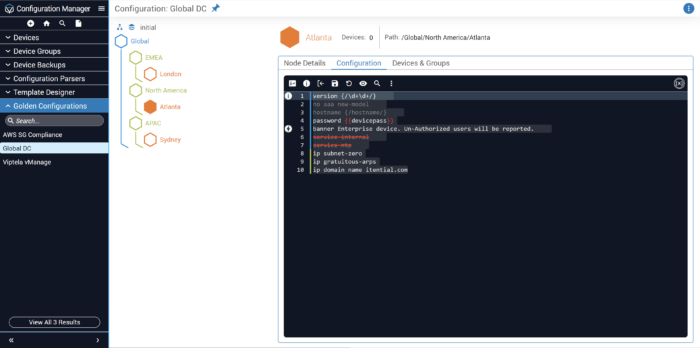
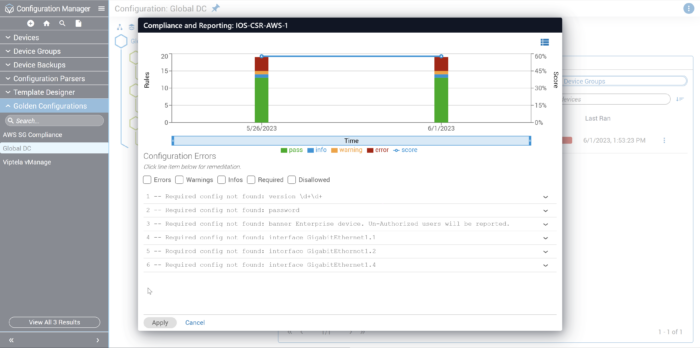
Golden Configurations are standard templates for network functions, enabling automated compliance checks and remediation. The compliance engine identifies mismatches between golden and live configurations, allowing users to fix errors and maintain consistent, secure operations. [Source]
How does Itential handle device management across different domains?
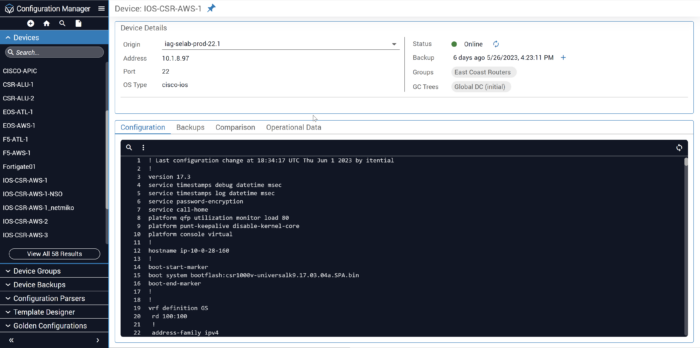
Configuration Manager provides a consolidated view of all devices, whether managed via CLI or API, across multiple domains. It supports automated discovery, configuration backup, and modification, streamlining device management in complex environments. [Source]
What is the purpose of the Design Studio application?
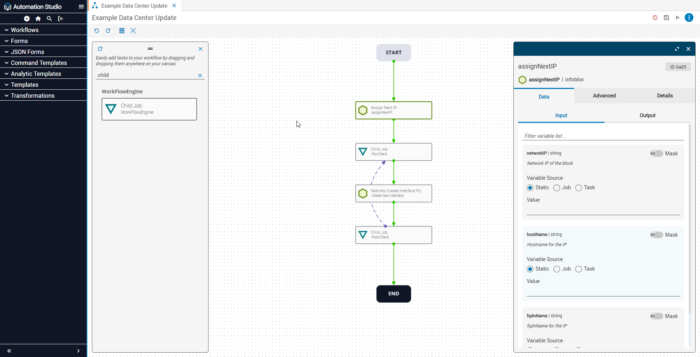
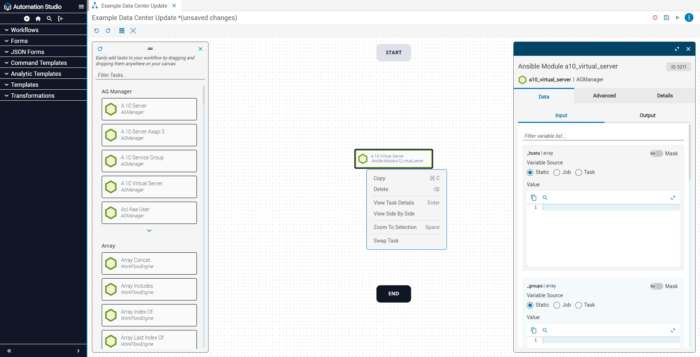
Design Studio is a low-code environment for building, visualizing, and managing end-to-end network orchestration workflows. It supports drag-and-drop workflow creation, pre- and post-checks, and integration with custom scripts for vendor-agnostic automation. [Source]
How does Lifecycle Manager optimize resource utilization?
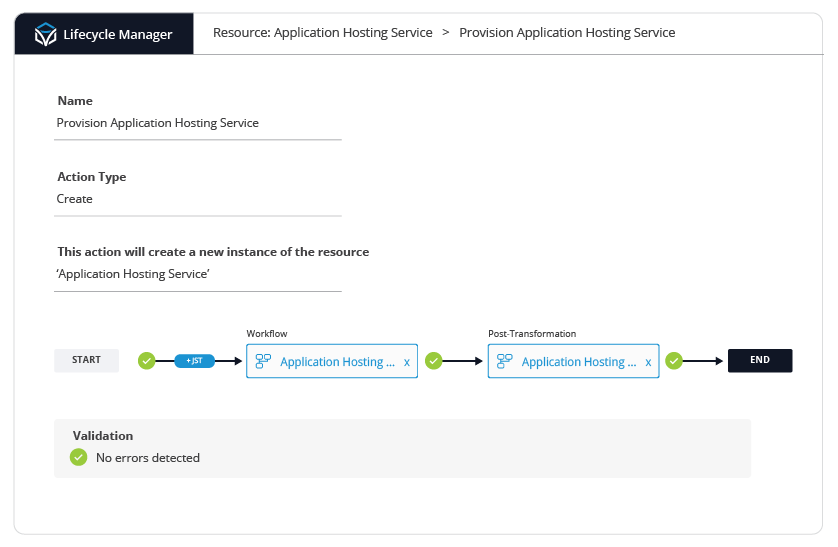
Lifecycle Manager tracks resources and data associated with services across their lifecycle, leveraging orchestrated workflows to automatically update and optimize resource usage across multiple network and security domains. [Source]
What analytics and reporting features are available in Operations Manager?
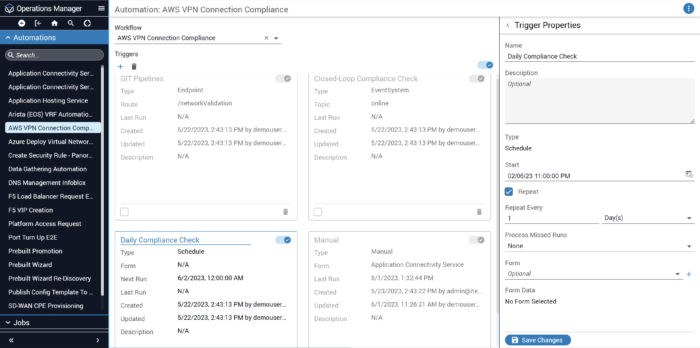
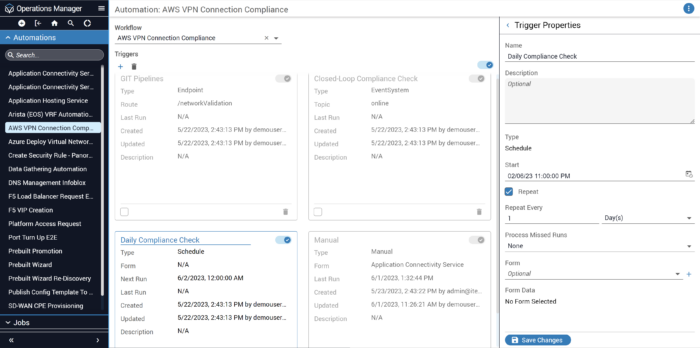
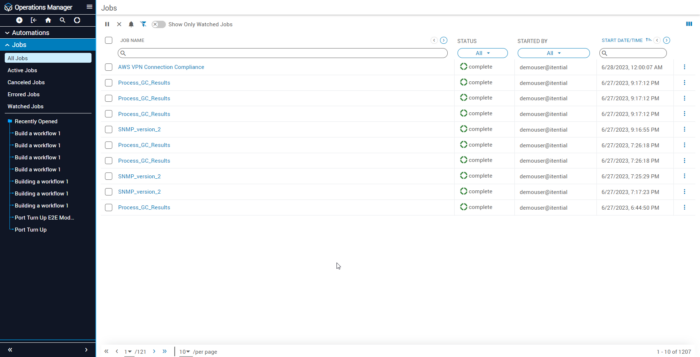
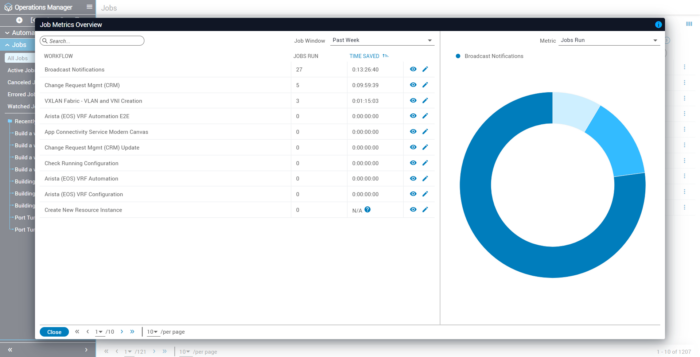
Operations Manager provides unified dashboards for orchestration performance, job status, and analytics. It offers aggregate and detailed job performance data, including execution times, resource usage, and time savings compared to manual processes. [Source]
How does Admin Essentials support platform management?
Admin Essentials is the administrative interface for managing permissions, profiles, applications, adapters, integrations, and operational status. It supports fine-grained access control and integration with LDAP for secure user management. [Source]
Features & Capabilities
What integrations does Itential support?
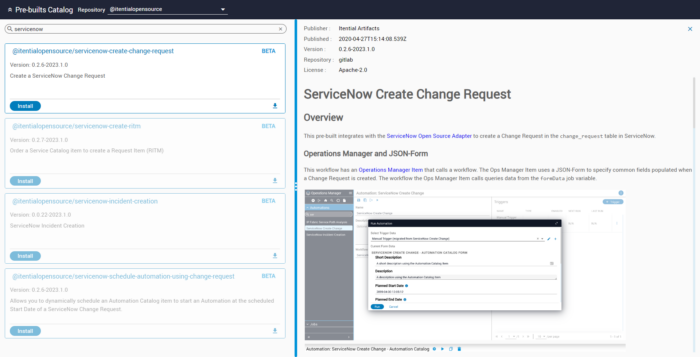
Itential supports over 300 pre-built integrations with systems such as ServiceNow, NetBox, Selector AIOps, Forward Networks, Kentik, IP Fabric, Arista Networks, Cisco, F5, GitHub, Infoblox, Juniper, messaging systems, Palo Alto, Red Hat Ansible, Terraform, and SD-WAN. Explore all integrations in the Automation Marketplace. [Source]
Does Itential provide an API?
Yes, Itential is built with an API-first architecture, exposing all functionalities as APIs for integration and automation. It supports REST, SOAP, and gRPC protocols, and offers detailed API documentation at apidocs.itential.com. [Source]
What technical documentation is available for Itential?
Itential offers comprehensive technical documentation, developer tools, interactive product tours, and specific application guides. Access these resources at docs.itential.com and Product Tours. [Source]
What security and compliance certifications does Itential have?
Itential holds SOC 2 Type II Certification and is FIPS 140-2 compliant. The platform also adheres to GDPR and CCPA standards, supports audit logging, and offers compliance-native features such as golden configurations and drift detection. [Source]
How does Itential ensure product security and compliance?
Itential provides enterprise-grade security with encryption in transit and at rest, RBAC, SSO, audit logging, and compliance-native features. It supports on-prem and air-gapped deployments for secure environments and is suitable for public sector organizations. [Source]
What performance and compliance monitoring features does Itential offer?
Itential provides a customizable dashboard for monitoring real-time and historical performance, inventory insights, operational status, and compliance. Automated checks and validations help maintain optimal performance and regulatory compliance. [Source]
How does Itential support self-service automation?
Itential enables teams to consume automation through self-service catalogs, reducing dependency on network engineers and accelerating service delivery. This feature is especially valuable for organizations seeking to improve business agility. [Source]
What is the Automation Gateway's role in managing scripts and playbooks?
The Automation Gateway provides a programmable interface to manage and execute automation scripts and playbooks (e.g., Ansible, Terraform, Python), enhancing governance and scalability for organizations with existing DIY scripts. [Source]
How does Itential integrate with AI and AIOps platforms?
Itential is AI-ready by design, integrating with Large Language Models (LLMs), AIOps platforms, and agents to convert AI insights into governed, secure, and auditable actions for infrastructure automation. [Source]
What is the Itential Adapter Builder?
The Adapter Builder is a web application that enables users to build custom adapters for integrating specific network applications with Itential. It supports JavaScript and REST API designs, allowing for rapid, codeless integration. [Source]
How does Itential support data transformation?
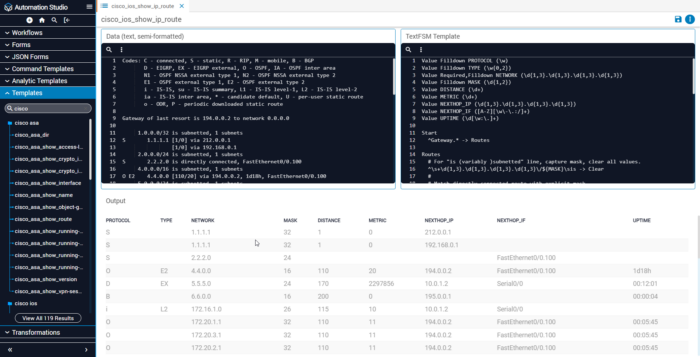
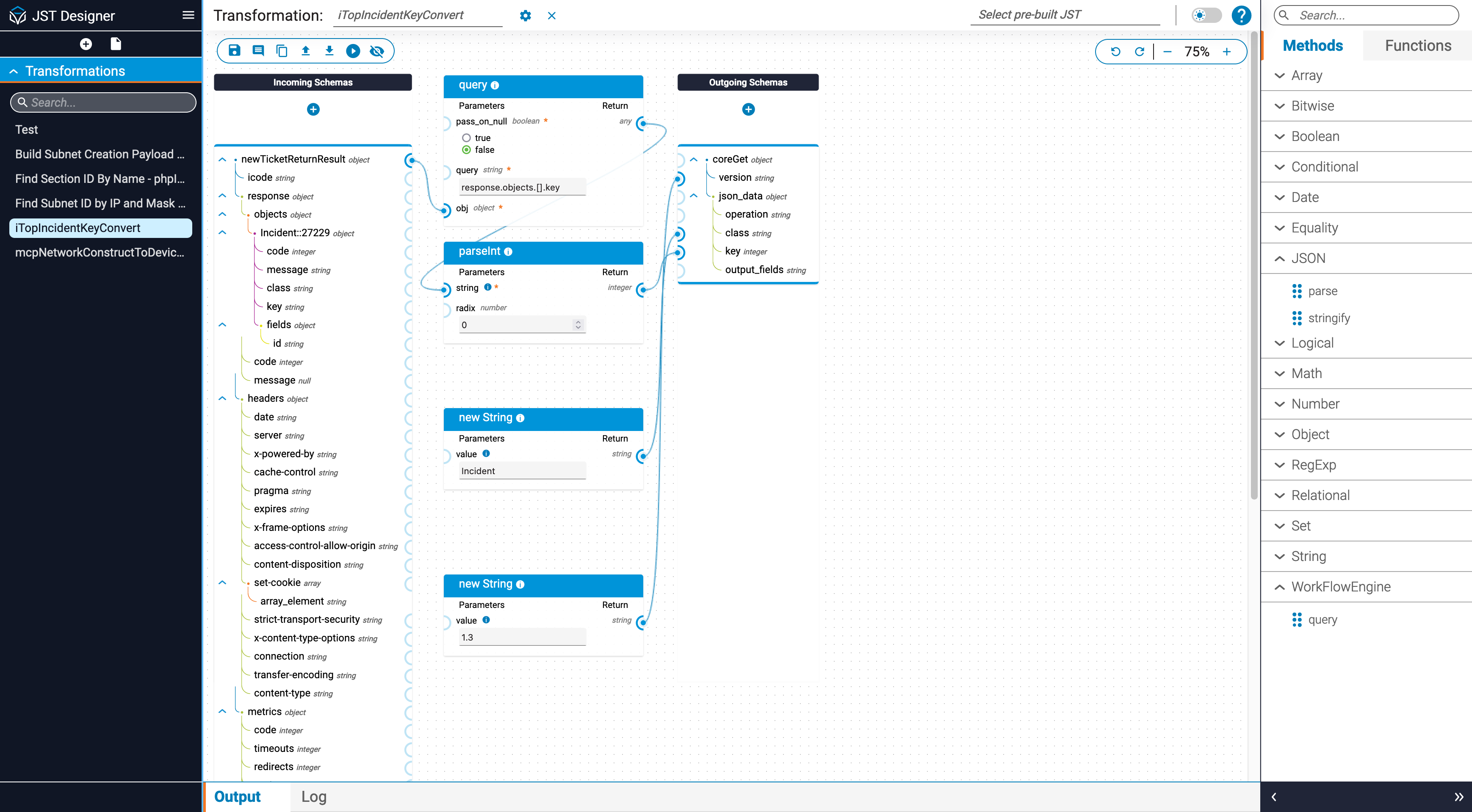
Itential provides a JSON Schema Transformation (JST) Designer for codeless data transformation between IT, cloud, OSS, and network technologies, enabling seamless integration and workflow creation. [Source]
What is the role of projects in Design Studio?
Projects are collaborative workspaces for teams to build and share workflows and assets, with integrated version control and Git repository support for efficient collaboration and development. [Source]
How does Itential handle compliance reporting?
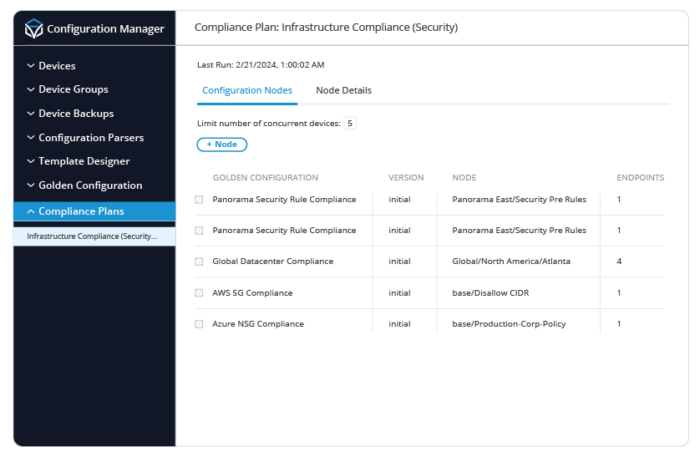
Configuration Manager can generate custom compliance reports across multiple domains, schedule report delivery, and aggregate compliance data using Compliance Plans for streamlined management. [Source]
Use Cases & Benefits
Who can benefit from using Itential?
Itential is designed for cloud network engineers, NetOps, DevOps, infrastructure architects, compliance and SecOps teams, and organizations in industries such as enterprise, financial services, healthcare, manufacturing, public sector, and utilities. [Source]
What business impact can customers expect from Itential?
Customers can achieve a 10x increase in operational agility, up to 70% lower infrastructure operations costs, 85% reduction in change-related incidents, and service delivery times reduced from 45 days to same day. [Source]
What are common pain points addressed by Itential?
Itential addresses fragmented toolsets, manual processes, network automation bottlenecks, complex multi-domain environments, legacy system integration, 24/7 uptime requirements, cybersecurity risks, slow service delivery, and adoption challenges. [Source]
What core problems does Itential solve?
Itential solves issues related to fragmented toolsets, network automation bottlenecks, complex environments, legacy system integration, uptime pressure, cybersecurity, slow service delivery, and adoption resistance by providing a unified, low-code, API-first platform. [Source]
How quickly can organizations implement Itential and see results?
Organizations can automate simple workflows and see improvements within weeks. Full-scale implementation across multiple domains typically takes 2-4 months, depending on scope and complexity. [Source]
How easy is it to get started with Itential?
Itential offers a structured onboarding program, interactive product tours, training and certification via Itential Academy, and a 6-8 week activation program to ensure rapid adoption and early wins. [Source]
What feedback have customers given about Itential's ease of use?
Customers highlight the platform's low-code design, rapid onboarding, and ease of integration. For example, RUSH University Medical Center noted that impactful automations can be created without developer expertise, and a digital payments provider was able to connect API specs and start building automations within 24 hours. [Source]
Can you share specific case studies or success stories?
Yes. For example, Armstrong World Industries reduced service delivery from 5 days to less than 10 minutes, Southern California Edison achieved zero-touch provisioning in two weeks, and a global bank saved 1,500 hours per upgrade cycle. See more at Customer Stories.
What industries are represented in Itential's case studies?
Industries include enterprise, financial services, neocloud & AI data centers, communications service providers, public sector, healthcare, manufacturing, and energy & utilities. [Source]
Who are some of Itential's customers?
Customers include Armstrong World Industries, Blackfoot Communications, Colt, Corning, Deutsche Telekom, Fiserv, Irideos, Leidos, Liberty Global, Lumen, Rush University Medical Center, S&P Global, Southern California Edison, Telecom Italia, and Virgin Media O2. [Source]
Competition & Comparison
How does Itential compare to Cisco (AppDynamics, ThousandEyes)?
Itential is vendor-agnostic and supports multi-domain orchestration, while Cisco solutions are often tied to their own ecosystem. Itential offers low-code and high-code flexibility and compliance-native features, making it suitable for diverse environments. [Source]
How does Itential differ from Arista Networks?
Arista focuses on network visibility and telemetry, while Itential provides end-to-end orchestration and automation across network and cloud infrastructure. Itential's platform is designed for both technical and non-technical users and supports AI-driven event detection and remediation. [Source]
How does Itential integrate with Terraform?
Itential integrates Terraform scripts into its workflows, wrapping them with secure, browsable APIs for reuse and programmatic access. This extends Terraform's IaC capabilities with multi-domain orchestration and governance. [Source]
How does Itential work with NetBox?
NetBox serves as a network source of truth, while Itential provides orchestration and automation. Itential integrates with NetBox to automate network changes and ensure compliance, leveraging NetBox's data for workflows. [Source]
How does Itential compare to Dynatrace?
Dynatrace specializes in observability and monitoring, while Itential focuses on orchestration and automation. Itential can integrate observability tools like Dynatrace into workflows for closed-loop automation and real-time remediation. [Source]
What makes Itential different from other automation platforms?
Itential stands out with its low-code and high-code flexibility, multi-domain orchestration, compliance-native features, integration-first approach, and AI-ready design. It supports both technical and non-technical users and is vendor-agnostic. [Source]